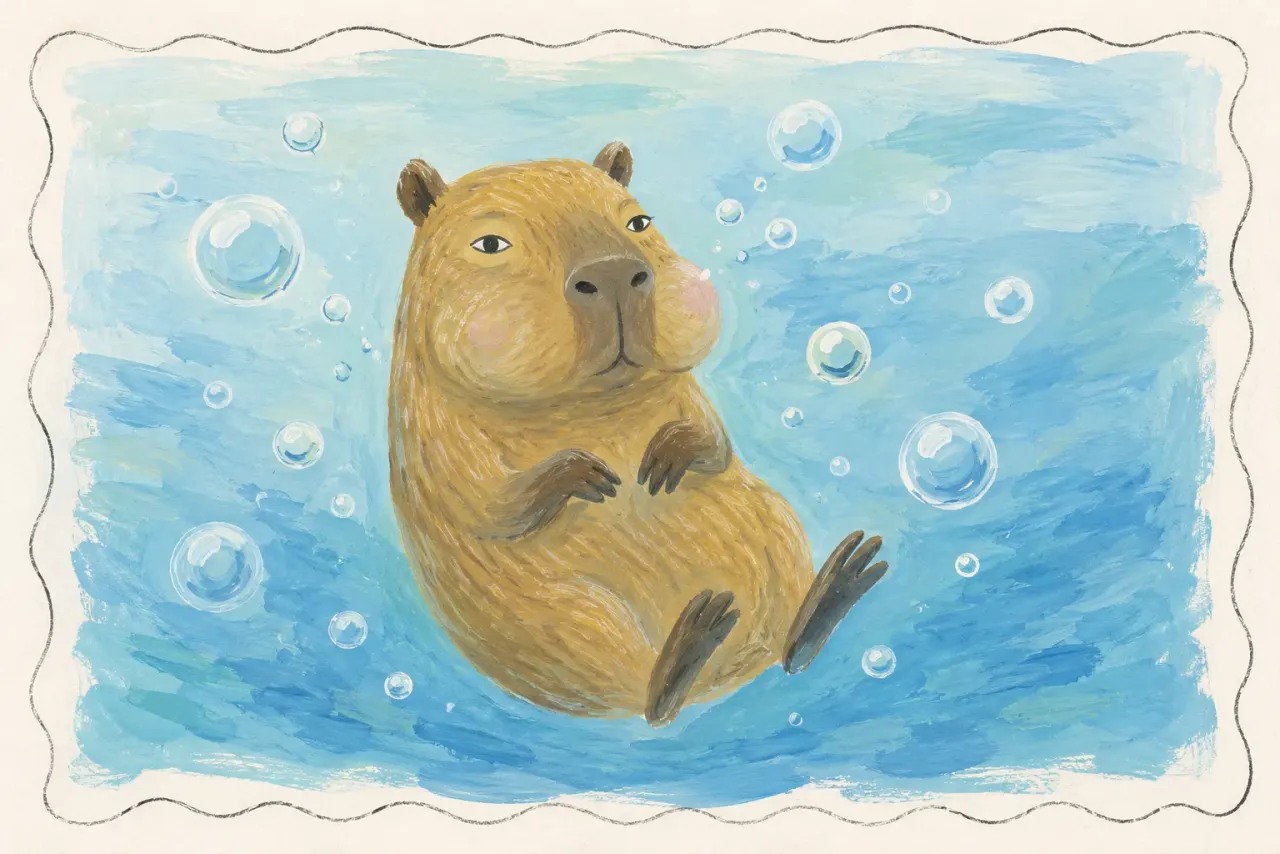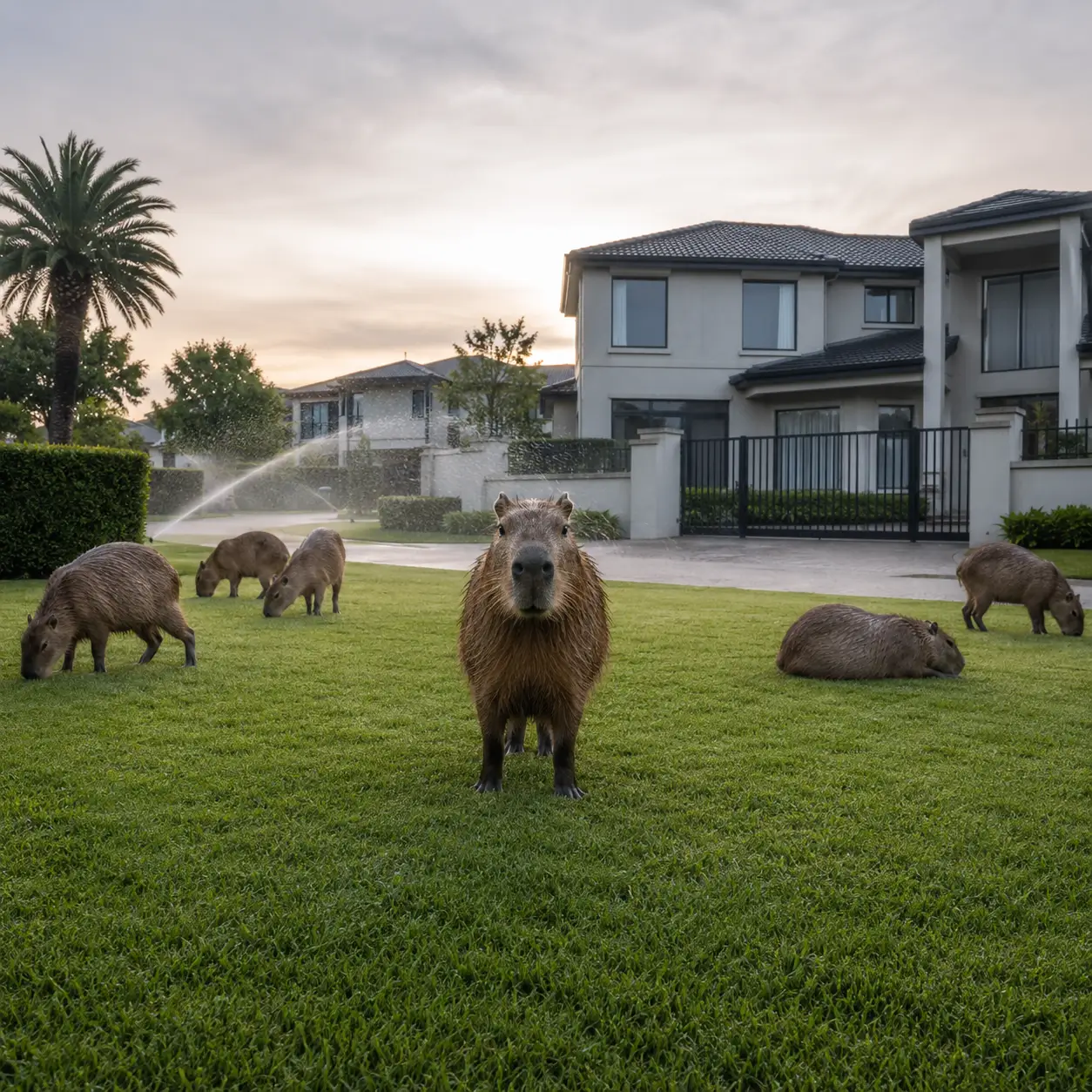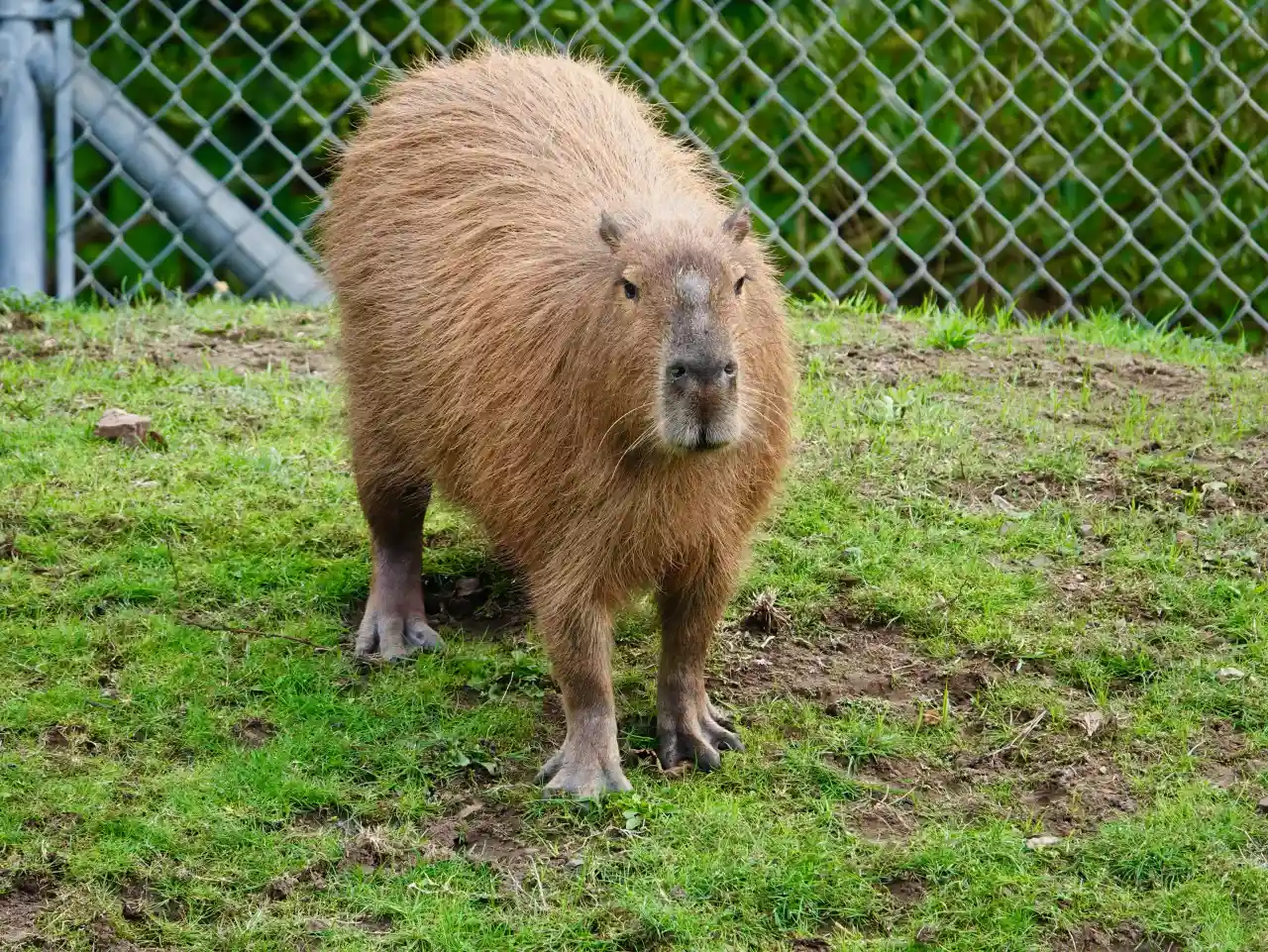
Capybara enrichment is not a toy box. It is a daily puzzle with teeth, water, mud, snacks, smells, and staff notes.
The AZA Capybara Care Manual defines enrichment as providing safe stimuli or environmental changes that increase activity, stimulate cognition, and promote natural behavior. That sentence is less cute than a capybara pushing a floating vegetable around, but it is the part that matters.
Enrichment Is Not A Show For Visitors
A visitor sees a log, a scent trail, a hidden food item, or a puzzle feeder and thinks: activity. A keeper sees a plan. What behavior is this meant to encourage? Is it safe? Did the animal use it? Did it create stress or conflict? Should it happen again?
The care manual says enrichment plans should involve goal setting, approval, implementation, documentation, evaluation, and refinement. Very glamorous. Somewhere a capybara is chewing a branch while paperwork quietly does its job.
Food, Browse, Scent, Water, And Choice
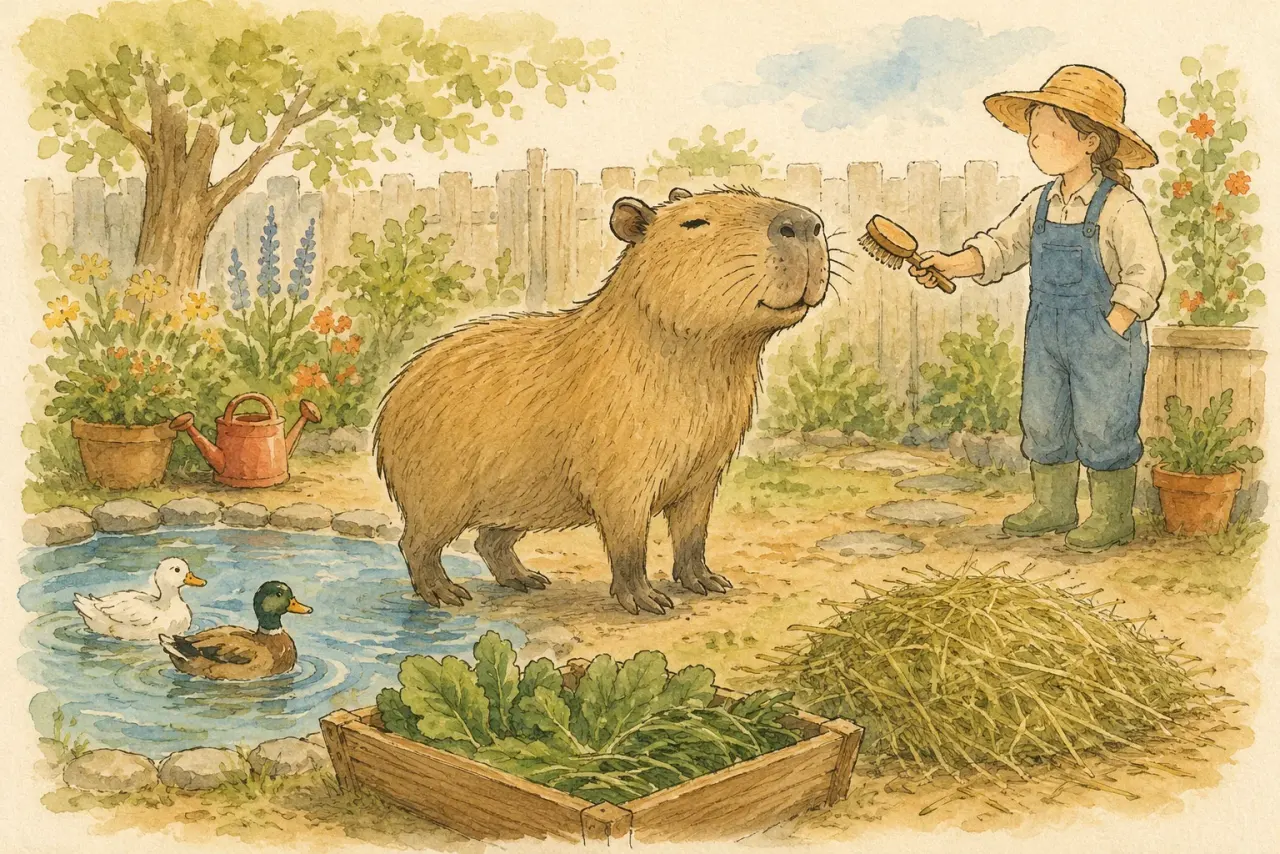
AZA lists possible capybara enrichment such as food presented in new ways, frozen items, puzzle feeders, scent items, tree stumps, browse, ice blocks, logs, boxes, feeders, safe wood, tubes, mirrors, radios, paint, and mud wallows.
The useful pattern is not “give them stuff.” It is matching the item to the species: grazing, foraging, swimming, chewing, resting, scent investigation, and social behavior.
| Enrichment type | What it can encourage |
|---|---|
| Browse or hay placement | Foraging and chewing |
| Puzzle feeder | Slower feeding and problem-solving |
| Mud wallow | Cooling and natural body contact with wet substrate |
| Safe logs or wood | Chewing and exploration |
| Training session | Cooperative care and reduced handling stress |
What Good Enrichment Looks Like From The Rail
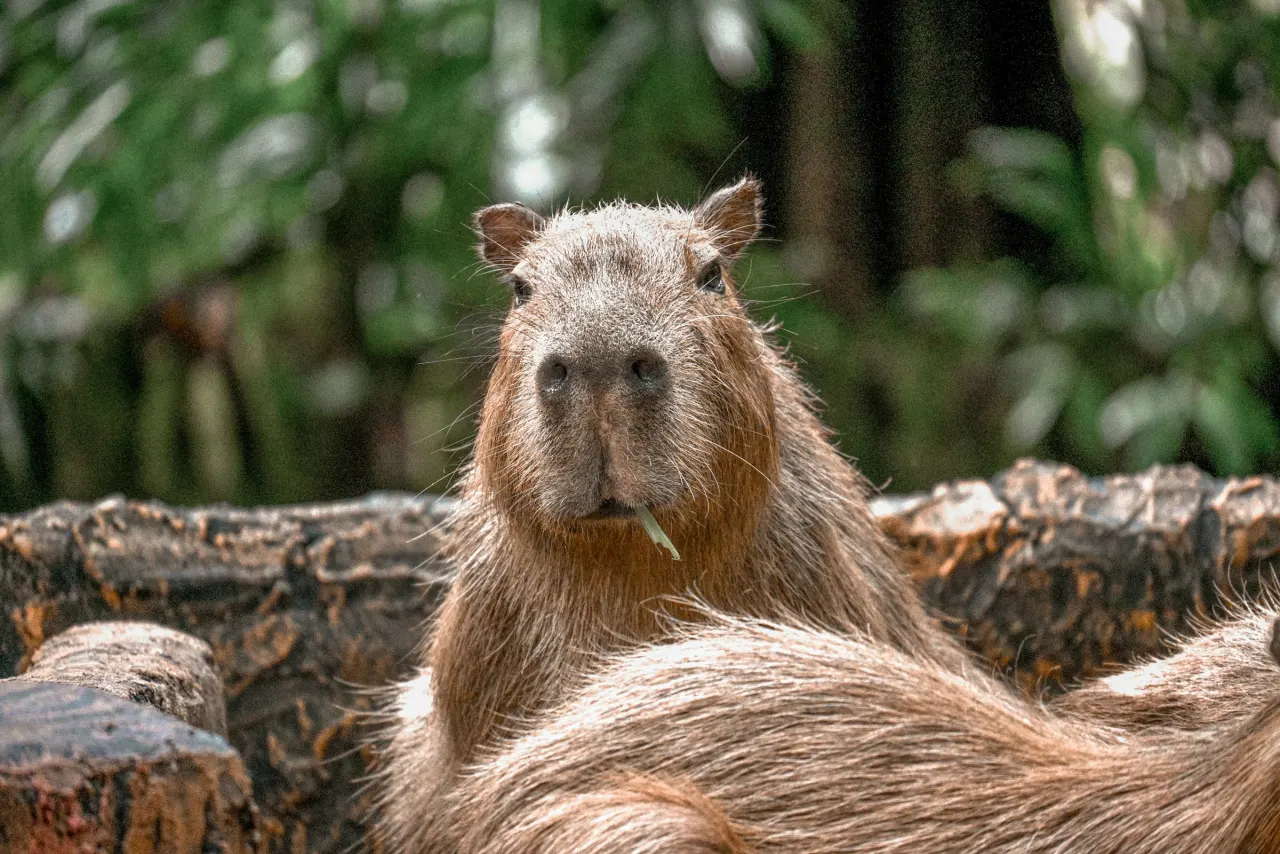
Good enrichment may look boring. The capybara sniffs, chews, chooses water, ignores the item, comes back later, or lets a more dominant group member investigate first. That still tells keepers something.
If you see staff placing browse, hiding food, changing habitat elements, or doing calm target training, you are watching care happen in public. The animal should still be able to opt out. A capybara that refuses the bit is not failing the program.
Bad Enrichment Is Just Clutter
Random objects are not automatically enrichment. Something unsafe, sharp, treated, toxic, swallowable, stressful, or likely to cause group conflict is just a problem with a label on it.
The same goes for visitor inventions. A snack through the fence, a dropped toy, a scented hand lotion offered at nose level: none of that is enrichment. It is staff cleanup wearing confidence.
Why The Biology Decides The Enrichment
Enrichment that ignores how a capybara is built is just decoration. A few facts from sources like the AZA Capybara Care Manual, Animal Diversity Web, and San Diego Zoo Wildlife Alliance shape almost every good decision a keeper makes.
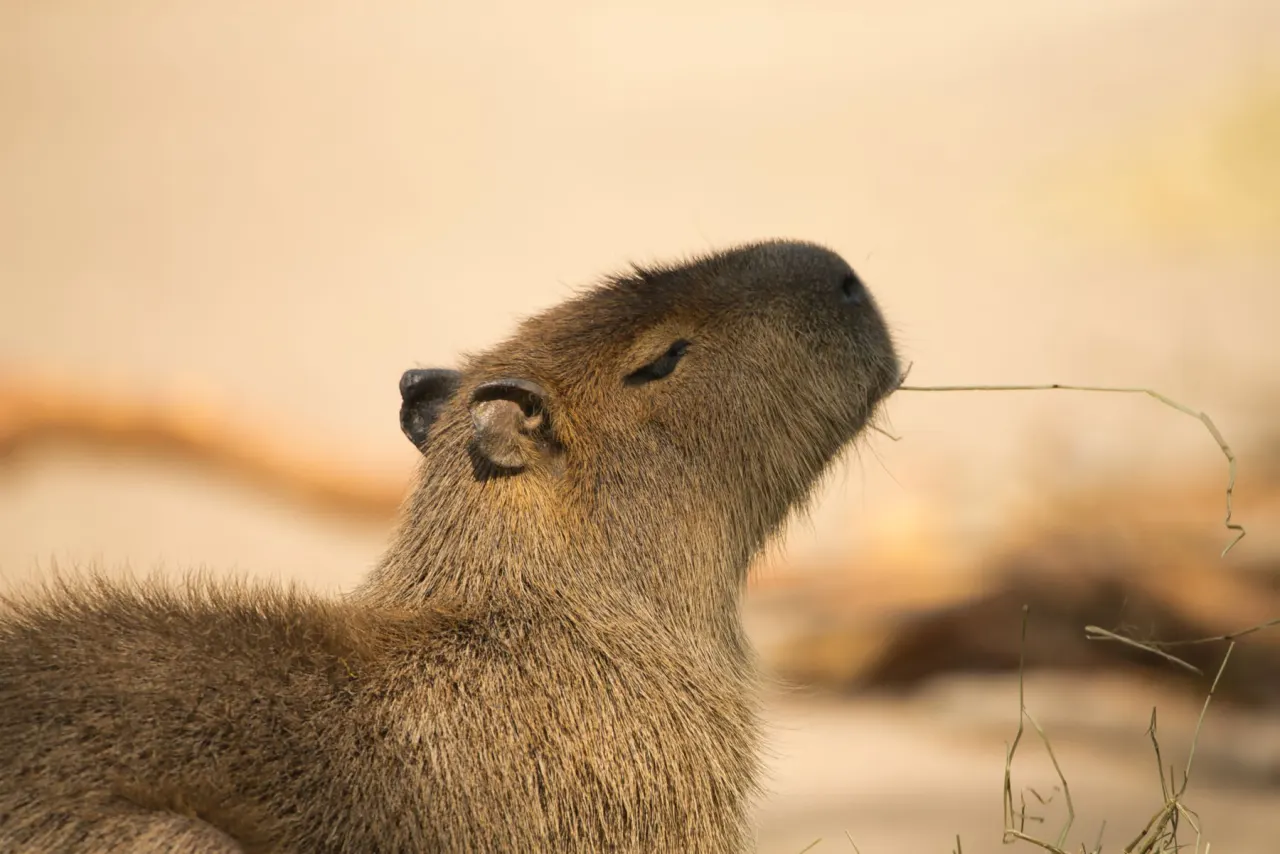
Capybaras are the world’s largest rodent, and the rodent part is not a footnote. Their teeth grow continuously (hypsodont), so chewing is a need, not a hobby. Browse, safe wood, and tough plant material give those teeth a job. Take that away and you get overgrowth and dental problems, which no amount of cute floating-vegetable content fixes.
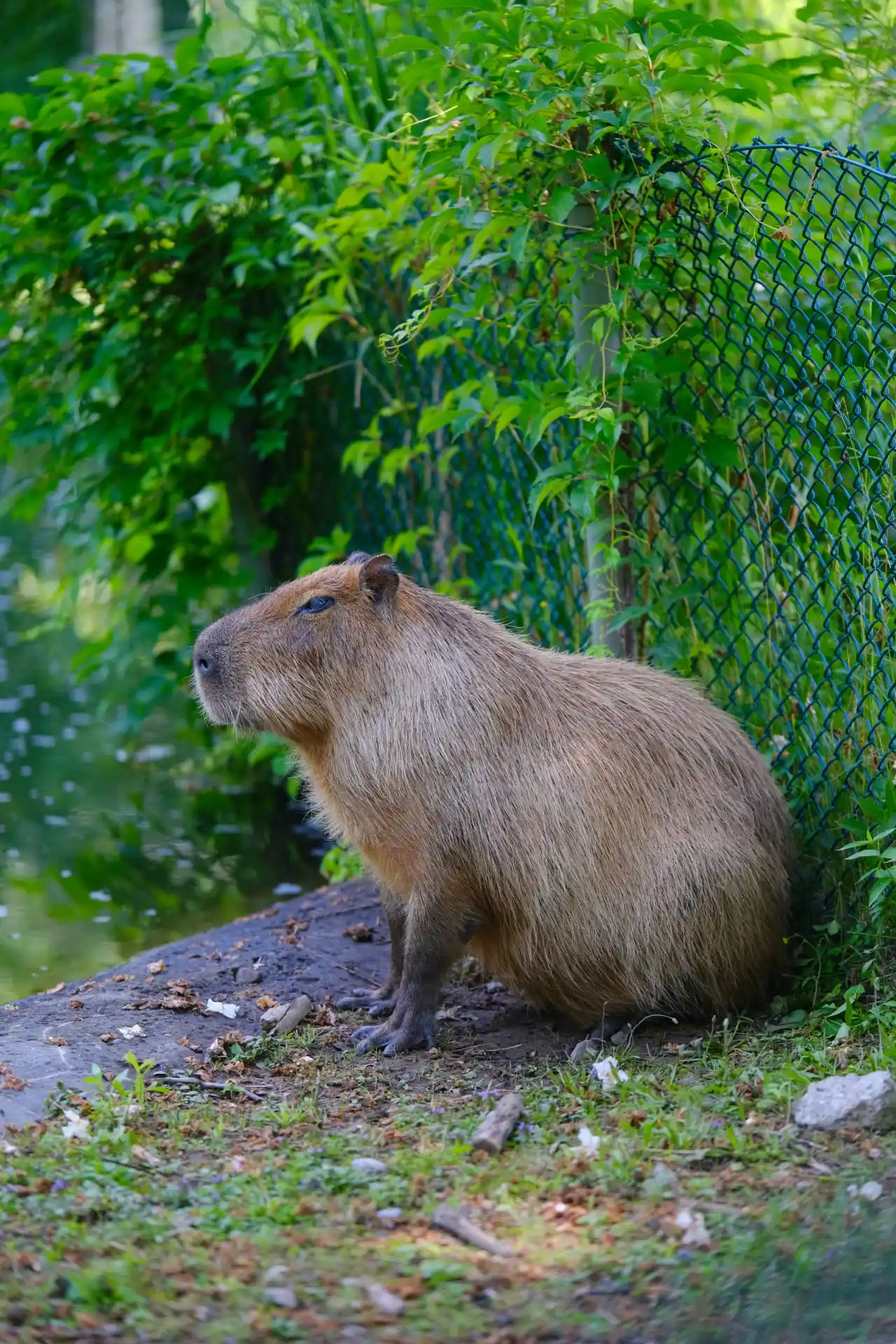
They are semi-aquatic grazers from South America, built around grasses and aquatic plants, with semi-webbed feet for getting in and out of water. Water is not an amenity here. It is a place to cool, hide, and move the way the body expects to move. A capybara with no real water option is missing a category of behavior, not a perk.
They are also hindgut fermenters that re-ingest soft morning feces (coprophagy) to pull more nutrients out of their food, and unlike most mammals they cannot make their own vitamin C, like their guinea pig relatives. That is a diet and feeding-schedule concern more than a toy concern, but it is why “enrichment” and “nutrition” sit on the same clipboard. You cannot puzzle-feed your way out of a deficient diet.
And they are deeply social herd animals. Solitary housing is a welfare stressor, full stop. So enrichment is never just one animal versus one object. It is one object dropped into a group with its own ranking, and a clumsy item can spark conflict instead of curiosity.
The Myths People Bring To The Rail
Most enrichment misunderstandings are honest. They come from watching a calm animal and assuming calm means bored, or that a happy capybara should be doing something photogenic. Here is the gap between the common read and the more accurate one.
| Myth | Better answer |
|---|---|
| More toys means more enrichment | Variety and choice matter more than quantity; clutter can stress a group |
| A capybara ignoring an item means it failed | Opting out is a valid choice and still tells keepers something |
| Visitors can help by tossing snacks | Unapproved food risks diet, choking, and disease, and is not enrichment |
| Enrichment exists to make the animal active for viewers | The goal is natural behavior and welfare, whether or not anyone is watching |
| Calm equals bored | Rest is normal capybara behavior, not a problem to solve |
My honest opinion, after watching enough of these setups: the best enrichment is usually the least impressive thing in the exhibit. A pile of browse placed somewhere new beats almost any clever gadget, because it matches what the animal actually does all day. Novelty for the keeper is not the same as novelty for the capybara.
A Plan, Not A One-Off
One good afternoon of enrichment is not a program. The care manual frames this as an ongoing loop: set a goal, get it approved, run it, write down what happened, evaluate, and adjust. Rotation matters too, because the same “novel” log stops being novel by week three. Keepers vary what is offered, where it sits, and when it appears, so the day keeps some unpredictability without becoming chaotic.
That is also why documentation is not bureaucratic theater. If nobody records that a certain feeder caused two animals to crowd and snap at each other, the same mistake just repeats next month. Boring notes are how good enrichment stays good.
The Goal Is A Life With Options
The best enrichment is not about making a capybara perform. It is about giving the animal more ways to be a capybara inside a managed habitat.
That means options: wet or dry, shade or sun, group or distance, easy food or food that takes work, quiet rest or investigation. If the animal chooses the least dramatic option, fine. The capybara is not here to justify your admission price with jazz hands.