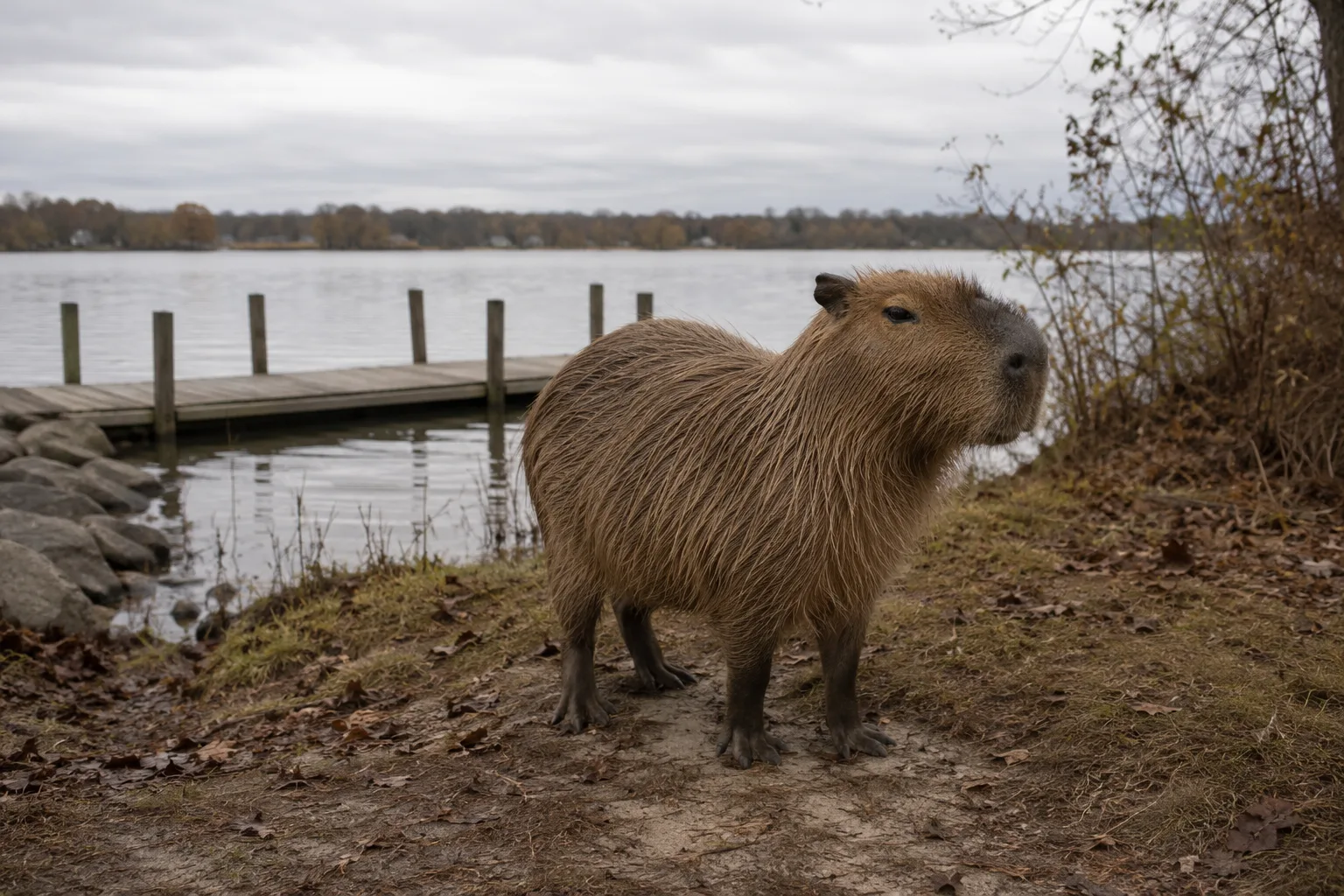
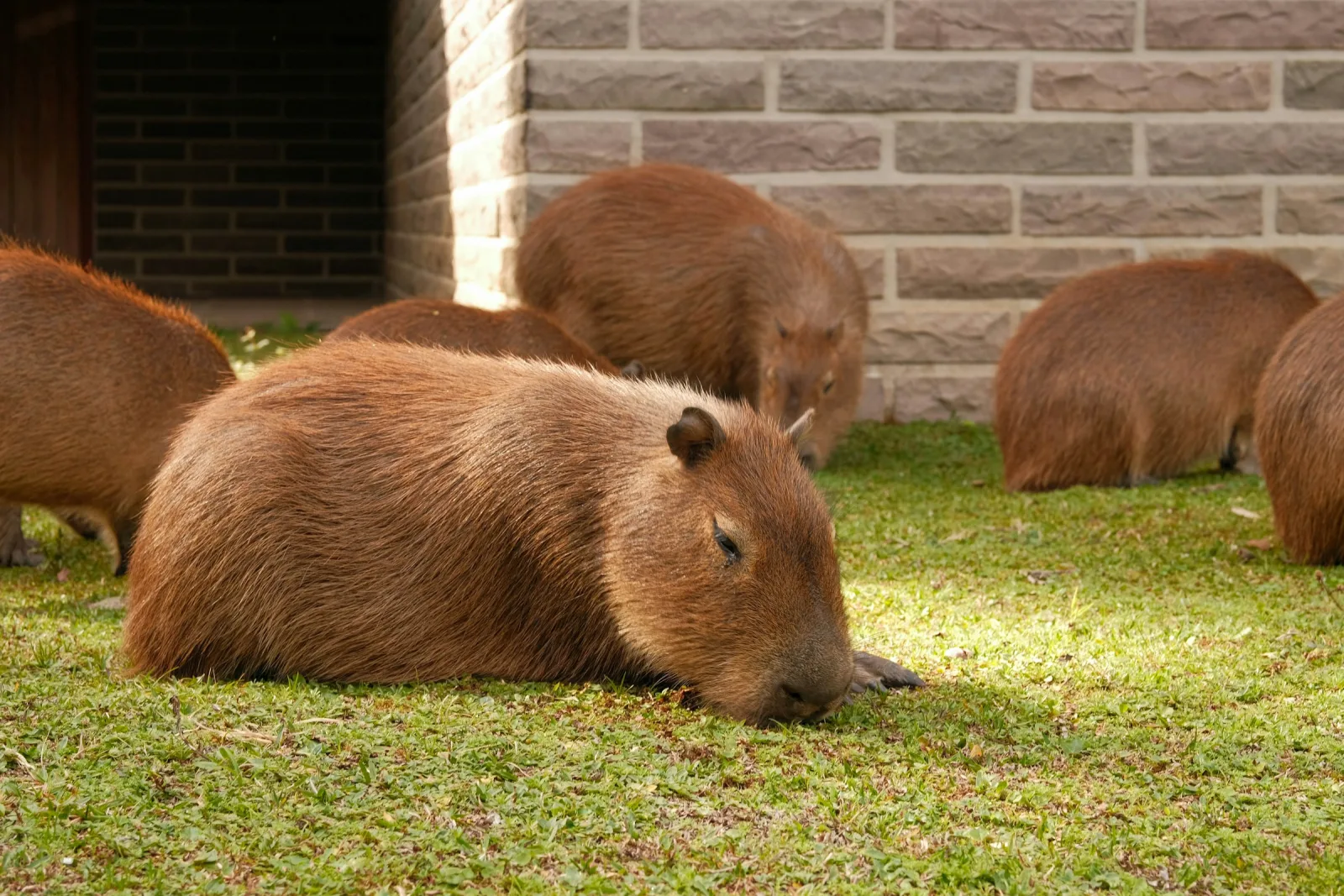
Sometime in the middle of 2021, a group of carpinchos walked onto a golf course in Nordelta, one of Argentina’s most exclusive gated communities, and sat down. They did not leave. More arrived. At some point there were twenty or thirty of them blocking a residential street, completely indifferent to the cars waiting.
Argentine Twitter found this extremely funny. Within days, the image of a large, serene rodent occupying a wealthy suburb had become a meme, a political metaphor, and a brief international news story. Within weeks, it had escaped Argentina entirely.
This is the story of what actually happened, why it landed the way it did, and what it tells you about a very calm animal and a country with a very specific sense of humor about land.
What Actually Happened in Nordelta Before Twitter Got There
Nordelta is not a neighborhood. It is a private city of roughly 15,000 residents in Tigre municipality, about 45 kilometers north of Buenos Aires. Development began in the late 1990s on reclaimed Paraná delta wetland. Golf courses, marinas, artificial lakes, manicured lawns, private streets. The kind of place where the grass is cut on a schedule.
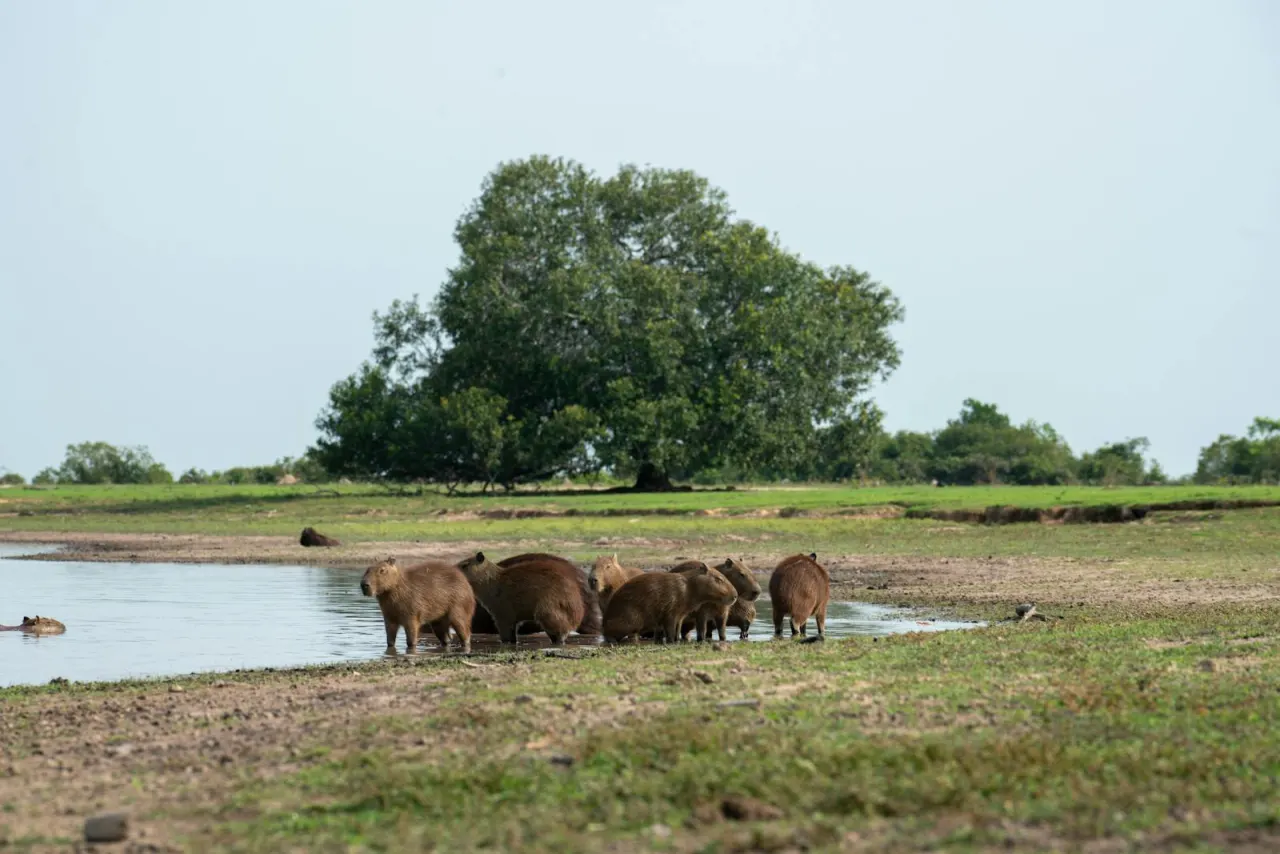
The land, before any of that, was a working floodplain. A wetland system that carpinchos (Hydrochoerus hydrochaeris) had occupied for a very long time. The Animal Diversity Web lists them as native to most of South America east of the Andes, with a strong preference for dense vegetation near rivers, lakes, swamps, and marshes. They are not, in any biological sense, an unusual species to find in the Paraná delta. They live there.
What changed in 2020–2021 was environmental. A combination of drought and shifting flood patterns concentrated wildlife across the delta. Reduced predator pressure in and around the development let carpincho populations expand without the usual checks. Residents started seeing them in larger groups than before: on roads, on golf fairways, in private gardens, occasionally swimming in pools. Groups of twenty or thirty were documented in videos that circulated on social media.
Here is a compressed timeline of how it unfolded:
| Year | What happened |
|---|---|
| Late 1990s | Nordelta development begins on reclaimed Paraná delta wetland |
| 2020–2021 | Drought and flood cycles concentrate wildlife; reduced predator pressure expands carpincho populations |
| Mid-2021 | Residents report mass carpincho presence on roads, lawns, and golf courses |
| August 2021 | Argentine and international media pick up the story; The Guardian, BBC, and New York Times run pieces |
| Late 2021 | CONICET researchers weigh in: natural population dynamics, not an invasion |
| 2022+ | Story fades from news; carpinchos remain a permanent feature of the development |
The Guardian covered it on August 27, 2021. Argentine outlets had been on it for weeks already.
”La Revancha del Carpincho”: Why Argentina Loved This Too Much to Stop
The moment the story hit social media, it got a political layer. Argentina is a country with acute inequality and a long history of land disputes. Nordelta (expensive, walled, private, built on land that used to be a public wetland) is a readable symbol.
So when residents started complaining about wildlife on their property, Argentine Twitter responded with a particular flavor of joy.
The phrases that spread: “la revancha del carpincho” (the carpincho’s revenge). “El carpincho no tiene patria” (the carpincho has no homeland, a riff on leftist internationalist slogans). “El carpincho no paga impuestos” (the carpincho doesn’t pay taxes). One post showed a video of a carpincho sitting on a Nordelta golf course fairway with the caption “él no paga cuotas de mantenimiento” (he doesn’t pay HOA fees) and got 50,000 likes in six hours.
The joke worked on multiple levels. The animal was absurd-looking, massive, and completely unbothered. The setting was a manicured golf course in a private suburb built on reclaimed floodplain. The “victim” of the situation was someone who owned a house in one of Argentina’s most exclusive zip codes and was now complaining that local wildlife had shown up on a Tuesday.
For a country with that particular political texture, it was too good to not be a metaphor.
What CONICET Said: There Was No Invasion. That’s the Whole Point.
CONICET, Argentina’s national science and technology council, sent researchers to assess the situation. Their finding was not particularly dramatic: the carpinchos were native species doing native things. The development had been built on their habitat. The population had expanded because environmental conditions in 2020–2021 created the circumstances for expansion.
This is the part where the internet narrative and the scientific narrative split. The meme said: invasion. CONICET said: there is no invasion here.
The IUCN Red List classifies Hydrochoerus hydrochaeris as Least Concern. The species is not rare, not endangered, and not behaviorally unusual. They are semi-aquatic, highly social, and they live in groups. The AZA Capybara Care Manual describes them as obligate grazers who graze up to eight hours daily near water. Put them near a body of water with grass and low predator pressure, and they will graze. The golf course was, from a carpincho perspective, an extremely well-maintained piece of habitat.
A correction table for the claims that circulated:
| The meme says | What’s actually true |
|---|---|
| Carpinchos “invaded” Nordelta | They were there first; the development was built on their habitat |
| The population surge was unusual | Wet and dry cycles naturally concentrate and disperse carpincho populations |
| They were pests that needed removal | CONICET: they are native wildlife adapting to a modified landscape |
| This was unique to Nordelta | Suburban wildlife conflicts are common wherever development encroaches on wetlands |
The scientists’ position was not that the carpinchos should stay indefinitely or that human-wildlife conflict in dense residential areas is simple. It was that calling it an “invasion” misread what was happening ecologically. The animals weren’t arriving from somewhere else. They were already there, in lower numbers, before the lawns were laid.
How the Story Left Argentina and Lost Half Its Meaning
By late August 2021, the story had left Argentina. The Guardian framed it as capybaras overrunning a luxury housing development. The New York Times ran a version. Reuters sent wire copy. BBC picked it up.
Each international version slightly flattened the local political texture. What arrived globally was a simpler image: large calm rodents, fancy suburb, complete indifference.
That image had a specific cultural valence in 2021. The “unbothered” animal, impervious to property values and HOA politics, sat well alongside a broader internet interest in capybara energy: the idea that capybaras were the world’s most serene creature, accepted by everyone, bothered by nothing. The Nordelta story provided proof of concept. Here was a capybara literally sitting on a golf course, and it simply did not care.
The story fed directly into the wave of capybara content that peaked across TikTok, Reddit, and Twitter through 2022 and 2023. Nordelta wasn’t the only source, but it was a particularly good image. If you want to understand why capybaras became so popular on the internet, the Nordelta moment is one of the clearest early data points.
For those curious about the geography: Nordelta is in Tigre municipality, which sits at the edge of the Tigre delta, the same delta system that gives the carpinchos their natural range. Argentines call capybaras carpinchos — same animal, different name in the region.
The Carpincho Won Because It Didn’t Know It Was in a Fight
The carpinchos won because they had no idea there was a fight.
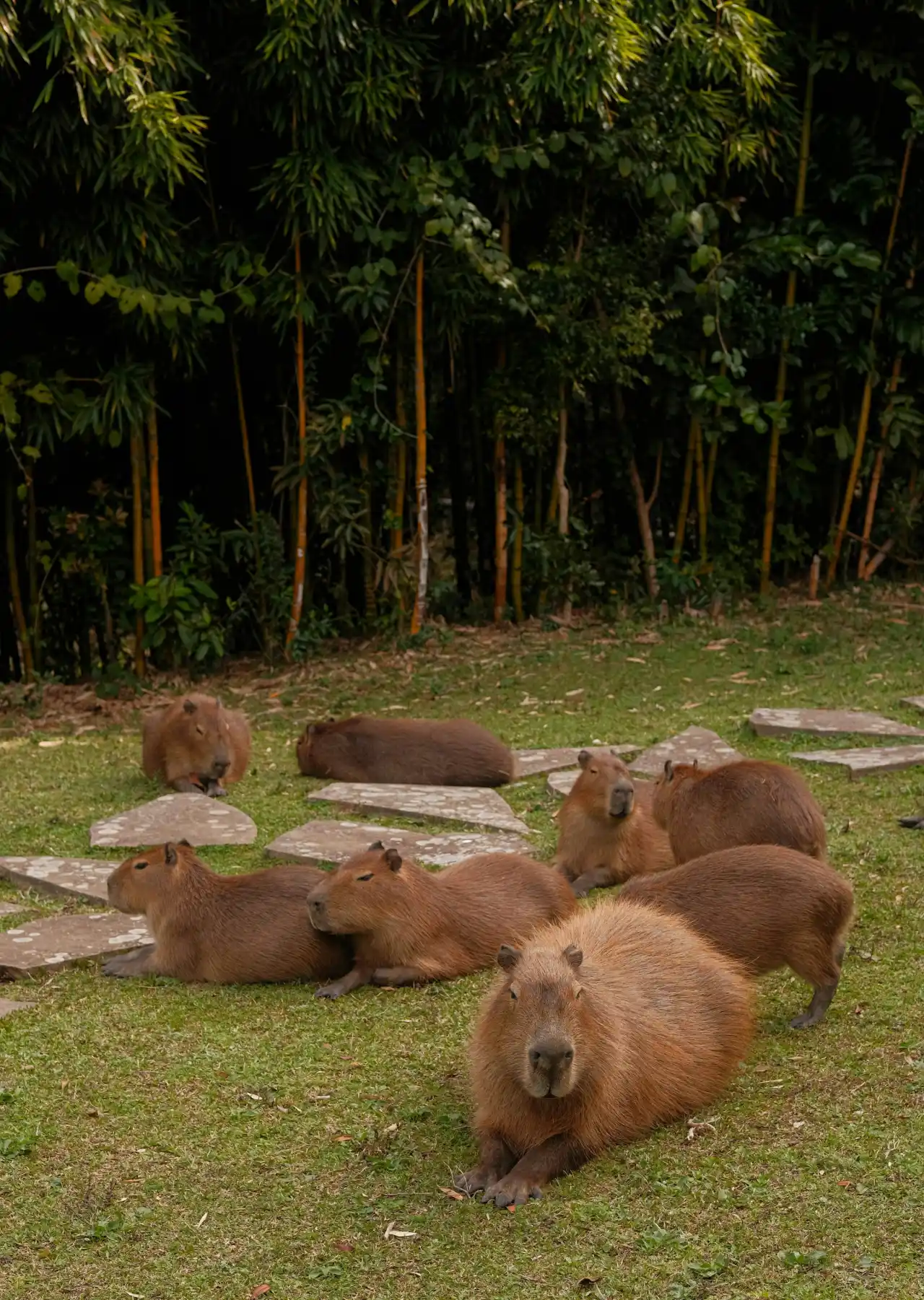
That was the appeal. Argentine social media used them as a symbol of class justice, and the internet latched onto them as symbols of calm. Both readings worked off the same image: a very large animal sitting in a very expensive suburb, entirely unconcerned. The animal contributed nothing to the discourse except its presence and its expression, which, as with all capybaras, reads as mildly disapproving at best.
The Smithsonian National Zoo describes capybaras as the world’s largest living rodent, with adults reaching 77 to 150 pounds. The San Diego Zoo Wildlife Alliance notes they are social animals that live in groups of ten to twenty in the wild, sometimes larger. A herd of thirty carpinchos on a Nordelta street was, from a biology standpoint, not especially abnormal. From the perspective of someone trying to drive to their marina: sure, unusual.
The story’s staying power came from how cleanly it illustrated something that doesn’t usually get illustrated this directly: that the distinction between “nature invading human space” and “human space built on nature” is entirely a matter of perspective, and the animal doesn’t share yours.
For anyone curious about whether capybaras pose actual safety concerns in human-adjacent settings, the answer is more nuanced than the meme suggests. See are capybaras dangerous for a grounded look at that question.
For a closer look at the location itself and the ongoing relationship between Nordelta and its carpincho neighbors, see the companion piece on capybaras in Buenos Aires. The deep-dive on the Nordelta site specifically is scheduled separately.
The carpinchos remain in Nordelta. Nobody really expected them to leave.