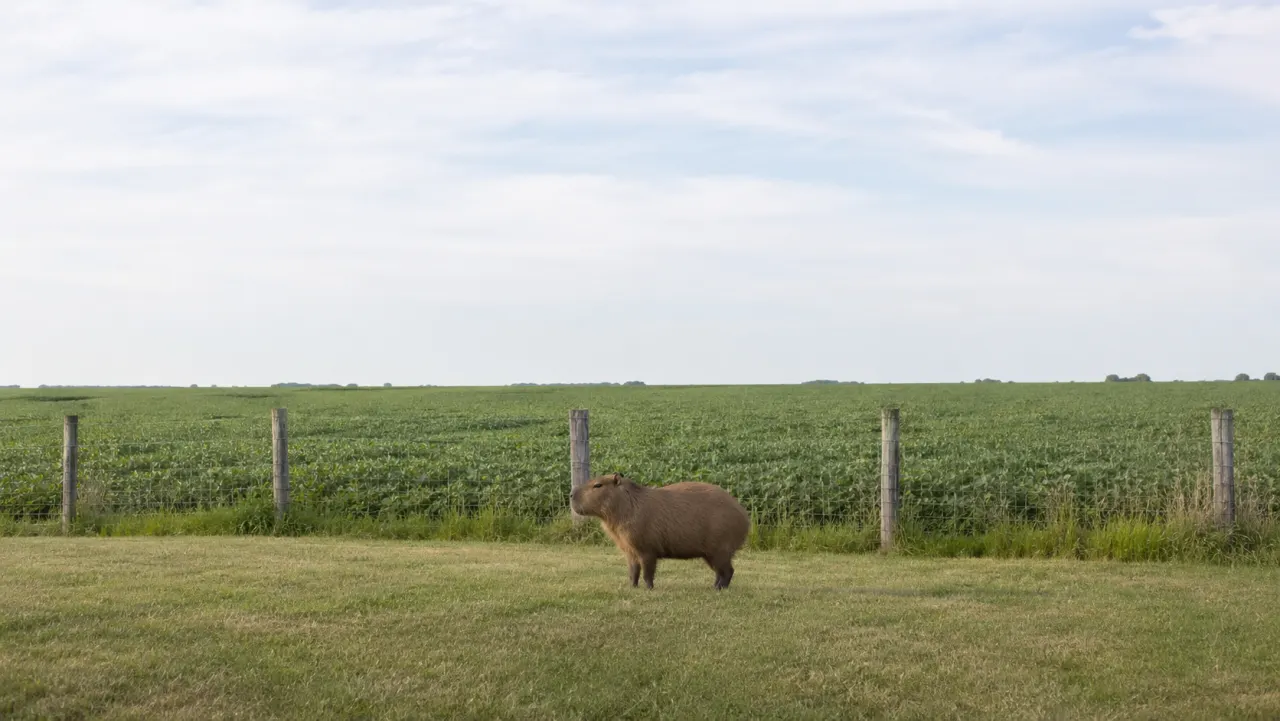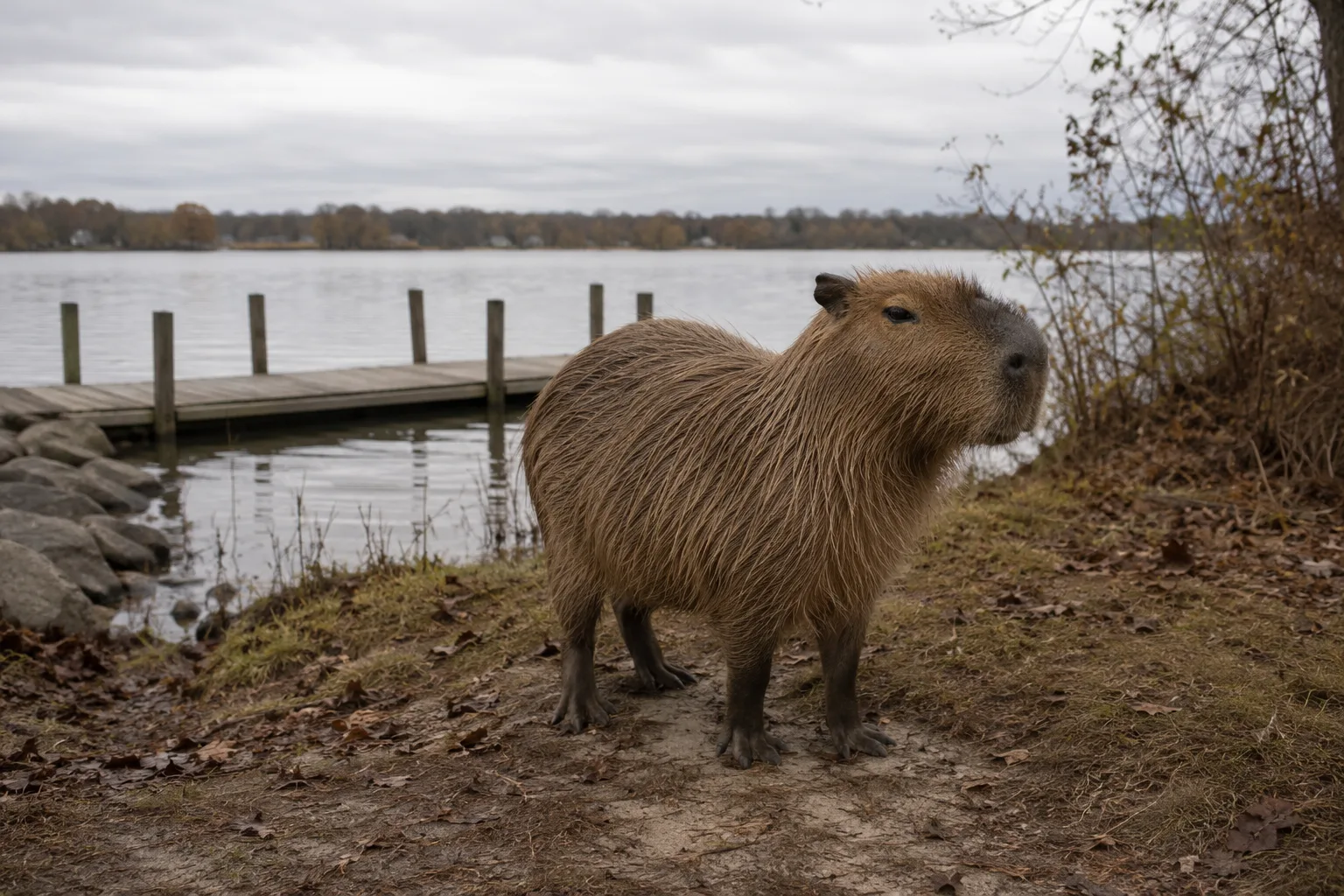

Walk into a leatherwork stall in San Telmo and ask for a “capybara belt.” The vendor will look at you like you’ve asked in Japanese. The same belt, the same animal, the same counter — but the word is wrong. In Argentina, the animal is a carpincho. Always has been.
This isn’t a regional quirk. It’s a small window into five centuries of South American history, two indigenous languages, and the way colonial geography still shapes what people call things.
They’re Identical. The Name Is the Whole Story.
Same species. Same scientific name: Hydrochoerus hydrochaeris. Same semi-aquatic, grass-eating, alarmingly calm giant rodent. According to the Smithsonian National Zoo, adults typically weigh between 77 and 150 pounds, making them the largest rodent on Earth. The IUCN Red List confirms they range across most of tropical and subtropical South America, from Venezuela and Colombia down through Brazil, Bolivia, Peru, Argentina, and Uruguay.
So there is no taxonomic mystery here. A carpincho is not a subspecies. It is not a smaller cousin or a regional variant. It is a capybara. Call it either one, and you’re pointing at the same animal wading through the same wetland. If you want the full biological picture, what a capybara actually is covers it.
The question is why two names exist at all. And which one you use says something about where you learned the word.
Where “Capybara” Comes From (Hint: Not Argentina)
“Capybara” is a Tupí word. Merriam-Webster traces it to “ka’apiûara,” roughly meaning “one who eats slender leaves.” A grass eater, in plain terms. The Tupí-speaking peoples lived along Brazil’s Atlantic coast, and when Portuguese colonizers arrived, they picked up local animal names and started using them. The word entered Portuguese first, then traveled outward as the international default.
By the time English, French, and most international Spanish-language sources standardized their terminology, “capybara” was the word with momentum. Britannica uses it. Scientific literature uses it. TikTok definitely uses it.
None of that flow touched Argentina the same way.

”Carpincho” Comes from Guaraní — and Guaraní Never Went Away
Guaraní is the other half of this story. It was spoken by millions of people across what is now northeastern Argentina (the provinces of Corrientes, Misiones, Chaco, Entre Ríos) and across Uruguay and Paraguay. Unlike Tupí, which declined sharply after Portuguese contact, Guaraní proved remarkably durable. It is still an official language of Paraguay today, spoken daily by millions of people.
When Spanish colonizers settled the Río de la Plata basin, they encountered Guaraní speakers everywhere. Over generations, the two languages mixed at the edges. Colonial Spanish absorbed hundreds of Guaraní words for animals, plants, foods, and places that didn’t have Spanish equivalents. The Real Academia Española’s dictionary lists “carpincho” with a note tracing it to the Guaraní root, likely “kapiÿva” or a close variant.
The word adapted and stuck. It didn’t cross the Atlantic. It didn’t become the scientific standard. But it became the word used by the people who actually lived near the animal.
That’s a meaningful distinction. “Carpincho” is what the Río de la Plata region called the animal before anyone else had an opinion about it.
Why Saying “Capybara” in Buenos Aires Marks You Immediately
Ask an Argentine about capybaras and they will probably ask you what you mean. “Capybara” in Buenos Aires sounds like a word someone learned from a British nature documentary. It’s not wrong, exactly. It’s just not what you’d say. Using it in conversation signals you’re from somewhere else, or you spend too much time on English-language social media.
The cultural weight runs deeper than vocabulary. Carpincho leather has been part of Argentine material culture for centuries. Gaucho gear (gloves, belts, accessories) has long used carpincho hide for its durability and texture. Argentine polo players, who have a particular obsession with their equipment, have traditionally preferred carpincho leather gloves for grip and feel. The word isn’t just a name. It’s attached to a whole economy and a whole aesthetic tradition.
Then came 2021, and the Nordelta incident.
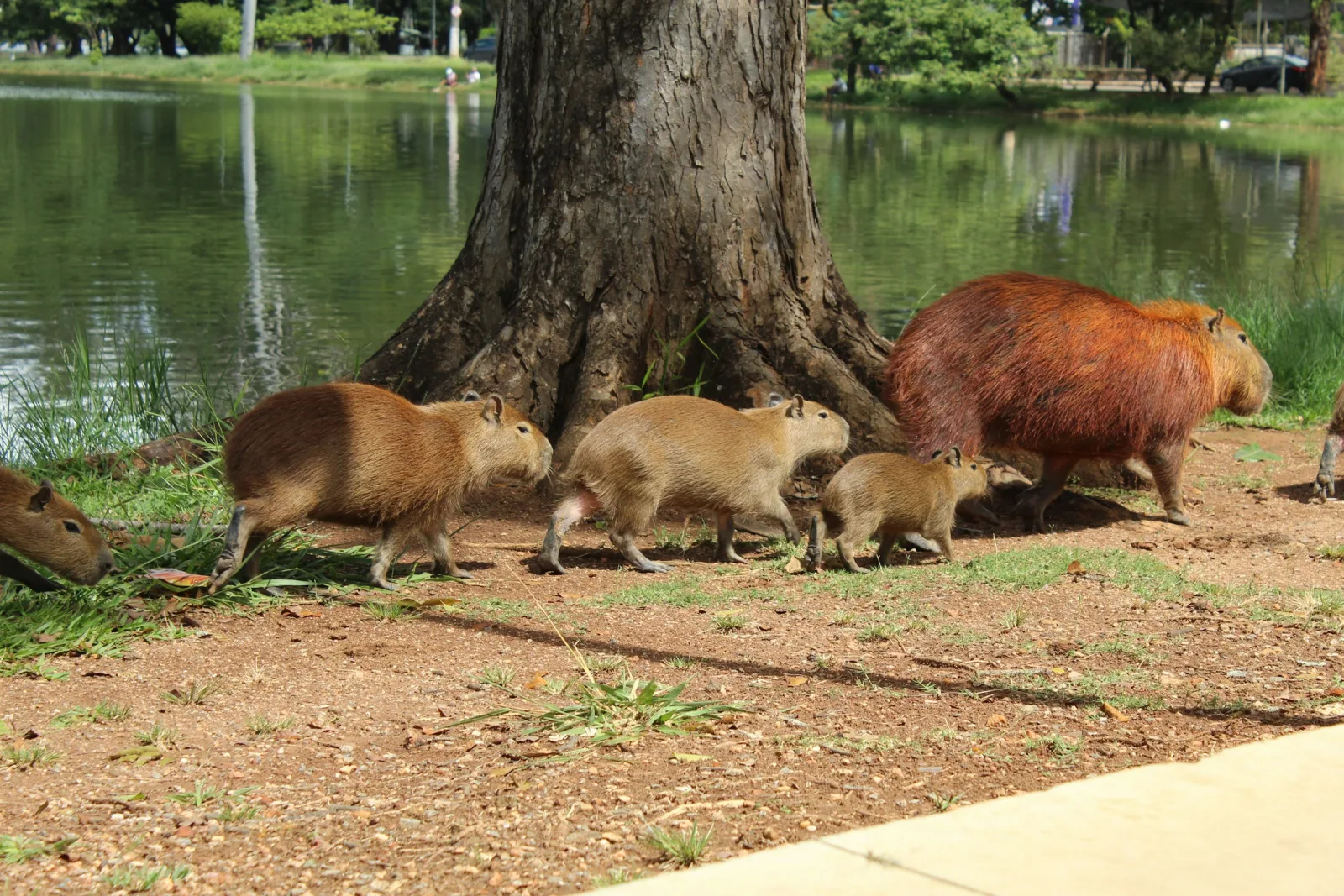
A group of capybaras, dozens of them, took up residence in Nordelta, an upscale gated community outside Buenos Aires built on former wetlands. They walked the manicured streets, grazed on golf courses, and refused to leave. The story went viral in Argentina. Every single newspaper, TV channel, and social media account covering it called them “los carpinchos.” Not capybaras. Not capíbaras. Carpinchos. The Nordelta meme became a global moment, but in Argentina it was always a carpincho story.
Two Words, One Animal: How to Read the Map
The word split is actually a useful diagnostic, once you know it.
If someone says “carpincho,” they are almost certainly from Argentina, Uruguay, Paraguay, or at least familiar with the Río de la Plata region. If they say “capybara,” they’re likely working from the English internet, international scientific literature, or Brazilian Portuguese influence. If they say “capibara,” they might be using more formal South American Spanish or have strong Brazilian cultural connections.
The two words compared:
| Capybara | Carpincho | |
|---|---|---|
| Origin | Tupí (coastal Brazil) | Guaraní / Río de la Plata Spanish |
| Used in | English, international Spanish, Brazil | Argentina, Uruguay, Paraguay |
| Cultural register | Global, internet, scientific | Regional, traditional, local identity |
| Same animal? | Yes | Yes |
Neither name is wrong. But only one of them gets you a knowing nod from a Buenos Aires leather vendor, connects you to gaucho history, and carries the memory of los carpinchos invading a luxury housing development built where their wetlands used to be.
The name difference isn’t really about linguistics. It’s about which communities shaped the word, which trade routes carried it, and which colonial encounter left the deeper mark. Tupí fed into Portuguese and traveled the world. Guaraní stayed in the basin and held on.
For a complete picture of where these animals actually live — including the Argentine river systems at the heart of carpincho country — see where capybaras live in the wild. And if you’re visiting Buenos Aires and hoping to spot one, the Buenos Aires encounter guide has the practical rundown. If you want to understand the carpincho leather tradition that made the word a household name long before TikTok existed, that guide goes deeper.
One last note: if you call them capybaras in Argentina, no one will be offended. They’ll just know you learned the word somewhere else. That’s the thing about names — they travel, but not always together.