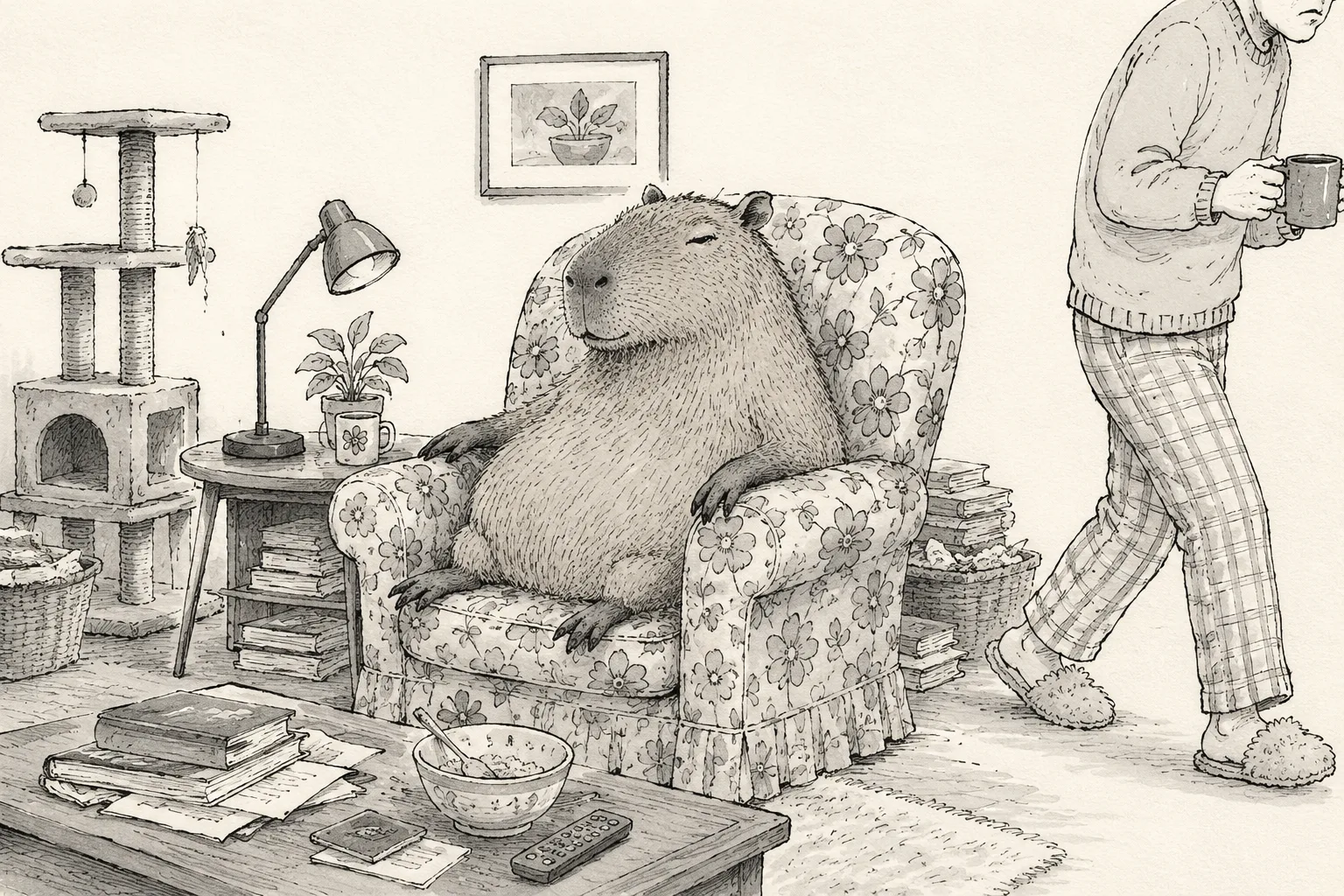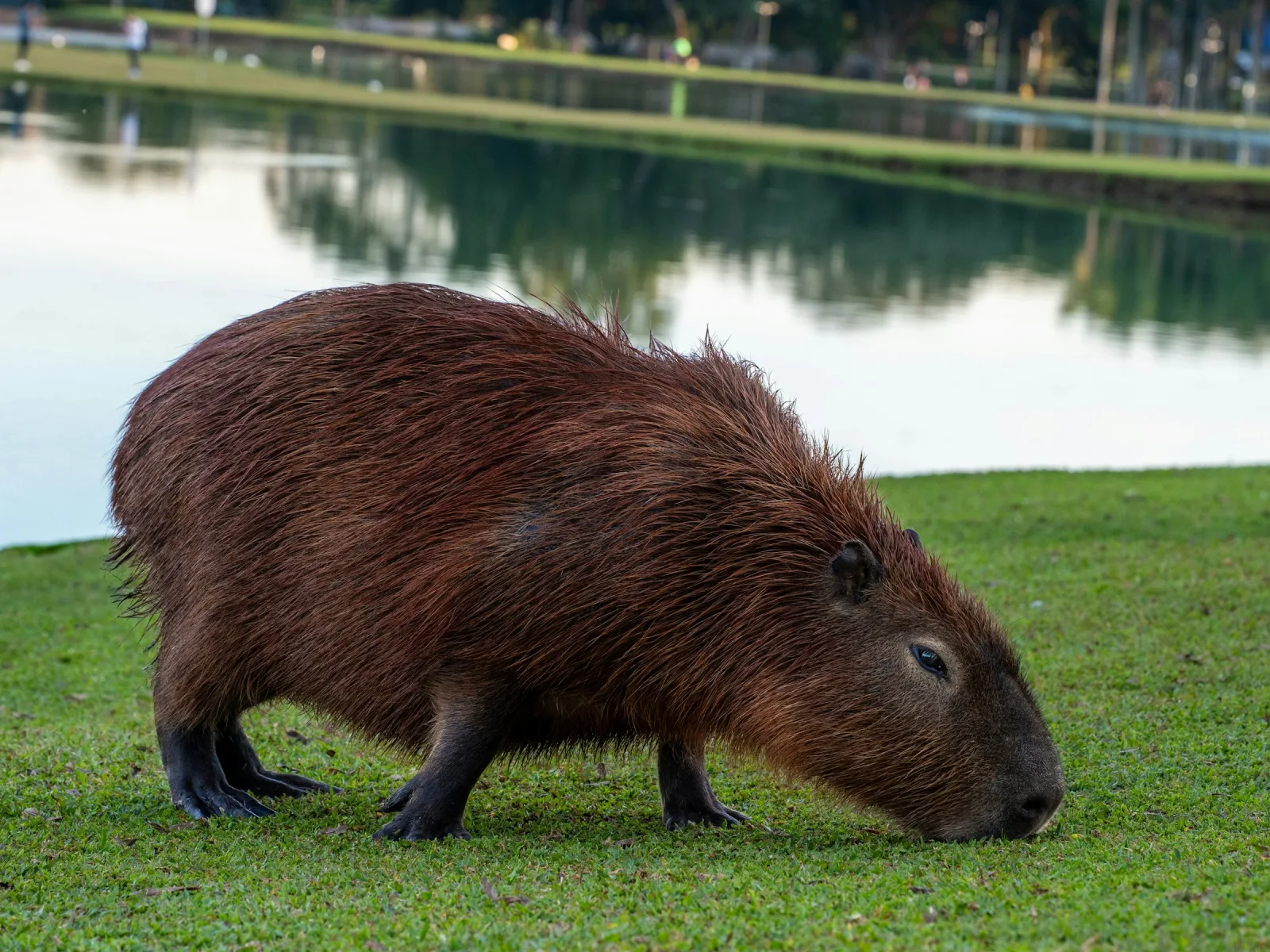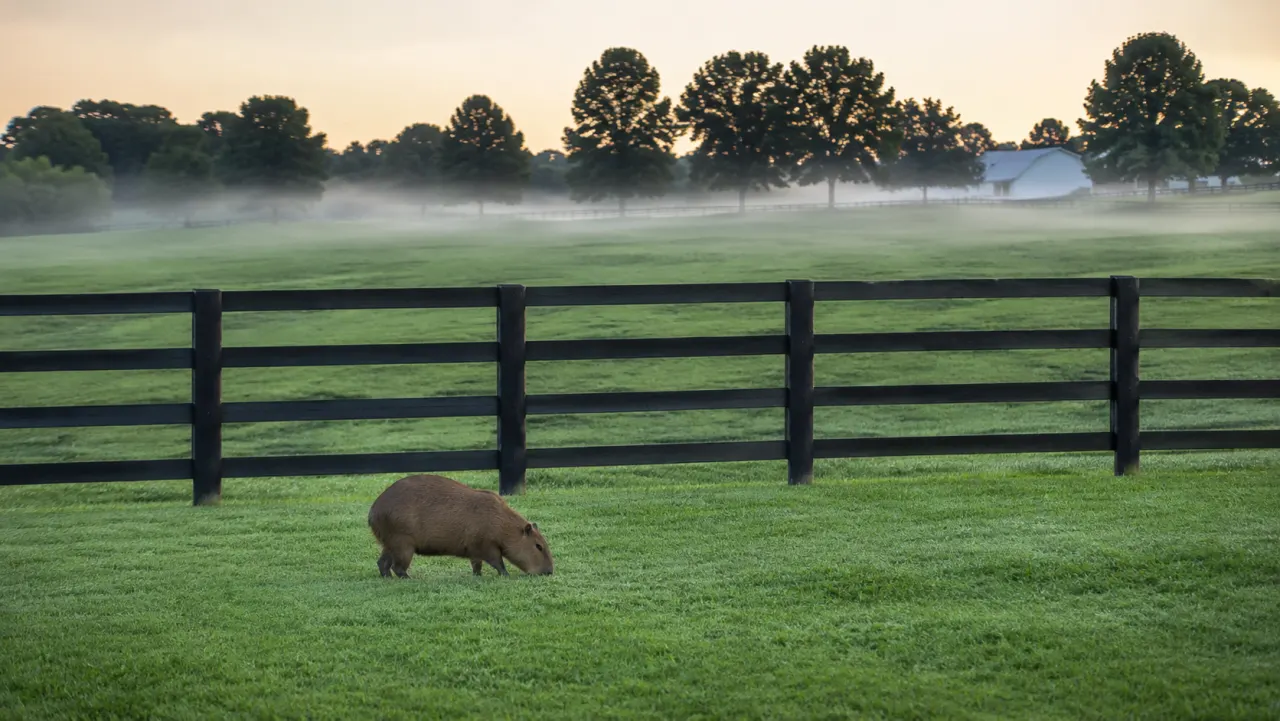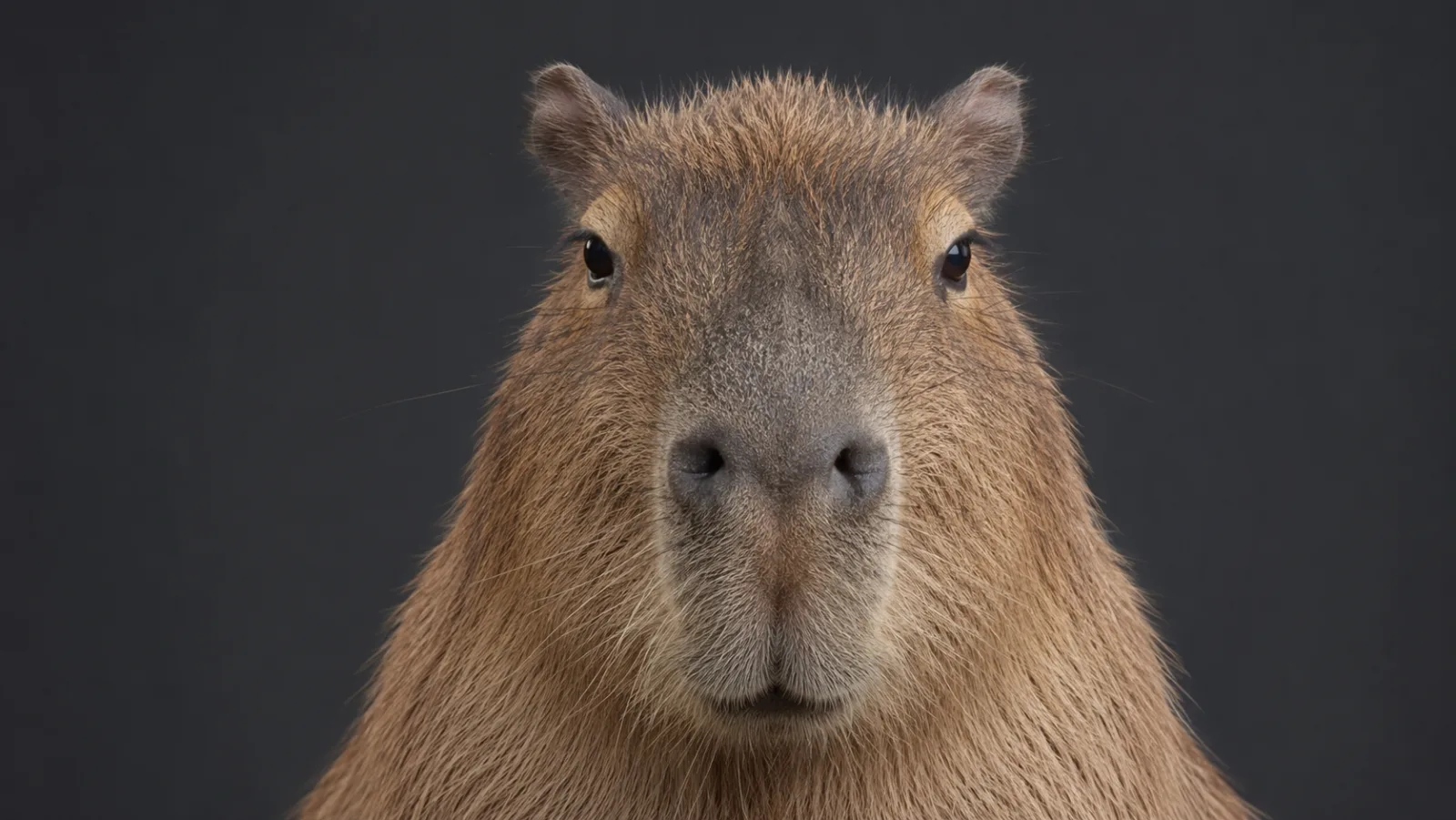

Every few weeks someone asks which licence you need to keep a capybara in Britain. The honest answer is that the licence does not exist, and the reason is more interesting than a species being left off a list.
No dangerous wild animal licence, because British law has no dangerous rodents
The Dangerous Wild Animals Act schedule is organised by animal group, and Rodentia is not one of the groups, in England and Wales or in Scotland.
What replaces it is a welfare duty with teeth, an exhibition licence that catches filming, a pet-selling licence that starts before any sale, a zoo threshold of seven days, and an escape offence you can commit by accident.
The Dangerous Wild Animals Act Has No Rodents In It
The Dangerous Wild Animals Act 1976 works by schedule: if your animal is on it, you need a licence from your local authority, and if it is not, you do not. Almost every article about exotic pets in Britain stops at “capybaras are not on the schedule,” which is true and slightly misses the point.
Read the schedule substituted for England and Wales by the Dangerous Wild Animals Act 1976 (Modification) (No.2) Order 2007 (S.I. 2007/2465) and count the groups:
Marsupials, primates, edentates, carnivores, pinnipedes, elephants, aardvark, odd-toed ungulates, even-toed ungulates, hybrids, cassowaries, ostrich, crocodilians, lizards and snakes, spiders, scorpions. That is all sixteen. The schedule licenses the aardvark, the pronghorn, and asses, horses and zebras, with the donkey and the domestic horse excepted by name.
It used to license the capybara too. The Explanatory Note to the 2007 Order says so outright, listing what came off:
The following animals are no longer listed (other than by way of exception) in the Schedule and so the provisions of the Act no longer apply to them: certain smaller primates (woolly lemurs, tamarins, night (or owl) monkeys, titis and squirrel monkeys), sloths, the North American porcupine, the capybara, crested porcupines…
Scotland did the same a year later, in S.S.I. 2008/302, and its schedule is built on the same group headings with no Rodentia either.
So this is not an animal Parliament forgot. It is one that sat on the dangerous wild animals list for three decades, was looked at in a review, and was taken off.
So the DWAA question closes quickly, and everything interesting happens in the five regimes underneath it.
The Rule That Actually Binds Is a Welfare Duty
Animal Welfare Act 2006 s.9(1): “A person commits an offence if he does not take such steps as are reasonable in all the circumstances to ensure that the needs of an animal for which he is responsible are met to the extent required by good practice.”
This is not a licence you apply for. It is a standing duty, enforceable against anyone responsible for any vertebrate, and it is the provision most likely to be used against a badly kept capybara in Britain. s.9(2) then defines what “needs” means, and the list is short enough to set out in full:
| s.9(2) | The need | What it means for a capybara |
|---|---|---|
| (a) | A suitable environment | Water it can get into, not a bowl. Shelter that works in a British winter |
| (b) | A suitable diet | Grass and hay as the base. AZA collections give a gram of ascorbic acid a day, because a vitamin-C-deficient capybara gets scurvy |
| (c) | To be able to exhibit normal behaviour patterns | Grazing, wallowing, swimming. A lawn is not a substitute |
| (d) | To be housed with, or apart from, other animals | The one that catches most owners. See below |
| (e) | Protection from pain, suffering, injury and disease | An exotic vet who has seen the species before |
The Clause That Makes One Capybara the Risky Number
Subsection (d) is doing more work than it looks. “Any need it has to be housed with, or apart from, other animals” is a statutory need, on the same footing as food and shelter.
Capybaras live in groups. The AZA Capybara Care Manual treats group housing as baseline husbandry rather than enrichment, and puts wild groups at about ten animals on average, with temporary aggregations far larger. So in England and Wales, a single capybara kept alone is not a smaller version of keeping two. It is the version that invites an s.9 prosecution, because the animal has an identified need that the arrangement does not meet.
"No licence required" makes a capybara sound like an easy first exotic. The welfare duty then requires at least two of them, heated winter shelter, and water deep enough to submerge in. The legal barrier is low and the practical one is not.

Exhibition, and the Sentence About Recording Visual Images
This is the part almost nobody knows about, and it is the reason the UK is a more regulated place to own a capybara than the DWAA answer suggests.
The Animal Welfare (Licensing of Activities Involving Animals) (England) Regulations 2018 (S.I. 2018/486), Schedule 1, Part 6, paragraph 10, makes the following a licensable activity:
Keeping or training animals for exhibition in the course of a business for educational or entertainment purposes — (a) to any audience attending in person, or (b) by the recording of visual images of them by any form of technology that enables the display of such images.
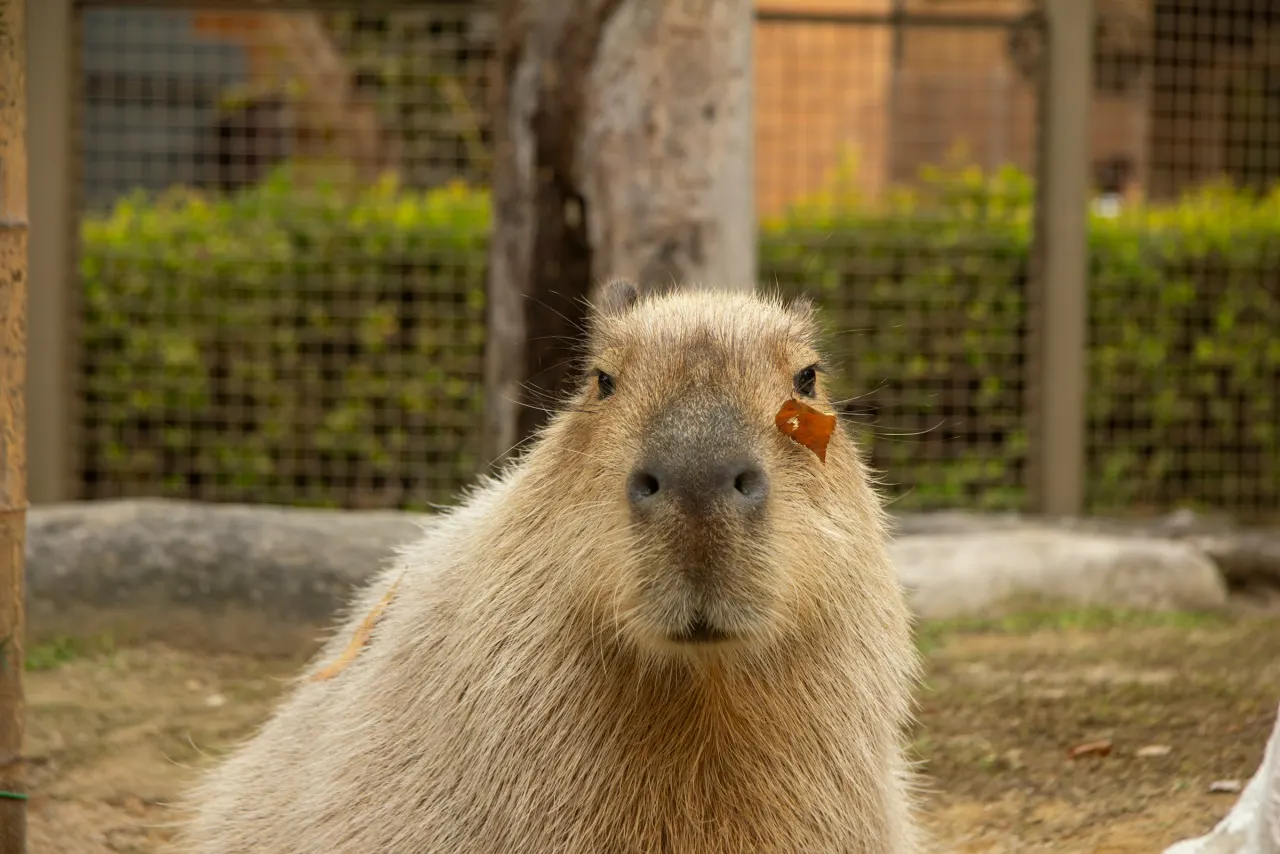
Limb (b) is the modern one. Filming an animal for an audience, in the course of a business, is exhibition in England whether or not anybody attends in person. A capybara account that makes money is far closer to a licensable activity than its owner probably thinks. The licence comes from the local authority, with a star rating and inspections attached.
Paragraph 11 carves out military, police and sporting purposes, anything already covered by a zoo licence, and licensed travelling circuses. That last one is now spent: the 2012 circus regulations lapsed in January 2020 when the Wild Animals in Circuses Act 2019 ban took effect. It does not carve out social media.
Seven Days in Twelve Months, and You Are a Zoo
If people come to you, the threshold is lower than almost anyone expects.
Zoo Licensing Act 1981 s.1(2) defines a zoo as “an establishment where wild animals … are kept for exhibition to the public otherwise than for purposes of a circus … and otherwise than in a pet shop.” s.1(2A) then applies the Act “to any zoo to which members of the public have access, with or without charge for admission, on seven days or more in any period of twelve consecutive months.”
Seven days. Not seven consecutive days, and not seven paying days. “With or without charge” closes the free-open-day argument. A smallholding that lets visitors meet the capybaras one Saturday a month is over the line by August.
Stays a private animal
- Kept at home, no business, nobody paying
- Friends and family visiting, not "the public"
- Filming for your own enjoyment, not as a business
- Still fully subject to Animal Welfare Act 2006 s.9
Becomes a licensed activity
- Any business exhibiting the animal, in person or on camera
- Public access on seven days in twelve months, free or paid
- Selling offspring as pets, or keeping them with that in view (Part 2)
- Boarding or hiring the animal out
The Pair Becomes a Business Before You Sell Anything
s.9(2)(d) pushes you toward two animals. Two animals breed. And the moment breeding is the plan, a fifth regime opens: the same 2018 regulations, a different Part.
Schedule 1, Part 2, paragraph 2 makes this licensable:
Selling animals as pets (or with a view to their being later resold as pets) in the course of a business including keeping animals in the course of a business with a view to their being so sold or resold.
Read the clause in bold twice. It does not licence the sale. It licences the keeping, from the point at which you are keeping the animals with a view to selling their young. Nothing has to change hands for the activity to have started, and there is no litter threshold the way there is for dogs in Part 5. One intended sale is enough to put you inside it.
Part 1 of the same Schedule sets the business test, and it is undemanding: a local authority must consider whether the operator “makes any sale by, or otherwise carries on, the activity with a view to making a profit, or earns any commission or fee from the activity.”
So the sequence that starts with “no licence required” can end at a licensed pet-selling business in two steps, neither of which felt like a decision: keep two because one would be an offence, then sell one of the young to a friend.
The Offence You Commit by Accident
Wildlife and Countryside Act 1981 s.14(1), in England and Wales: it is an offence if a person “releases or allows to escape into the wild any animal which — (a) is of a kind which is not ordinarily resident in and is not a regular visitor to Great Britain in a wild state; or (b) is included in Part I, IA or IB of Schedule 9.”
Schedule 9 does not name the capybara, and it does not have to. Limb (a) covers everything that is not naturally here, permanently, because it always will be.
The word to notice is “allows.” Not releases. A gate left open, a fence undermined, a flooded paddock in February: none of that requires anyone to have decided anything. The AZA puts an adult at 27 to 79 kg, and the animal swims and digs, so the fence is a bigger project than it looks.
One qualifier, since the section reads as absolute and is not quite: s.14(4ZA) disapplies limb (a) for species on the Annex to Commission Implementing Regulation (EU) 2016/1141. The capybara is not on that list, so the answer here does not change.
England, Scotland, Wales and Northern Ireland Are Not One Answer
The DWAA result is the same across Great Britain, because both schedules omit rodents. Everything else diverges:
- England — Animal Welfare Act 2006, plus the 2018 licensing regulations described above.
- Wales — Animal Welfare Act 2006 applies, but the activity-licensing regulations above apply in England only. Welsh licensing of exhibition and pet sales sits under separate Welsh instruments; check with the local authority rather than assuming the English regime.
- Scotland — the welfare duty is s.24 of the Animal Health and Welfare (Scotland) Act 2006 rather than the 2006 Act of the UK Parliament. The needs list is s.24(3) and it is not identical: Scottish limb (e) protects against “suffering, injury and disease” and omits the word pain. The DWAA schedule is the one substituted by S.S.I. 2008/302. Scotland also has its own substituted s.14, which drops the Schedule 9 test and asks instead whether the animal ended up outside its native range — a test a capybara fails anywhere in Britain.
- Northern Ireland — a separate jurisdiction with its own welfare and wildlife legislation, not covered here.
One thing this page does not cover: the Welsh and Northern Irish licensing layers. Wales keeps the Animal Welfare Act but not the 2018 activity regulations, and Northern Ireland runs its own welfare and wildlife statutes entirely. Neither was read here, and a paraphrase of somebody’s summary of them is not worth what it would cost you.
The Calls, and Exactly What to Ask
-
Your local authority's animal licensing team
Ask whether they treat what you plan to do as an activity under Schedule 1 of S.I. 2018/486, and get the answer by email. They also issue DWAA licences, so they can confirm in writing that a capybara needs none.
-
An exotics vet, before you buy
Not after. s.9(2)(e) is a legal duty, and a vet who has never seen the species is not a plan.
-
Your insurer, and your landlord or mortgage lender
Public liability for a 79 kg animal is not a standard pet policy, and leasehold covenants stop more exotic animals in Britain than statute does.
-
The breeder or seller, about the pair
s.9(2)(d) means you are buying two animals or you are buying a problem. Anyone willing to sell you one alone has told you something about their standards.
And the same thing as a paper trail, because a council officer will ask which section you were told about:
| Who to ask | What to ask | Why it matters | What changes the answer |
|---|---|---|---|
| Local authority licensing | Is what I am describing an activity under Schedule 1 of S.I. 2018/486, and which Part? | Parts 2 and 6 both reach a capybara plan that most owners would not call a business | Whether money is involved, in any form, including ad revenue |
| Local authority licensing | Will you confirm in writing that no DWAA licence is required for this species? | They issue DWAA licences, so their “no” is the one that counts | Nothing — the schedule has had no rodent since 2007 |
| Local authority, zoo team | At what point do you treat visitor access as engaging the Zoo Licensing Act? | s.1(2A) is seven days in twelve months, free or paid | How often people come, not how much they pay |
| Exotics vet, before purchase | Have you treated this species, and what is your out-of-hours arrangement? | s.9(2)(e) is a legal duty and a list of local vets is not a plan | Where you live, mostly |
| Insurer, landlord or lender | Is a 79 kg non-native mammal covered, or excluded? | Covenants and policy exclusions stop more of these than statute does | Tenure, and the wording of the policy |
Misconceptions UK Readers Should Drop
“They’re banned under the Dangerous Wild Animals Act.” They are not on the schedule, and no rodent is. The Act is not the obstacle.
“No licence means no rules.” The Animal Welfare Act 2006 applies to every animal you are responsible for, with or without a licence, and it is the provision that actually gets enforced.
“I’ll just keep one and see how it goes.” That is the fact pattern s.9(2)(d) was drafted for.
“Zoos are big places.” Seven days of public access in a year, free or paid, and the Zoo Licensing Act 1981 is your problem too.
“It’s fine, they already live wild in Britain.” They do not. Any that get out are covered by s.14(1)(a), which is the point of the section.
The Practical Takeaway
Britain licenses animals that can kill people, and a capybara has never been known to, so nobody ever wrote it a licence. What Britain does instead is regulate the relationship: what the animal needs, who gets to look at it, and what happens if it gets out.
In practice that means a pair rather than one, real water rather than a trough, an exotics vet lined up before the animal arrives, and a written answer from your council before any money moves, plus a licence if you intend to film or charge. If what you actually want is to meet one, where to see capybaras in the UK lists the places that already hold the licences, and what it costs to meet a capybara is the cheaper version of this entire question.
Current as of October 6, 2026. Licensing regimes are amended on someone else’s schedule, not yours, and the Welsh and Northern Irish layers were not read for this page. Confirm the Part and the section with your own local authority’s licensing team before money changes hands or an animal moves. This is a screening path, not legal advice.