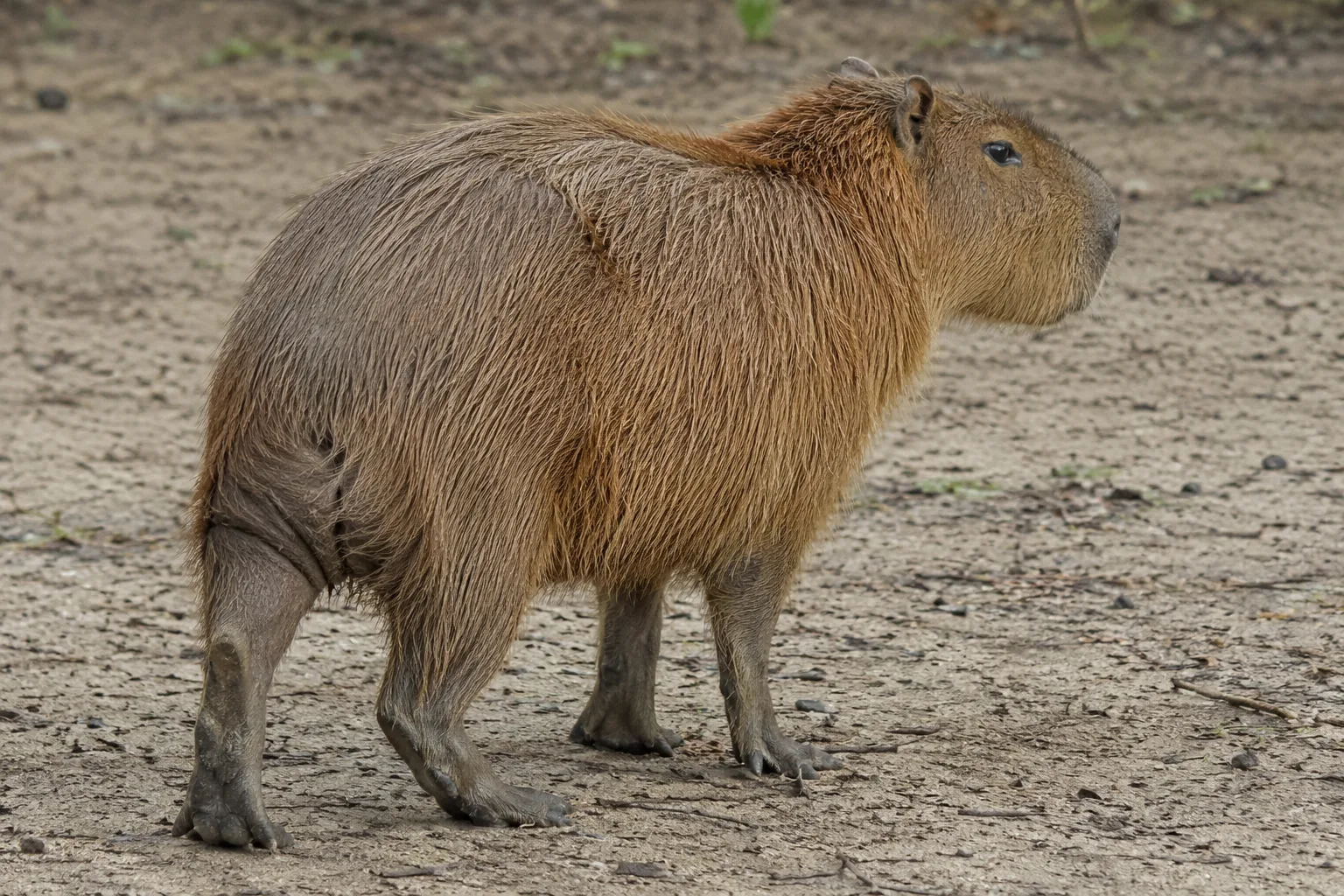

Brazil is capybara country. That is exactly why the legal question deserves more respect, not less.
Capybaras are native Brazilian wildlife. That does not mean you can catch one, keep one, buy one casually, or turn a park capivara into a pet. Legal possession depends on authorized sources, legal origin, identification, and federal or state wildlife rules.
The animal may be common in some places. The law still has a spine.
Native Does Not Mean Free To Keep
IBAMA guidance on wild animals is clear in practical terms: the legal way to possess a wild animal is through an authorized breeder or commercial establishment, with the required documentation. Brazil’s wildlife systems also include categories for captive fauna enterprises, such as commercial breeders, conservation breeders, scientific breeders, zoos, and other authorized uses.
That is a different world from picking up a young capybara near a lagoon because it looked lonely. It was not lonely. It was living there.
| Scenario | Legal concern |
|---|---|
| Wild capybara in a park or wetland | Do not capture or harass |
| Animal from a vague seller | Legal origin may be missing |
| Authorized breeder or establishment | Documentation and registration must match |
| Public display or commercial use | Enterprise authorization and welfare rules may apply |
| State-specific possession | State environmental agency may control the process |

The Legal Source Is The Whole Story
IBAMA’s 2015 normative instruction defines an animal kept as a pet or companion, in this wildlife context, as coming from a native wild species, born in an authorized commercial breeder for that purpose, and kept in domestic captivity without slaughter, breeding, scientific, commercial, laboratory, or exhibition purposes.
That definition tells buyers what to look for: authorized source first. Legal origin first. Paper that matches the animal first.
If a seller cannot show authorization, identification, invoice, transfer record, and species-specific legal origin, the answer is no. Not “maybe.” Not “this is Brazil, everyone does it.” No.
IBAMA also notes that people keeping wild animals without permission and acquired clandestinely can voluntarily deliver them to IBAMA and, under the guidance described, avoid accountability under certain conditions. That is a rescue path for a bad situation, not a shopping strategy.
Wild Capybaras Are Not Pet Inventory
Wild capybaras in Brazil can be urban neighbors, agricultural conflicts, wetland residents, road hazards, and local celebrities. They are not free pets.
Capybaras also live in groups. Removing one animal disrupts the group and creates a captive-care problem immediately. A baby capybara is not a cute exception; it is usually the worst possible candidate for a human impulse decision.
If your capybara plan begins with “we found it,” the plan is already broken. Call the relevant environmental authority or wildlife rescue channel instead.
Where Brazilians Get The Answer Wrong
Living in capybara country produces its own folklore. Some of it sounds reasonable at a barbecue and falls apart the moment a wildlife agency asks for paperwork. Here is the version worth keeping in your head.
| Myth | Better answer |
|---|---|
| It is native, so possession is basically free | Native status describes where the species belongs, not who may own one. Brazil still routes wild animals through authorized sources and registration. |
| The one near my street has no owner, so it is up for grabs | An unowned wild animal living in its habitat is not abandoned property. Capture without authorization can be treated as illegal possession. |
| A baby is fine because it is small and harmless now | A young capybara grows into a large, water-dependent herd animal. Small today is a temporary, misleading reason. |
| If I get one quietly, nobody will check | Legal origin can be requested at transport, sale, vet visits, or complaints. “Nobody asks” is luck, not a legal position. |
| Any seller offering a capivara must be licensed | Plenty are not. The burden is on the seller to prove authorization, identification, and legal origin, and on you to refuse if they cannot. |
The honest opinion here, and it is mine: the riskiest capybara decisions in Brazil are almost never made by people trying to break the law. They are made by people who assume “common” means “allowed” and skip the boring step of asking the agency in writing. That assumption is where most trouble starts.
What Legal Origin Actually Costs You
A capybara that clears the legal questions is still the expensive, demanding part. The paperwork is the cheap half of the job.
Water is not optional decoration. Capybaras are semi-aquatic, and they swim, cool down, escape stress, and mate near water, so a real enclosure means standing water and drainage, not a garden hose and a kiddie pool. They are herd animals, and solitary housing is a documented welfare stressor, so the honest version of ownership is at least a pair, which doubles space, food, and vet load. Like guinea pigs, they cannot make their own vitamin C and need it supplied in the diet, on top of a steady supply of grasses and forage that their continuously growing teeth are built to grind. Add an exotics-capable veterinarian who can handle dental, skin, parasite, and injury issues, because a standard small-animal clinic usually cannot. None of that is exotic-pet glamour. It is a livestock-grade commitment with a wildlife rulebook attached, for an animal that can live a decade or more in good captive care.
The Paper Trail You Are Actually Building
Possession in Brazil is less about owning an animal and more about holding a chain of documents that an agency can verify. If you cannot reproduce the chain on request, you do not really have a legal animal, you have a problem waiting for a complaint.
| Agency / document | What to ask | Why it matters | What changes the answer |
|---|---|---|---|
| IBAMA or state environmental agency | Which rules govern possession of Hydrochoerus hydrochaeris here? | Federal and state wildlife rules define whether possession is even possible | Different state, updated normative instruction, or a use category you did not expect |
| Authorized breeder or establishment | Show authorization, legal origin, identification, and transfer records | These documents are the difference between a pet and seized wildlife | Missing or mismatched paperwork voids the whole purchase |
| SisFauna or state management system | Is the enterprise and the individual animal registered? | Registration is how the animal stays traceable and legal over time | An unregistered animal, or a registration that does not match the animal |
| City or county animal control | Do local zoning, nuisance, or enclosure rules apply? | A federal yes can still meet a local no | Municipal limits on wild or large animals, enclosure standards, neighbor complaints |
| Environmental lawyer | Does this exact plan comply, end to end? | Generic answers miss state and use-case specifics | The detail you did not think mattered usually does |
Brazilian Habitat Still Does Not Make A House Work
Brazil’s climate and landscape can match capybara biology far better than a northern apartment. That does not make household ownership easy.
Animal Diversity Web describes capybaras as semi-aquatic, group-living grazers. IUCN lists the species as Least Concern globally, but that conservation status does not remove animal-welfare law or legal-origin requirements. A private setup still needs secure space, clean water, forage, shade, social housing, veterinary access, and disease management.
| Need | Why it matters |
|---|---|
| Group housing | Capybaras are social animals |
| Water | They swim, thermoregulate, mate, and flee near water |
| Legal source | Native wildlife cannot be casually captured |
| Veterinary care | Dental, skin, parasite, and injury issues need expertise |
| Containment | Escapes create animal and traffic risks |

The Brazil Verification Checklist
Current as of June 2026: this is an editorial starting point, not legal advice. Recheck IBAMA, the relevant state environmental agency, and local rules in writing before acting near the scheduled November 2026 publish date.
Before keeping, buying, transporting, breeding, or displaying a capybara in Brazil, collect written answers.
| Who to contact | What to ask |
|---|---|
| IBAMA or state environmental agency | Which rules apply to possession of Hydrochoerus hydrochaeris in this state? |
| Authorized breeder or establishment | Can you prove authorization, legal origin, identification, and transfer records? |
| SisFauna or state system authority | Is the enterprise or animal properly registered? |
| Local municipality | Are local animal, zoning, nuisance, or enclosure rules relevant? |
| Veterinarian experienced with wild mammals | Can you treat capybaras and document welfare needs? |
| Environmental lawyer | Does the exact plan comply with federal and state wildlife law? |
For readers outside Brazil, this is the lesson: “native” does not mean “casual.” For readers in Brazil, the same lesson has sharper teeth. Capivaras belong first to Brazil’s wetlands, riverbanks, and managed authorized settings. A private home has to earn its answer on paper before it earns anything else.
The Practical Version
If you take one thing from this, take the sequence. Ask the wildlife agency in writing which rules apply in your state. Only deal with a source that can prove authorization, identification, legal origin, and transfer records, and walk away the second the paperwork is vague. Confirm the animal is or will be properly registered. Check the local municipality separately, because a federal yes can still meet a local no. And solve the welfare math, water, a companion, vitamin C, forage, and an exotics vet, before you ever solve the wanting-one math. In that order, the answer is usually slow. Slow is the correct speed here.
A Note On What This Is
This guide is general information, not legal advice. It reflects what was on the books as we understood it in June 2026, and Brazilian wildlife rules can change at the federal and state level without much warning. Treat every “is this allowed” question as a permit question until the relevant agency confirms it in writing. Before you keep, buy, transport, breed, or display a capybara in Brazil, contact IBAMA and your state environmental agency, check your local municipal office, and talk to a qualified environmental lawyer about your exact situation. Local rules can still say no even when everything else looks fine.