New pups in eastern Hungary
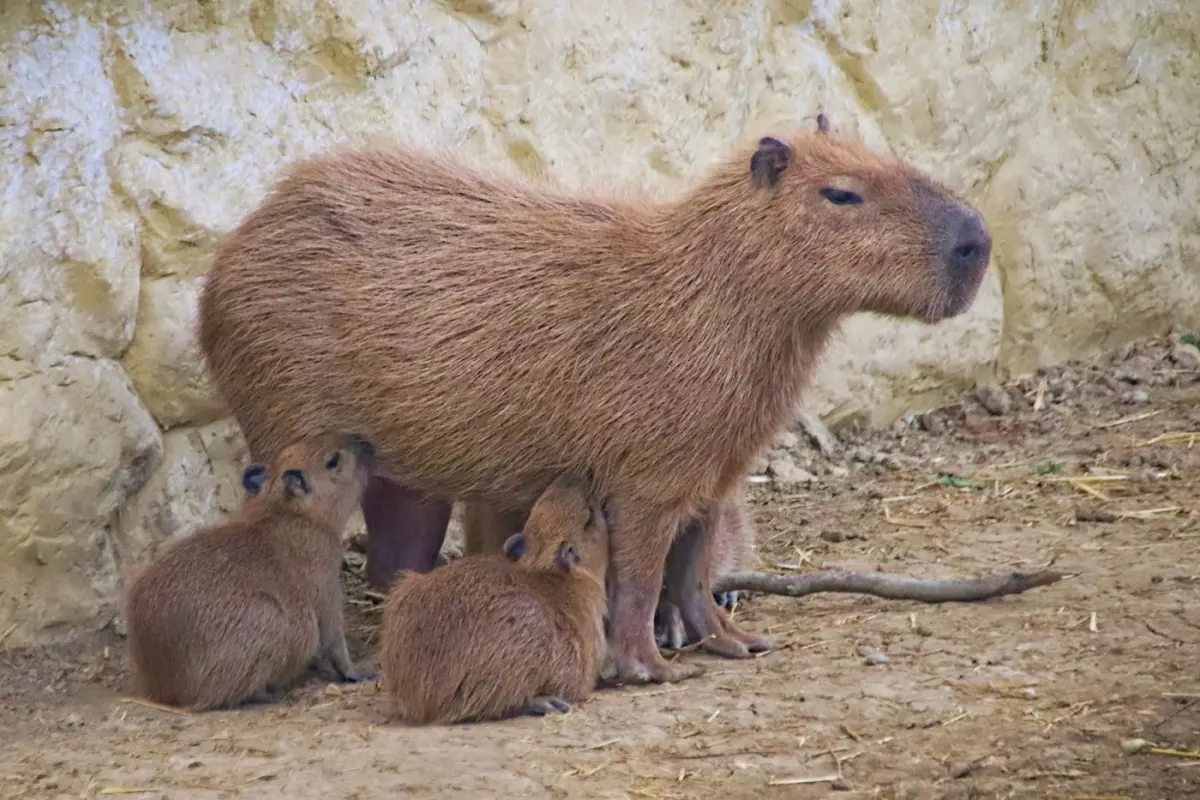
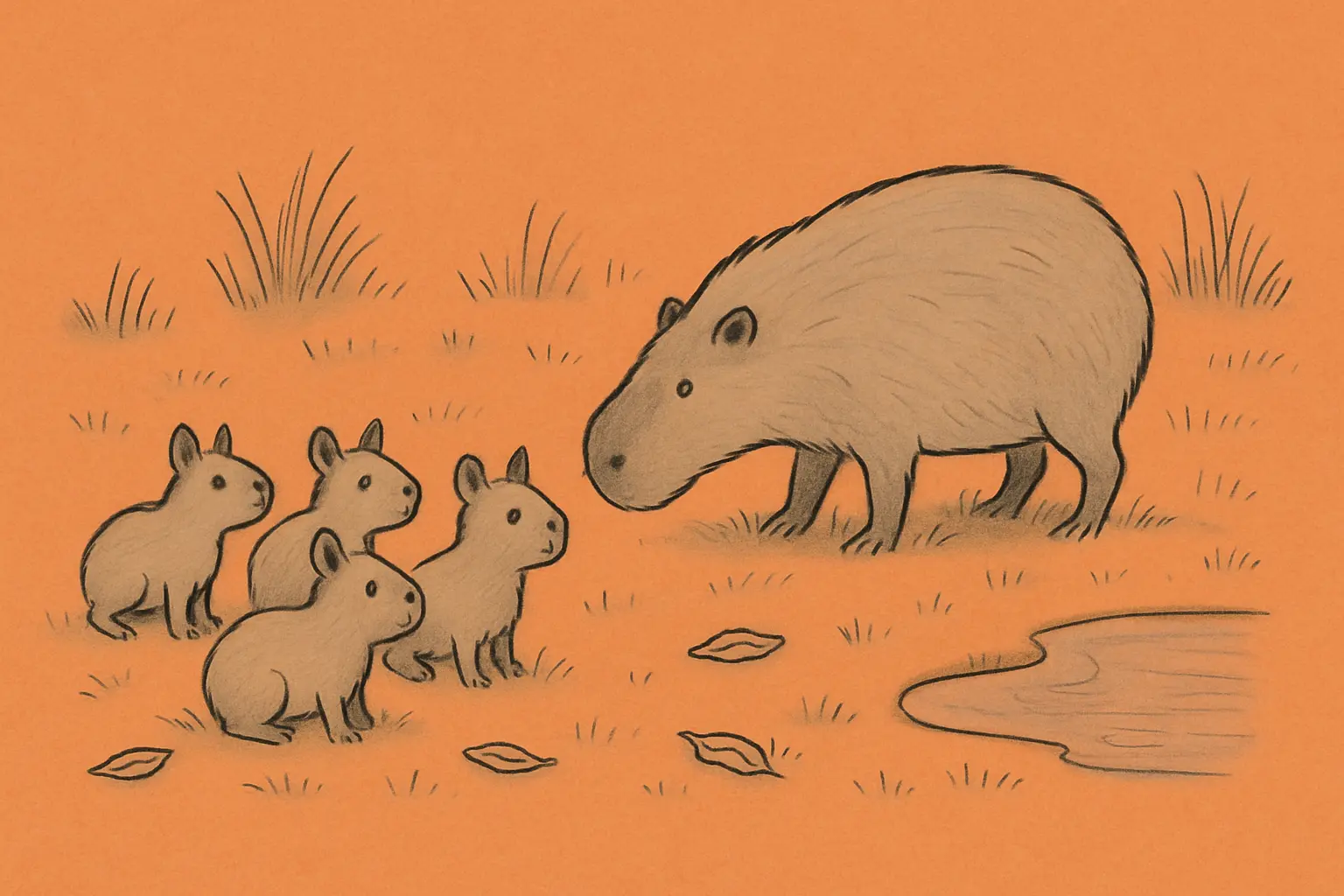
Debrecen Zoo has announced the birth of several capybara pups, sharing the news on social media alongside a short video of the newcomers. The footage shows the young animals scampering around their South America enclosure, investigating the dry resting areas, and following their mother into the pool.
According to Daily News Hungary, the pups settled into their surroundings quickly, which is consistent with how capybara young behave in the wild. Capybara pups are precocial — born with eyes open, already mobile, and capable of eating solid food within days — so the energetic footage is less surprising than the zoo’s social media framing might suggest.
What the zoo actually released
The announcement came via social media rather than a formal press statement, and the primary evidence is a short video clip. Daily News Hungary’s report notes the footage attracted attention online, though no specific view counts or engagement figures were provided.
The zoo has not publicly confirmed how many pups were born, referring only to “several.” Sex, individual names, and birth dates have not been disclosed in the available reporting.
Size, range, and what “largest rodent” actually means
Capybaras are native to South America, where they occupy riverbanks, wetlands, and flooded grasslands from Panama down to northern Argentina. They are the largest rodents on earth — a fact that gets repeated so often it has lost some of its punch, but the numbers behind it are genuinely worth pausing on.
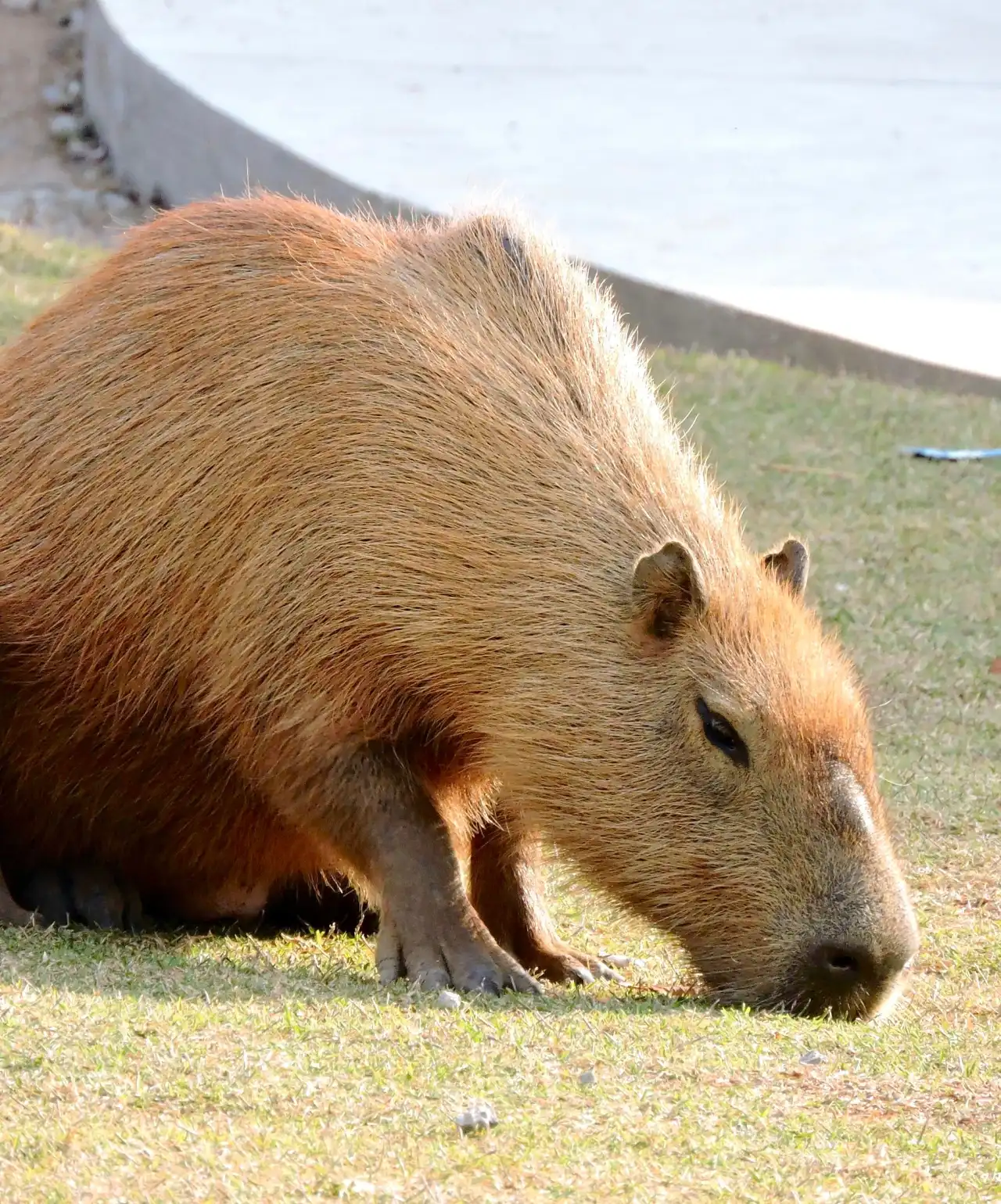
Adults typically measure between 106 and 134 centimetres in length and stand roughly 50 to 62 centimetres at the shoulder. Weight ranges from 35 to 66 kilograms for typical individuals, but according to the source reporting, exceptional females have been recorded exceeding 90 kilograms. That is a large dog’s weight in an animal more closely related to a guinea pig than to anything most Europeans would recognise.
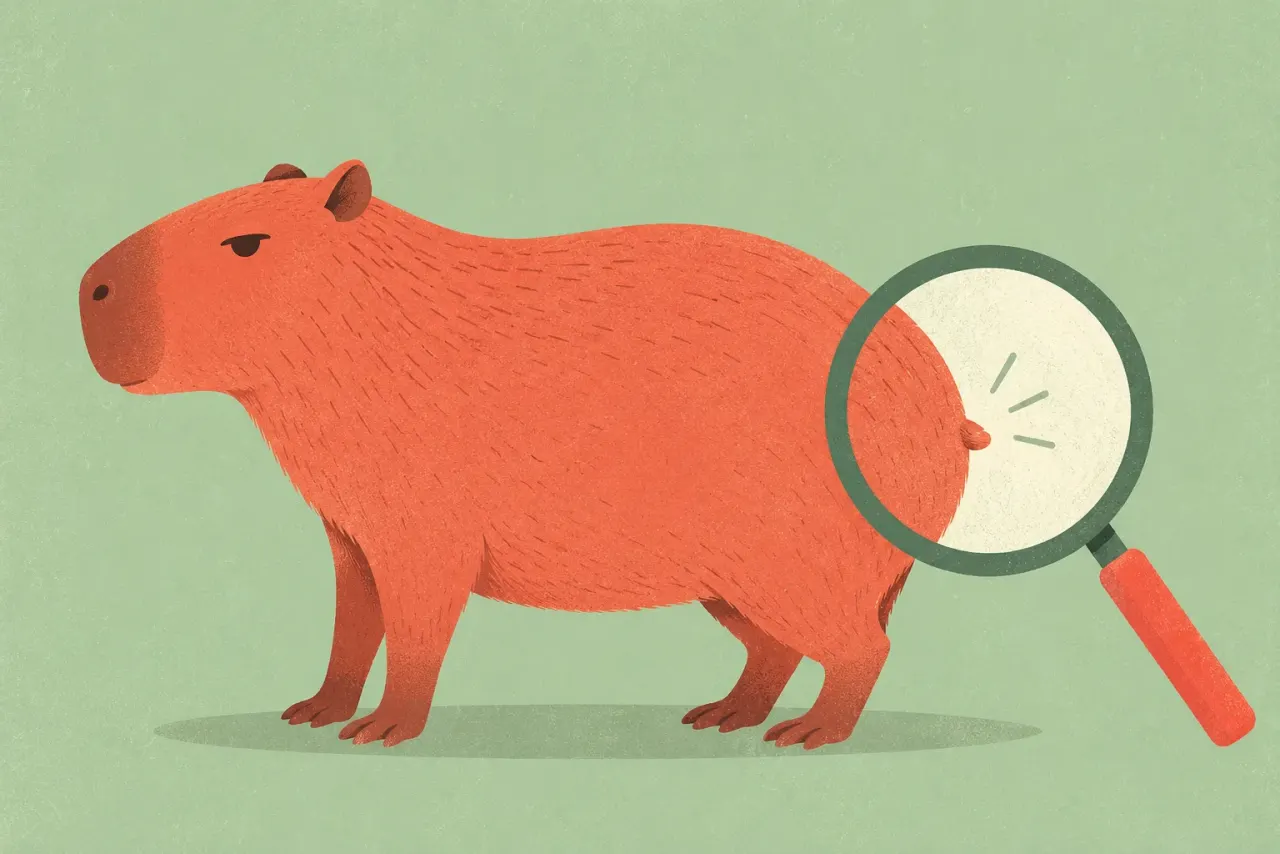
Here is the misconception worth correcting: capybaras are often described as “water pigs” — the Hungarian word vízidisznó translates directly to that — and the pig comparison is understandable given their barrel-shaped bodies and semi-aquatic habits. But they are rodents, not suids. Their closest relatives are guinea pigs and rock cavies, not pigs or hippos, despite what the silhouette might imply.
The semi-aquatic angle
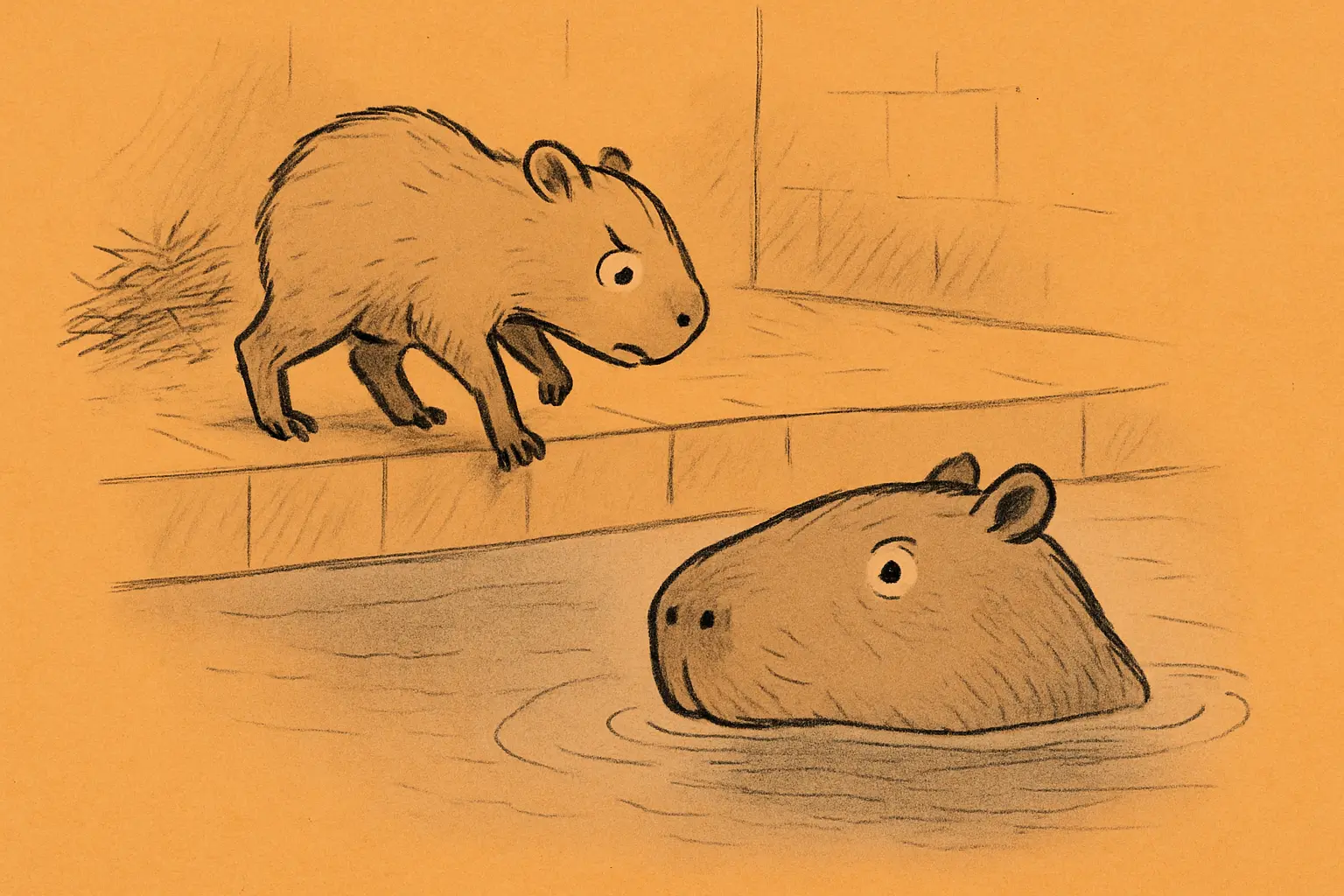
The pups following their mother into the pool is not just a cute detail for the video. Capybaras are genuinely built for water. They have slightly webbed feet, dense waterproof fur, and eyes, ears, and nostrils positioned high on their heads — all adaptations that allow them to move through water while keeping their senses active above the surface.
One of the more striking facts about the species: capybaras can hold their breath underwater for up to five minutes, a capability they use to evade predators in the wild. For a pup a few days old to be jumping into a zoo pool is, in that context, entirely on-brand behaviour. They are not being brave. They are being capybaras.
The Grumpy Capy take
Capybara birth announcements have become a reliable fixture of zoo social media, and Debrecen’s follows the standard template: short video, enthusiastic caption, no hard numbers. The absence of a confirmed pup count, birth date, or any veterinary detail is not unusual for this kind of post, but it does mean there is not much to verify beyond “pups exist and appear healthy.”
That is fine. Not every story needs to be a deep investigation. Healthy capybara pups at a zoo in Hungary is a straightforward piece of good news, and the footage of them following their mother into the water is the most informative thing in the entire report.
What is mildly worth noting is that the source material leans on “friendly” and “calm” as the primary capybara descriptors, which is the kind of generalisation that flattens a genuinely interesting animal into a vibe. Capybaras are social, communicative, and physiologically remarkable. They deserve slightly better copy than “gentle giants.” The pups, for their part, seem unbothered.