How a pup gets a name in 2026
Edinburgh Zoo announced the name Bru on its website and Instagram on or around 12 June 2026, roughly five weeks after the birth. According to AOL’s report, the Royal Zoological Society of Scotland — the wildlife conservation charity that operates both Edinburgh Zoo and Highland Wildlife Park — drew up a shortlist of four distinctly Scottish options and put them to a public vote.
The zoo described the pup as having “undeniable Scottish charm.” That is the kind of phrase a press team earns its salary writing. What is harder to argue with is that Bru, at roughly six weeks old, has apparently been zooming around his habitat with enough energy to justify the coverage.
The name that almost was
Before the official shortlist existed, the comments section had already reached a verdict. “David Attenbara” dominated fan suggestions, a portmanteau tribute to Sir David Attenborough, who shares Bru’s exact birthday of 8 May. Attenborough turned 100 this year.
It is a genuinely good joke, and it lost. The zoo went with Bru — a nod to the iconic Scottish soft drink Irn-Bru — which is at least honest about what the naming exercise was really for.
What Bru’s first weeks actually look like
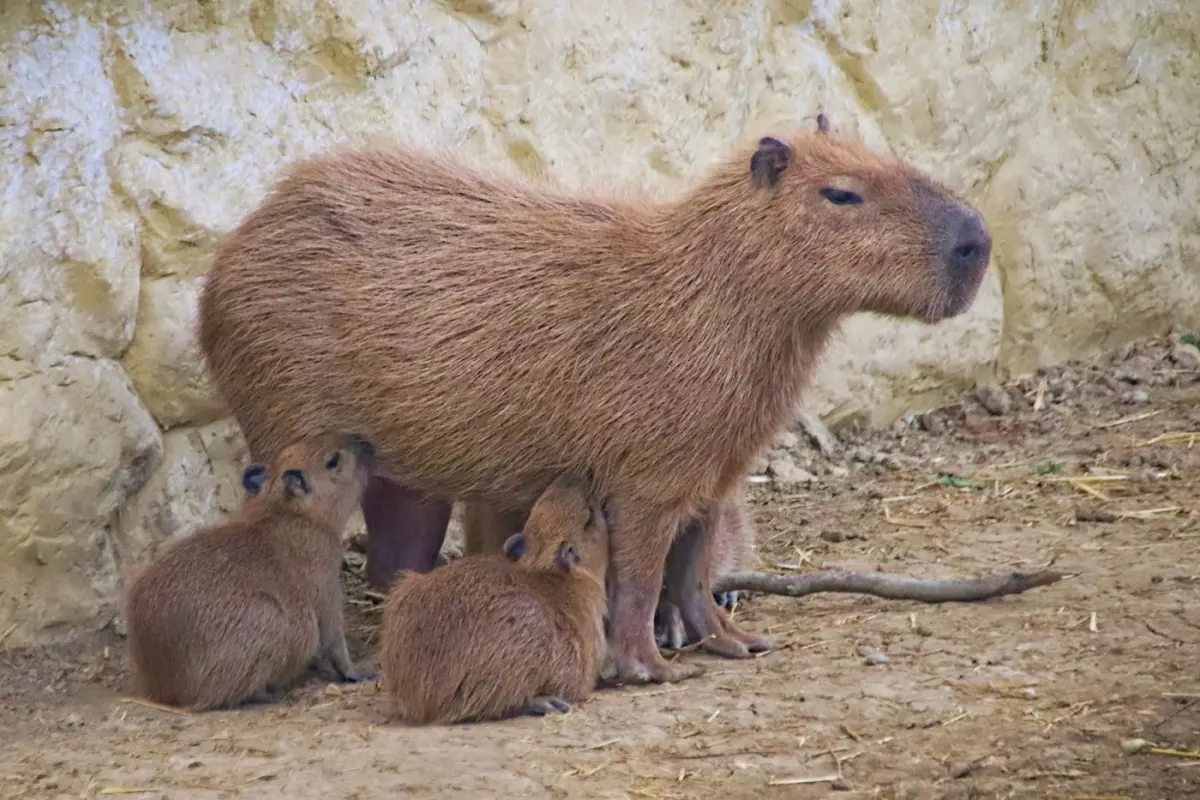
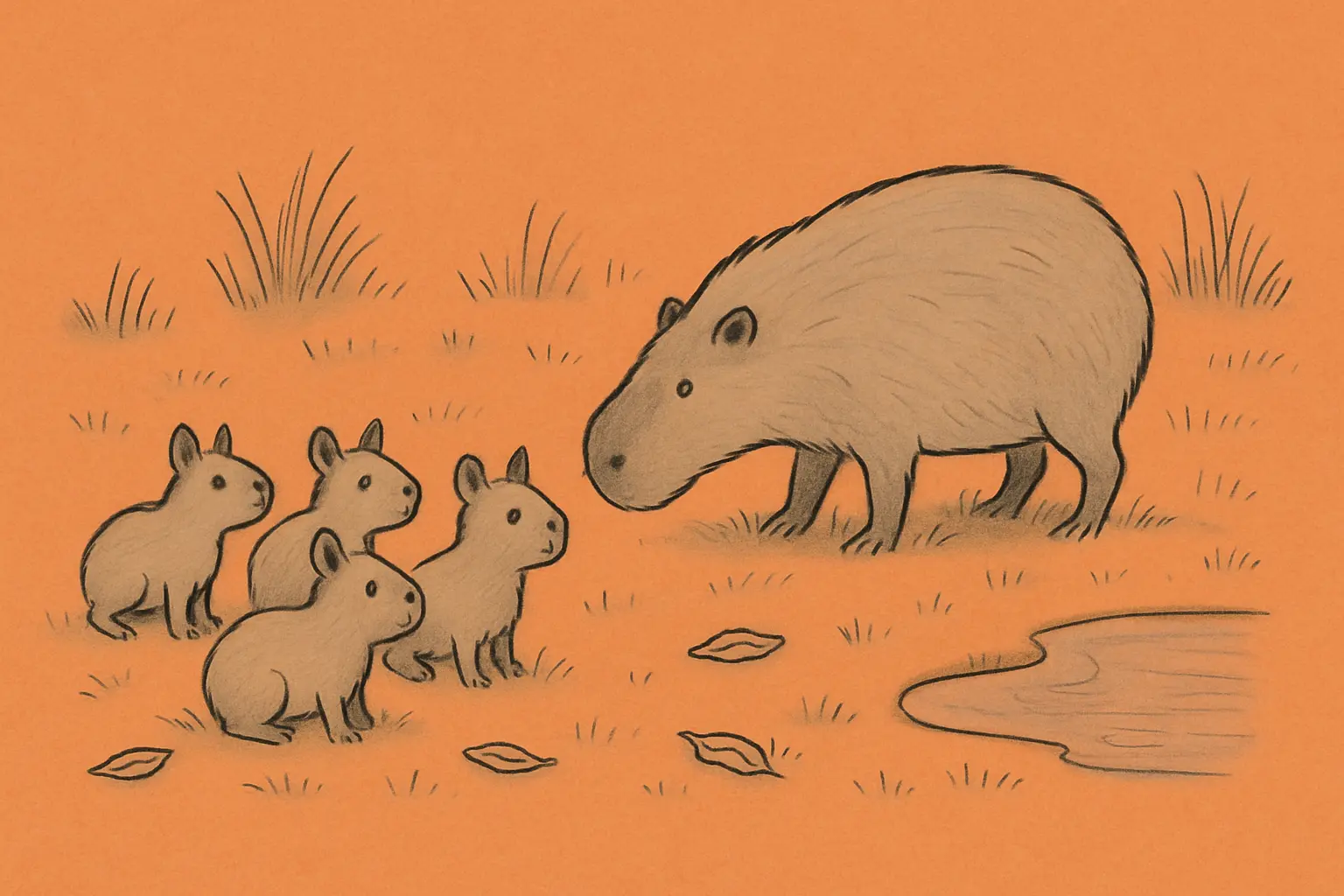
Bru was born on 8 May and is being raised alongside his mother Luna, father Rodney, and his aunt Cali. The AOL piece notes the zoo described him as “getting braver every day,” which tracks with normal capybara pup development.
Here is the part that surprises most people: capybara pups are born with their cheek teeth already fully formed and can eat solid food from day one. The common assumption is that, like most mammals, they spend weeks on milk alone. They do nurse, but they are grazing within hours of birth. It is one of the more efficient starts to life in the rodent world — and capybaras are, for the record, rodents. The largest ones on earth, topping out around 65 kilograms in adulthood.
Those ever-growing teeth are part of the same biological package. Capybara teeth never stop growing throughout their lives, worn down continuously by the fibrous grasses and aquatic plants that make up most of their diet. Bru, at somewhere between two and three pounds at birth, will reach roughly 88 pounds by 18 months — an increase of around 35 times his birth weight.
Eighteen years is a long gap
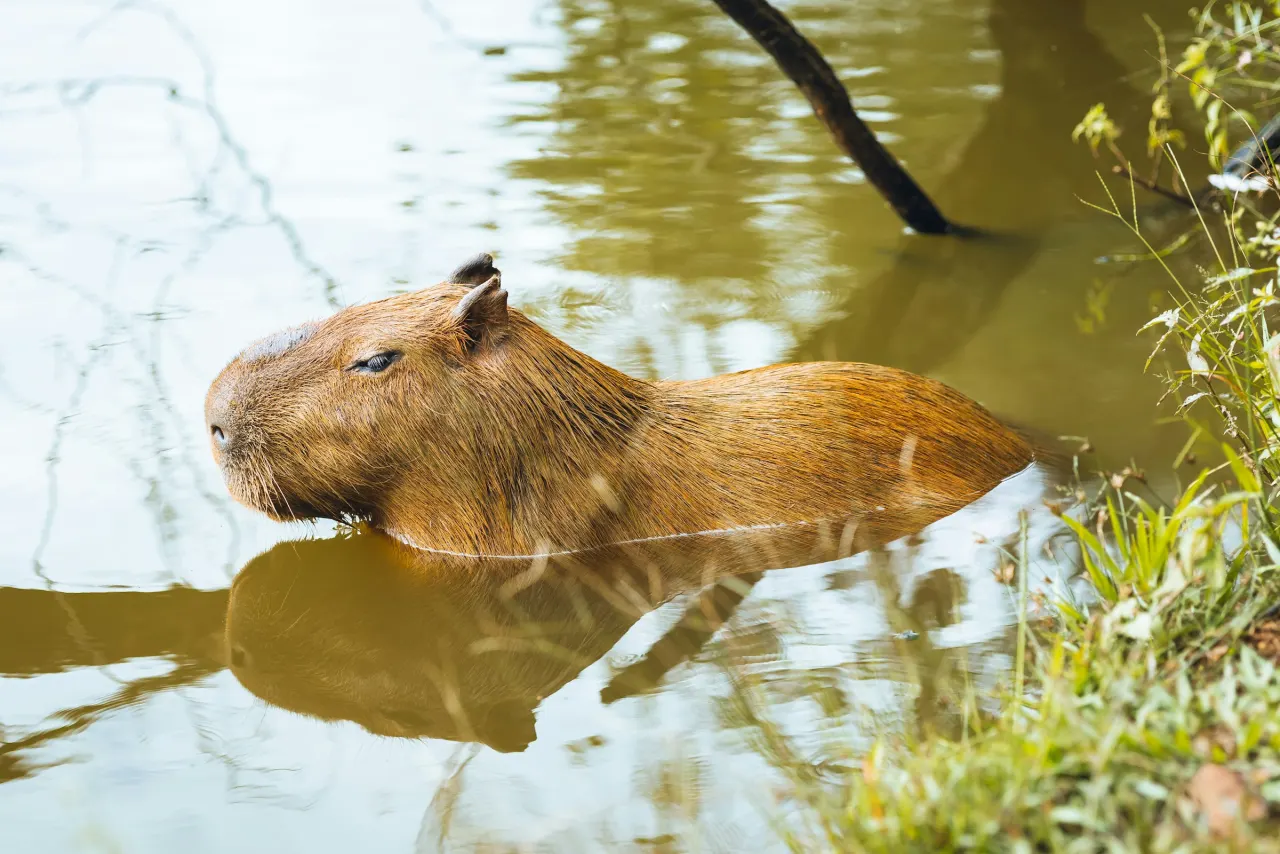
The zoo’s framing of this as the first capybara birth in 18 years is doing some work in the headline. It signals that this is not routine. Capybaras are social, semi-aquatic animals native to South America, where they live in groups near rivers, lakes, and marshes. They are not especially difficult to breed in captivity when conditions are right, but 18 years between pups at a single institution suggests the group composition or environment has not been conducive until now.
The current family unit — two adults and an aunt figure in Cali — is a reasonable approximation of the loose, fluid social groups capybaras form in the wild. Whether that stability is what finally produced a pup, or whether it is simply a matter of having the right pair in place, the zoo has not said.
The Grumpy Capy take
The name Bru is fine. It is local, it is pronounceable, and it will look acceptable on a zoo enclosure sign for the next decade or so. The campaign for David Attenbara was more creative, but zoos are not in the business of naming animals after living centenarians, however beloved.
What this story is really about is an 18-year gap at a major European zoo, which is the detail that deserves more than a parenthetical. Edinburgh Zoo has capybaras. It has had capybaras. For 18 years, no pup. Now there is one, and the institutional response is a social media vote and a TikTok announcement. That is not a criticism — it is just worth noticing that the conservation story is quieter than the naming ceremony.
Worth noting for transparency: the primary source is an AOL syndication of a PetHelpful article, and the same-story siblings are Yahoo mirrors of the same piece. There is effectively one original report here, leaning heavily on the zoo’s own Instagram copy. Independent verification of dates and details was not possible from this source set alone.