Nearly three months and still no door to bring her back through
Samba escaped Marwell Zoo on 17 March 2026. She had been on the premises for exactly one day. She arrived alongside a companion named Tango, both females, both sourced from Jimmy’s Farm & Wildlife Park. Tango, apparently the more cautious of the two, did not stray far and was recovered quickly. Samba had other ideas.
That was eleven weeks ago. As of the zoo’s most recent public update on 5 June, she has not been recaptured.
What the Bradbridge sightings actually tell us
According to Marwell Wildlife’s Facebook update, the search has shifted focus to the Bradbridge area of Hampshire following “several credible sightings” in recent days. The word “credible” is doing a lot of work in that sentence, and the zoo has not defined it further. What we do know is that the sightings were specific enough to justify deploying more than 20 staff members on a coordinated ground search.
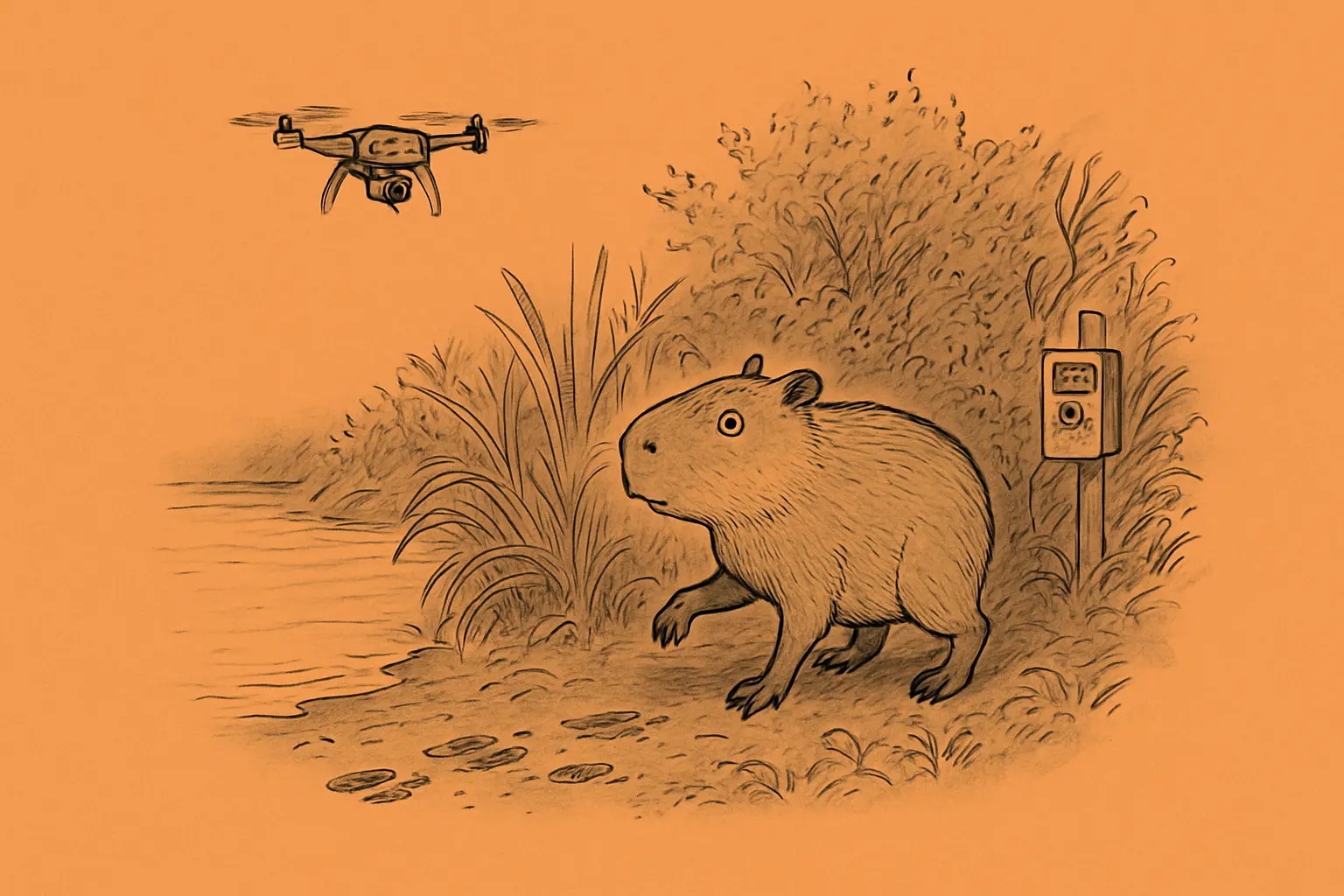
Teams are looking for footprints, droppings, and any physical trace of Samba’s presence. Thermal drones and a camera trap network remain active. The zoo described the vegetation in the search area as “extremely dense,” which, if you have ever seen footage of the Hampshire river margins in early summer, is not an exaggeration. It is the kind of cover that could conceal something considerably larger than a capybara.
Why a capybara can survive this long outside a zoo
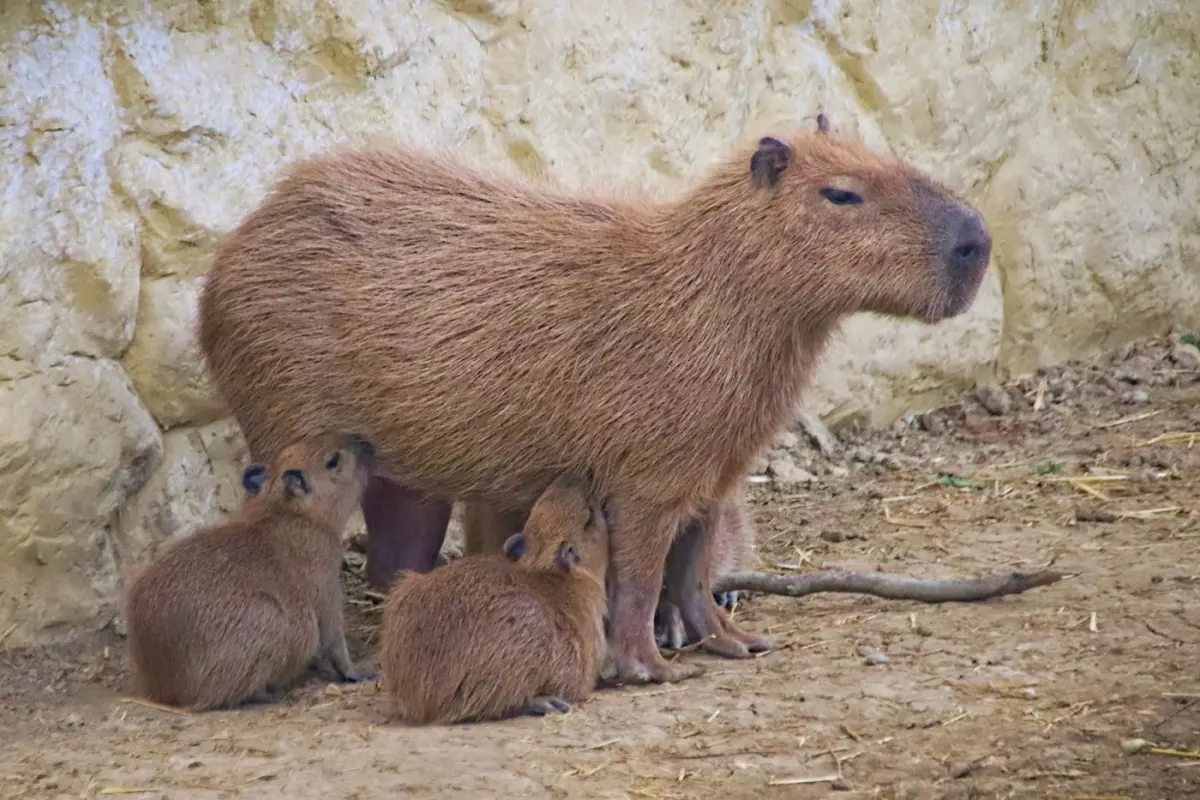
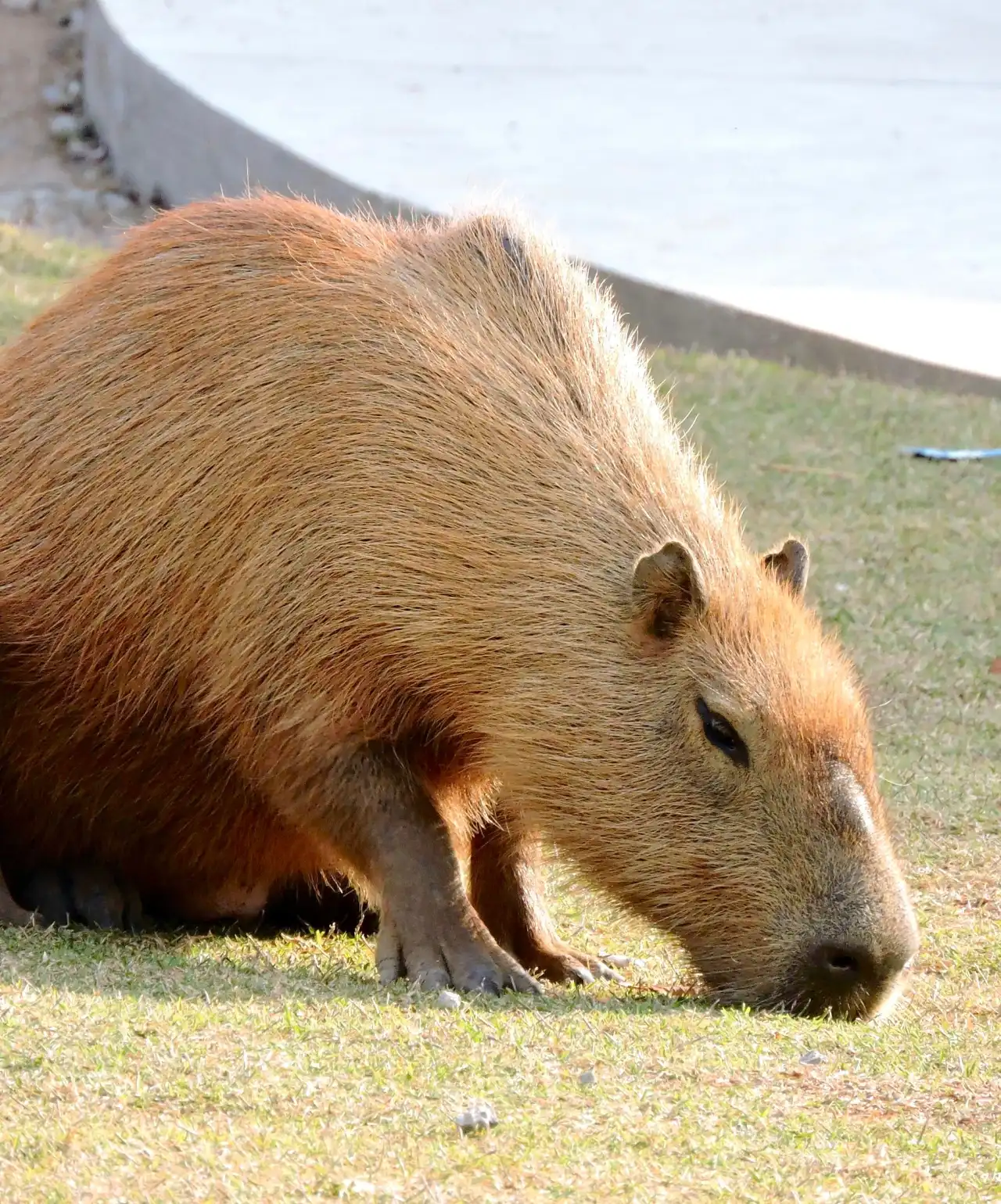
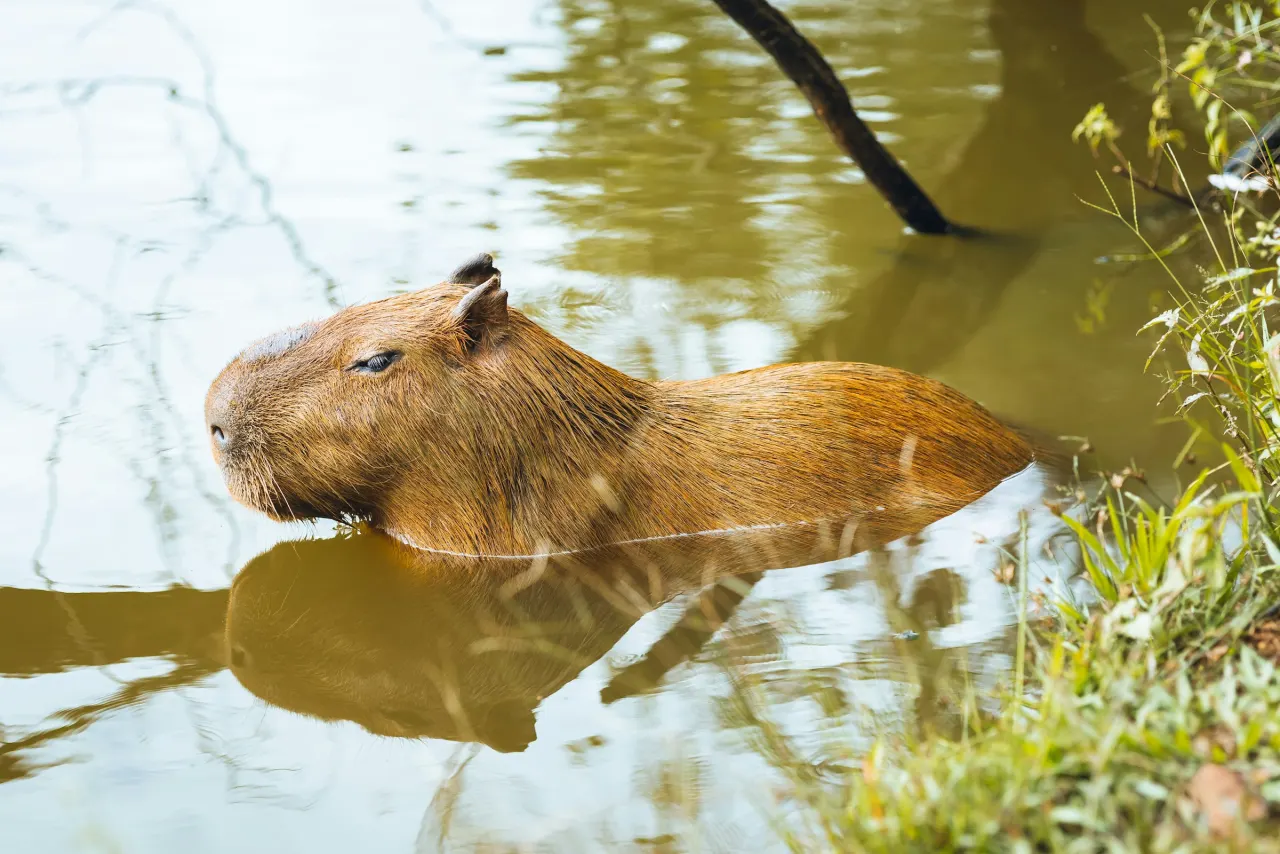
Samba was approximately nine months old when she escaped — young, but not a pup. Capybaras are the largest rodents on earth, with adults typically reaching 50 to 65 kilograms. They are semi-aquatic by nature, built for river margins and wetlands, and Hampshire has plenty of both. Wild capybaras in South America spend much of their day in or near water, using it for thermoregulation, predator avoidance, and social bonding.
Here is something most people do not know: capybaras can hold their breath underwater for up to five minutes, a trait that makes them genuinely difficult to locate even in shallow waterways. A thermal drone will not find an animal sitting on a river bottom. The Hampshire countryside, while not the Pantanal, offers a workable substitute in terms of water access and vegetation density. Samba, in other words, is not necessarily struggling.
The misconception worth correcting
A common assumption about escaped zoo animals is that they are immediately in distress and actively trying to return to captivity. People’s original reporting described Samba as “more adventurous” than Tango — and the eleven weeks since her escape suggest she has found enough food, water, and shelter to stay alive without human assistance. Capybaras are grazers, feeding primarily on grasses, aquatic plants, and bark. Southern England in late spring and early summer is not short of any of those things.
The zoo’s framing has consistently emphasised welfare as the primary concern. That is appropriate. But it is also worth noting that a healthy, free-ranging capybara is not the same as a distressed animal in need of rescue. The search is a recovery operation, not necessarily an emergency one.
The Grumpy Capy take
Eleven weeks is a long time. The fact that Marwell Wildlife is still mounting coordinated 20-person ground searches — rather than quietly downgrading the effort — is genuinely notable. Either they have good reason to believe Samba is alive and localised, or the PR cost of appearing to give up on a nine-month-old capybara is too high. Probably both.
The “several credible sightings” framing is frustrating precisely because it is so carefully hedged. Credible to whom, verified how, and why has none of this produced a usable photograph in eleven weeks? The zoo’s own tip line — text a photo to 07436 116740 — implies that photographic confirmation remains the missing piece. Until there is one, “credible sightings” is just a polite way of saying the search continues.
Worth noting for transparency: the primary source for this article is a Yahoo/People lifestyle piece that reproduces Marwell Wildlife’s Facebook post without independent verification. The zoo had not responded to People’s request for further comment at the time of publication. All factual claims about the search reflect what the zoo itself chose to make public.