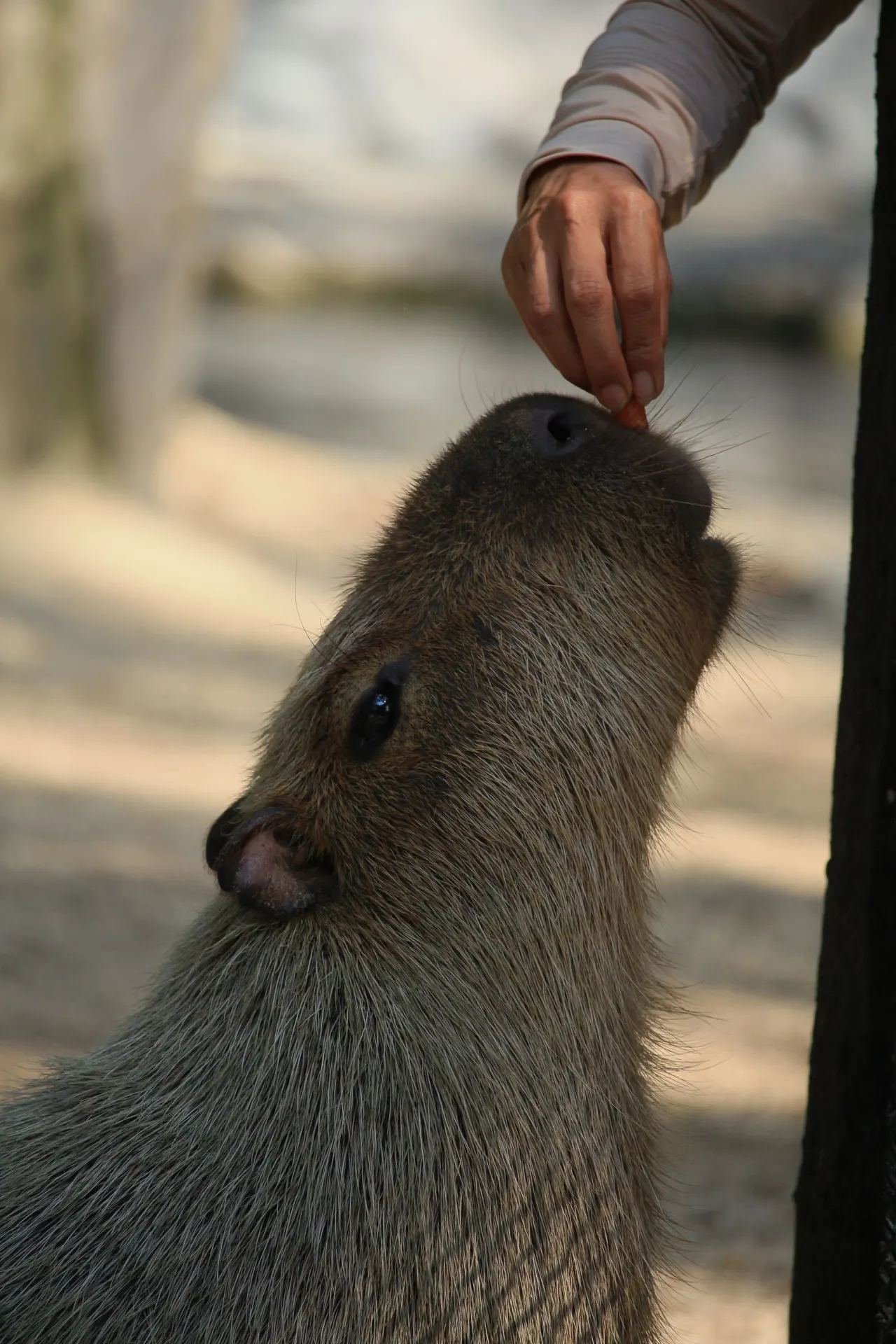
Do capybaras recognize people? In managed settings, they can learn familiar humans, routines, voices, scents, and cues. The less romantic answer is that the snack bucket is probably doing some of the emotional heavy lifting.
That does not make the answer disappointing. It makes it more animal-shaped.
Recognition Is Not The Same As Friendship
Recognition means an animal can distinguish familiar patterns from unfamiliar ones. Friendship is a human word we throw at animals when they do something near us without leaving.
Capybaras are trainable, social, and observant. The AZA care manual includes animal training as part of care and enrichment, especially for husbandry and veterinary work. A capybara may learn a keeper’s routine, a cue, a target, a gate sound, a feeding cart, or a voice.
That still does not mean every person gets the same response.
Keepers Are Not Random Visitors
Keepers are part of the animal’s daily structure. They feed, clean, observe, train, and notice tiny changes the rest of us miss. A visitor sees “it came over.” A keeper may see “it came over because the normal feeding route started.”
AZA’s writing on ambassador animal choice and control makes a useful point: good programs increasingly give animals the option to participate. That matters here. The best relationship is not “the animal always comes to people.” It is “the animal knows it can choose.”
Food, Voice, Smell, And Routine Do A Lot
For a capybara, familiar cues can stack up fast. Same staff clothing. Same gate. Same bucket. Same call. Same time of day. Same route to the holding area.
| Cue | What it may mean |
|---|---|
| Keeper voice | Familiar signal, especially if paired with feeding or training |
| Bucket or cart | Food or routine may be coming |
| Target training cue | Cooperative care or movement request |
| Visitor voice | Usually noise until proven otherwise |
| Sudden reach | Possible threat or stressor |
The capybara may know the keeper. It may also know that the keeper is where the romaine appears. Both can be true. Love is complicated; lettuce is simple.
What “Recognize” Probably Means For A Rodent
It helps to remember what kind of animal we are talking about. Capybaras are the world’s largest rodent, native to South America, semi-aquatic grazers that live in herds. According to the San Diego Zoo Wildlife Alliance and Animal Diversity Web, they are highly social, and solitary housing is a genuine welfare stressor, not a quirk. An animal built around a group reads its world through the group first and individuals second.
So “recognize” is not one switch. It is layers. A capybara can clock a familiar scent before it sees a face, a familiar gait before it hears a voice, a familiar time of day before anything happens at all. Pull those layers apart and the impression of personal recognition gets thinner. The animal is matching patterns, and people are one input among many.
That is also why a capybara can seem to “forget” a person who changes their jacket, their shift, or their smell. Nothing was forgotten. The pattern just stopped lining up.
Why Capybaras Are Easier To Train Than To Befriend
There is a real reason managed capybaras learn cues quickly. They are food-motivated grazers with a digestive setup that keeps them eating most of the day. As hindgut fermenters, they process a lot of low-value plant material, and they practice coprophagy, re-ingesting soft morning feces to pull more nutrients out of the same grass. An animal that thinks about food this constantly is an animal that pays close attention to whoever controls food.
That makes training effective and reliable. It does not make it affection. The honest take: most “my capybara loves me” stories are really “my capybara has a strong, well-reinforced feeding association with me,” and the second sentence is the more useful one to plan around. Plenty of good care rides on exactly that association, so there is nothing wrong with it. It just is not the same as a friend choosing your company over the herd’s.
A few common assumptions are worth correcting directly.
| Assumption | Better answer |
|---|---|
| It runs to me, so it loves me | It learned that you predict food or routine; approach is a trained pattern, not proof of affection |
| It let me touch it, so it trusts everyone | Tolerance of one familiar person does not transfer to strangers, and consent can change minute to minute |
| It remembers me forever | Recognition leans on stable cues; change your scent, clothes, or timing and the pattern can fail |
| A calm capybara is a happy capybara | Stillness can be comfort or a freeze response; you cannot tell from a distance |
| Bonding with me replaces its herd | Capybaras are herd animals; human company does not substitute for the social group they need |
How A Capybara Says Not Today
The AZA manual notes stress signs such as pacing, prolonged vocalization, sudden movements, running, jumping, and unease in quarantine contexts. Around visitors, the signals may be quieter: moving away, choosing water, freezing, turning the body, staying behind the group, or not approaching.
The mistake is treating stillness as consent. Sometimes stillness is comfort. Sometimes it is the animal deciding whether your nonsense requires a full exit.
You May Be Known And Still Not Invited
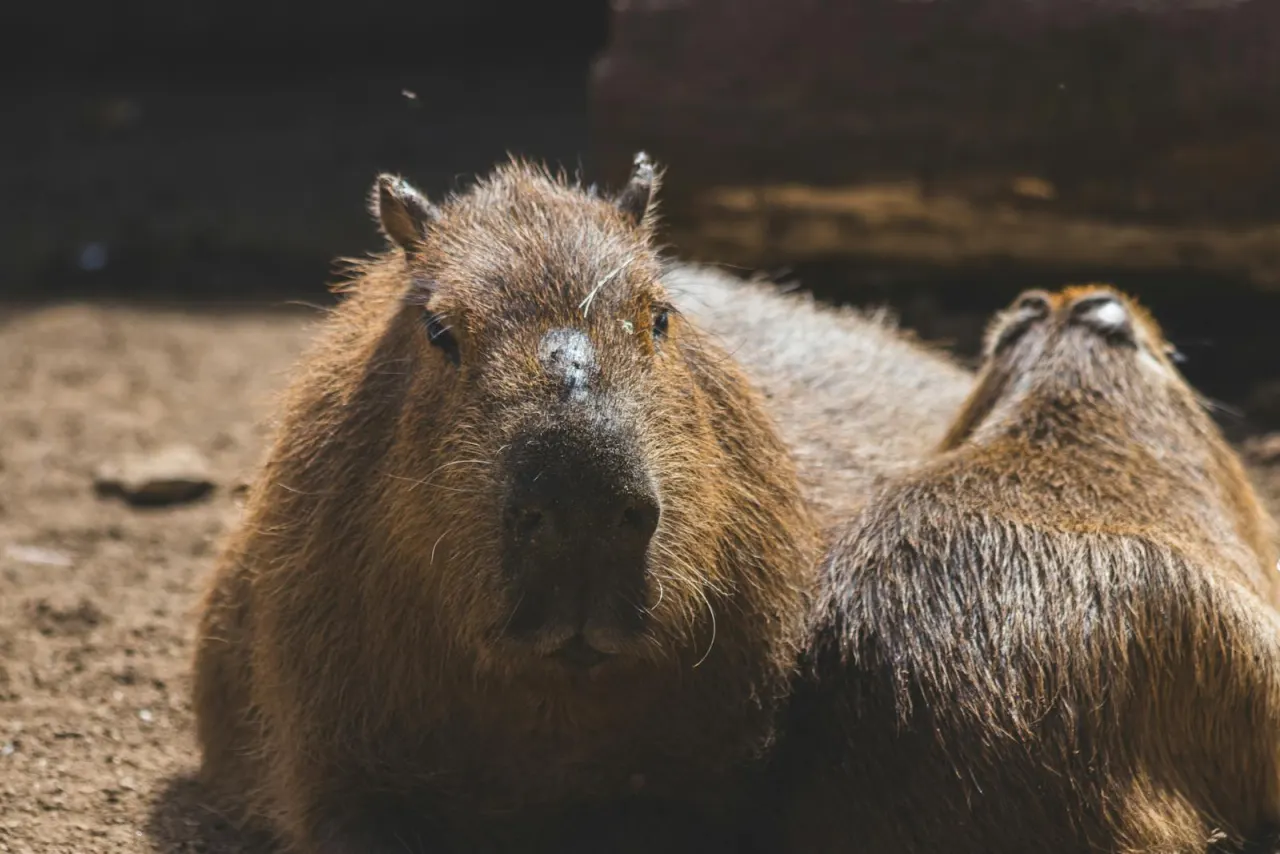
Here is the useful fan rule: even if a capybara recognizes a person, the animal is not public property. Recognition can support good care when it helps keepers monitor health, reduce stress, and move animals safely.
For visitors, the job is smaller. Follow the signs. Let staff manage contact. Do not assume approach means affection. If the capybara chooses the water, the shade, or the back of the habitat, accept the review.
What To Actually Do Around A Capybara That Knows You
If you are a regular, the kindest version of being recognized is being predictable and low-demand. The animal does the choosing.
- Show up the same way: same time, same calm pace, same general routine. Stable cues are the whole basis of recognition.
- Let the capybara close the distance. Approaching never proves much; an animal that walks toward you on its own has told you something.
- Read the exits. If it drifts toward water or the group, that is an answer, not a problem to fix.
- Keep food honest. If you are the source of the romaine, fine, just do not confuse that arrangement for a verdict on your personality.
- Defer to staff. In any managed setting, keepers know the individual animal’s baseline far better than a one-off observation ever will.
Recognition, in the end, is a tool for better care. Keepers use it to spot a sick animal sooner, to move a herd without panic, to run veterinary work with cooperation instead of restraint. That is the version worth wanting. A capybara that knows its people and still gets to choose is doing exactly what a well-managed capybara should. The snack bucket can keep its share of the credit.