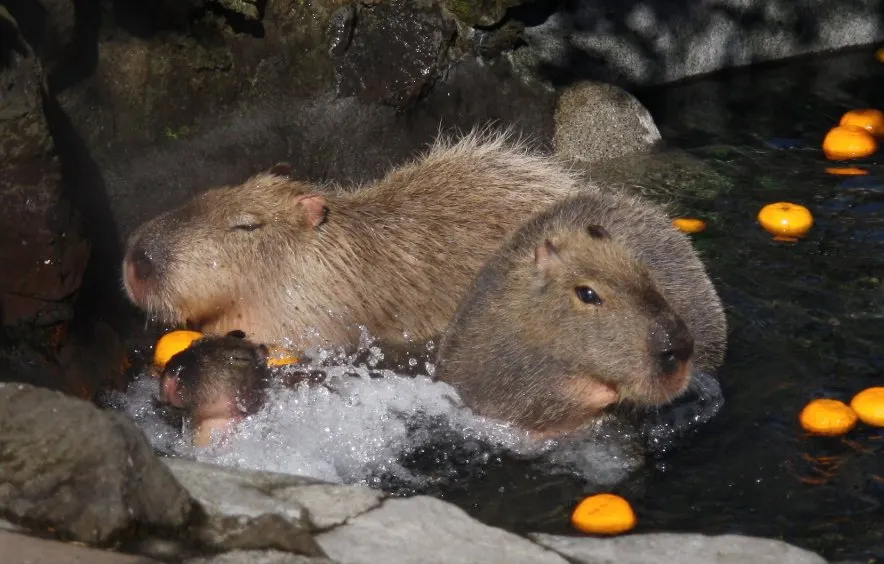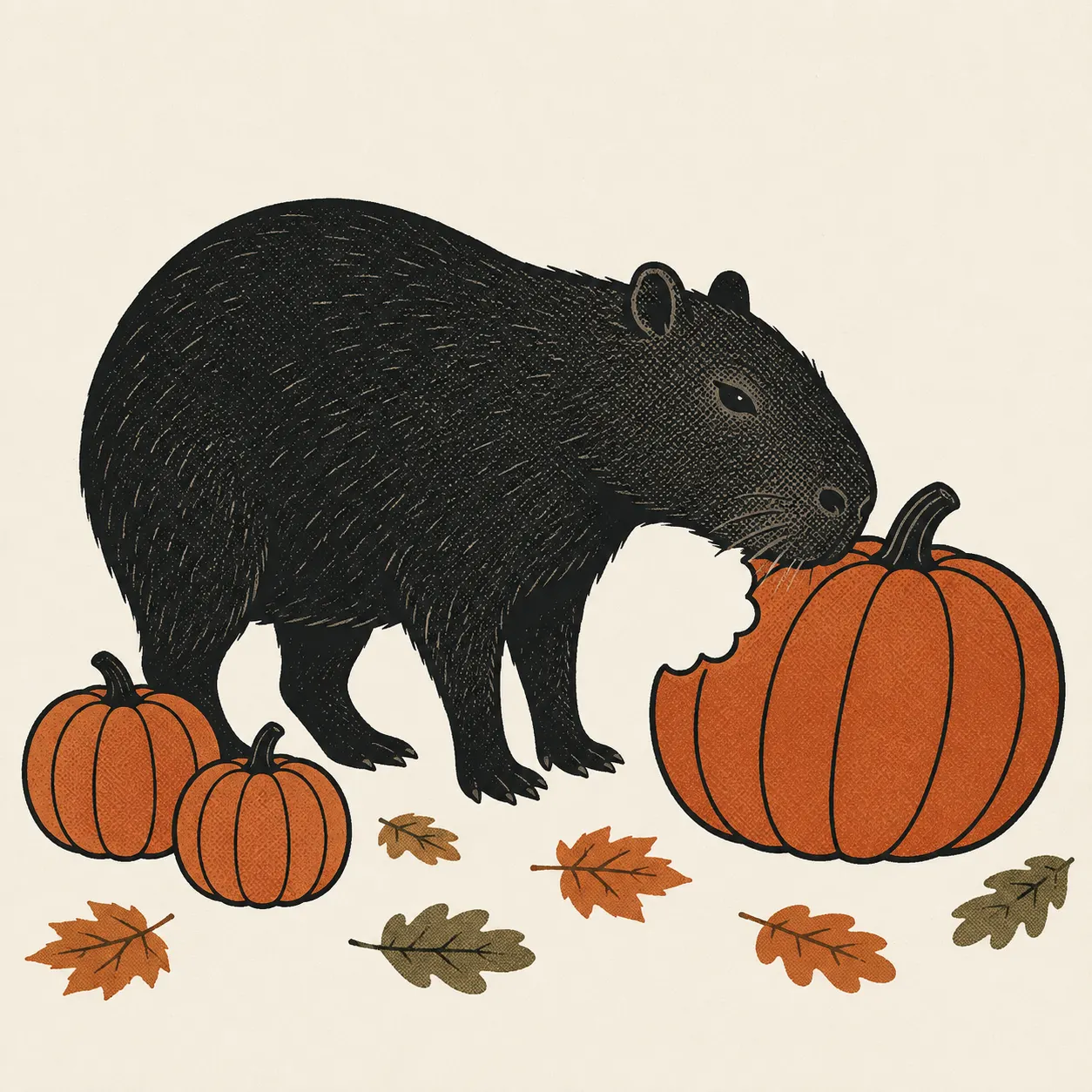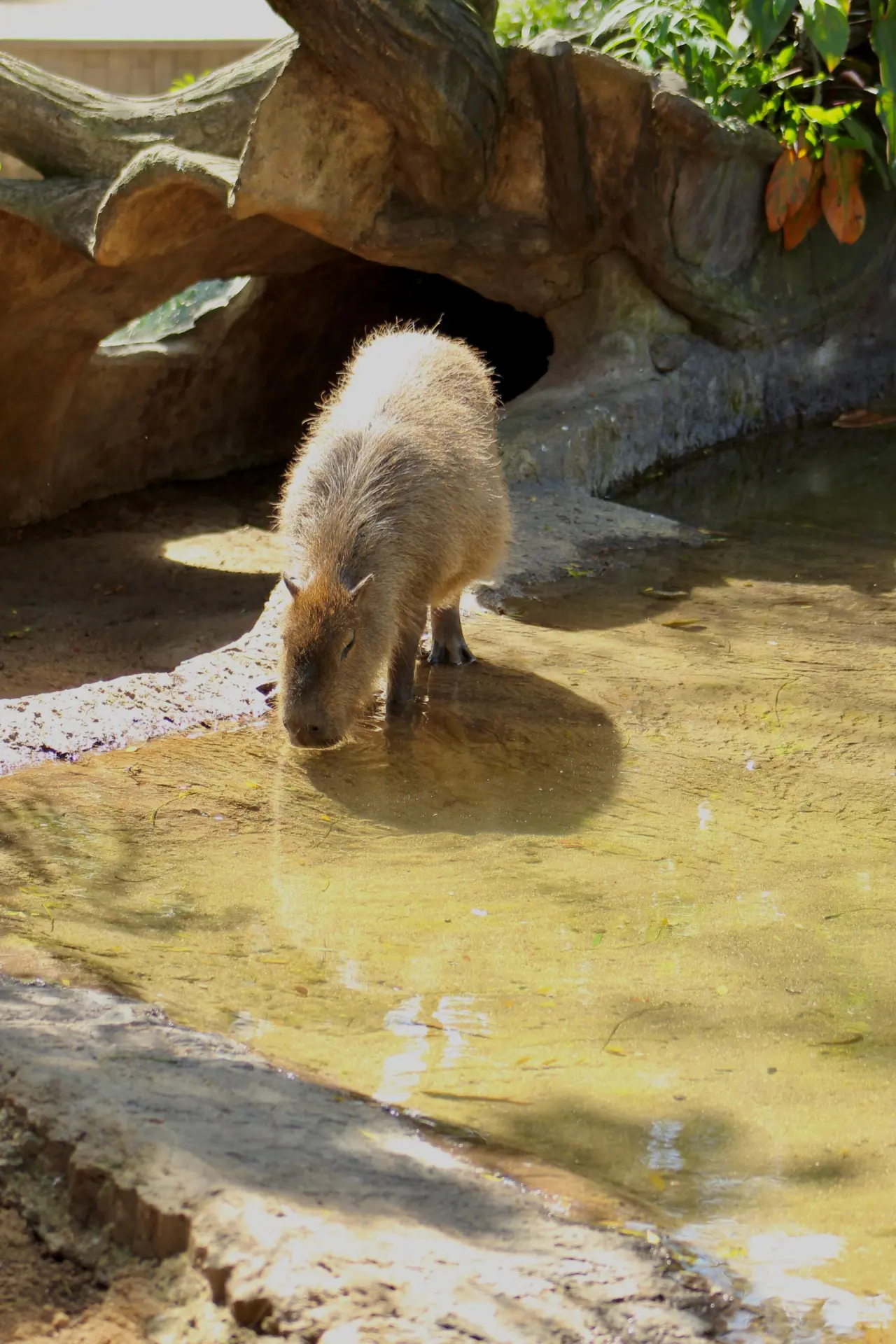
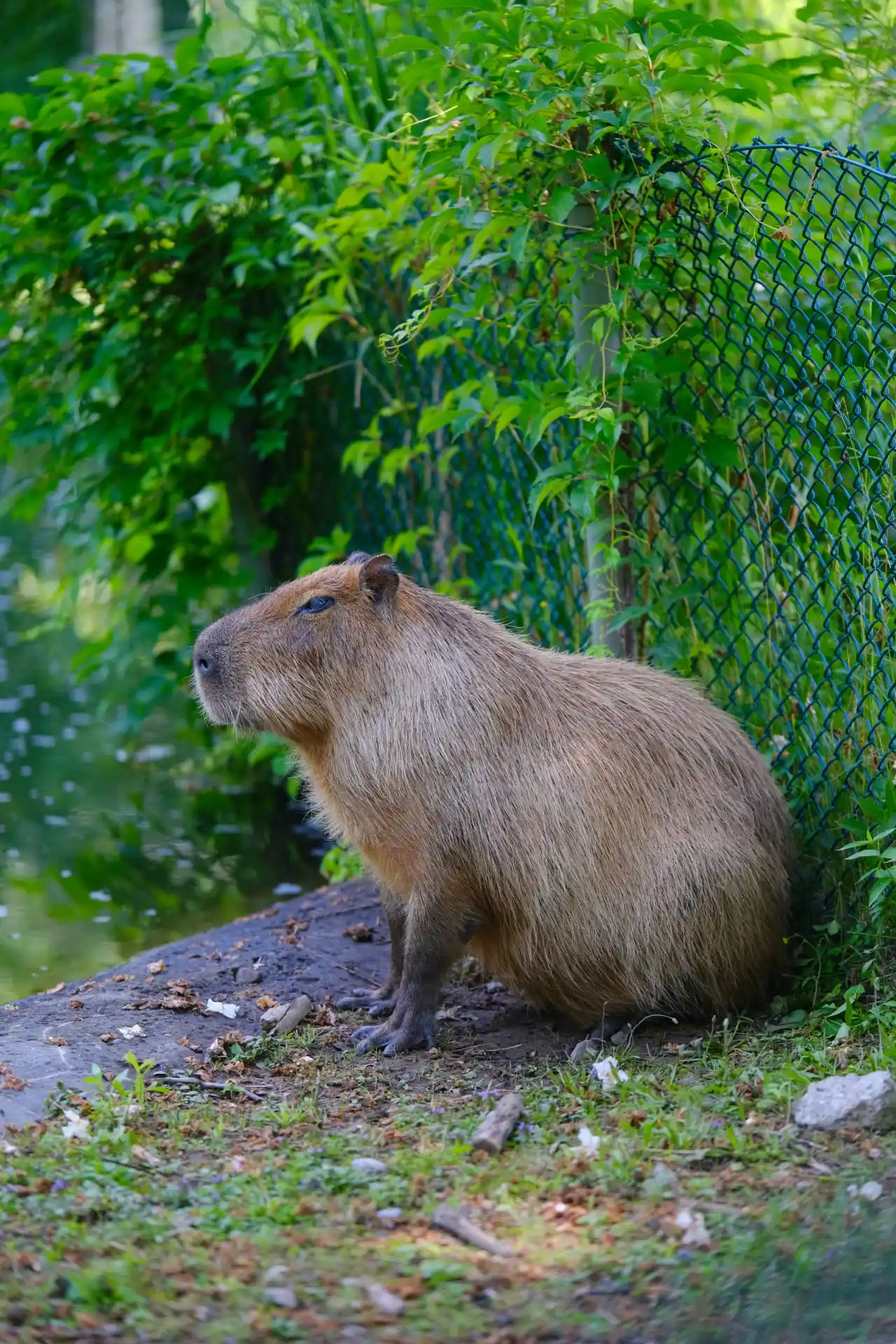
Some capybaras let humans get close because the setting has made humans predictable. Predictable is not the same as invited.
That is the key difference the internet keeps dropping in the pond.
Close Does Not Mean Permission
A capybara near a person may be habituated, trained, food-motivated, curious, tolerant, blocked by enclosure design, or simply choosing not to move. None of those are a permission slip to touch, hug, feed, kiss, climb into the space, or narrate your spiritual connection at full volume.
The animal is not a plush with a pulse. It is a large prey animal with teeth, a group, and an exit plan.
Habituation Is Boring And That Is The Point
Habituation means an animal has learned that a repeated, non-threatening stimulus is not worth reacting to every time. In a zoo, that might include staff moving through a service area, visitors at a rail, or routine husbandry sounds.
Good habituation lowers stress. Bad visitor behavior raises it right back up. The CDC reminds visitors at animal exhibits to follow staff rules, keep food away, supervise children, and wash hands after animal areas. Capybaras do not cancel basic public-health advice just by looking like a damp beanbag.
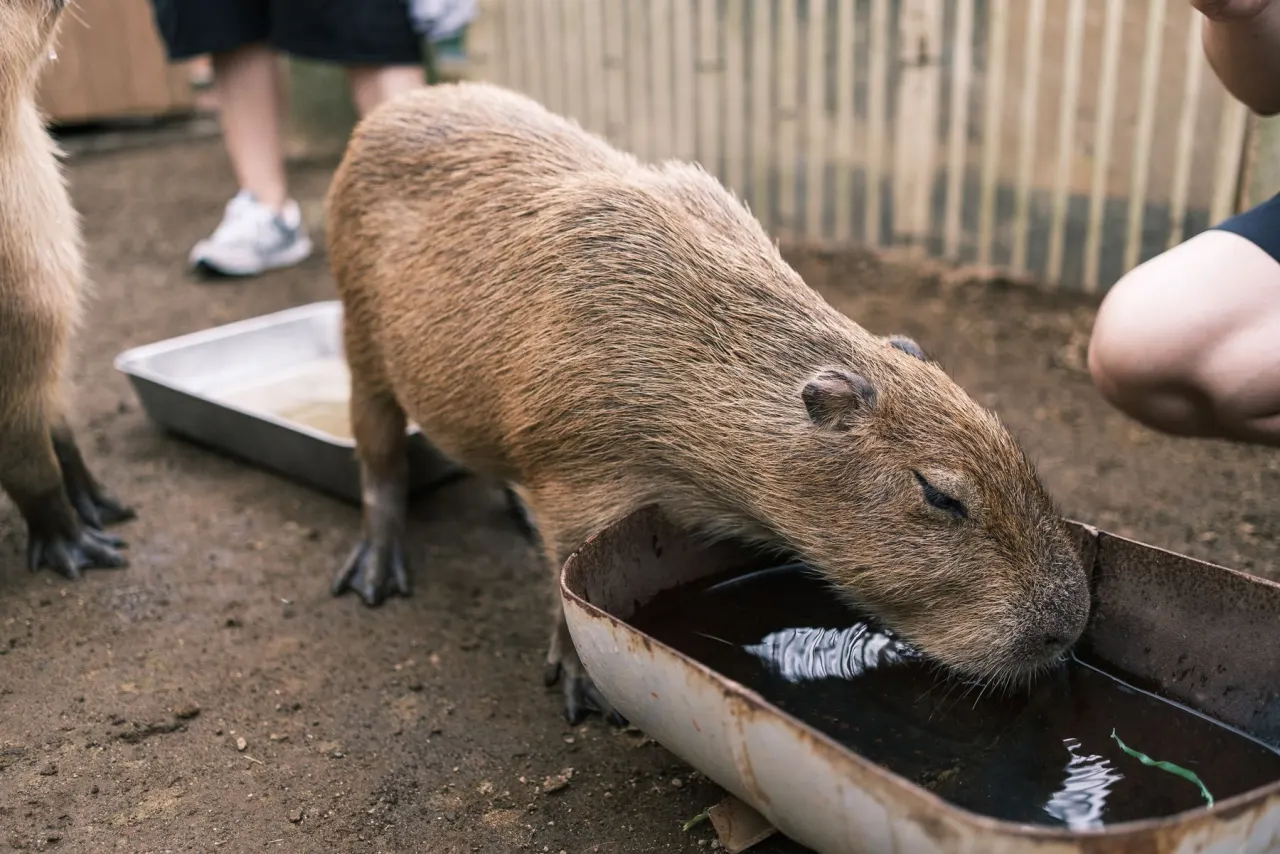
What The Animal Actually Is
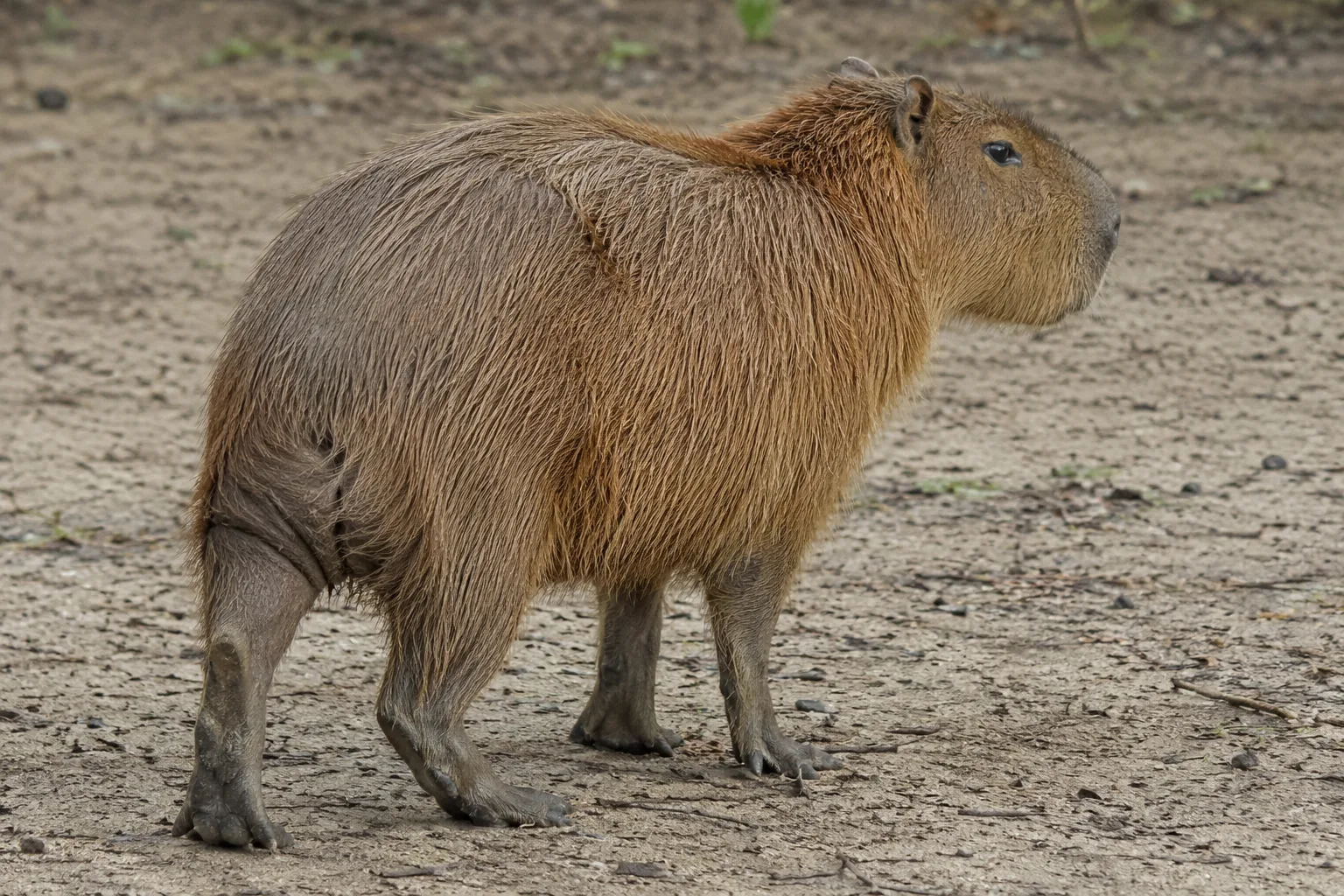
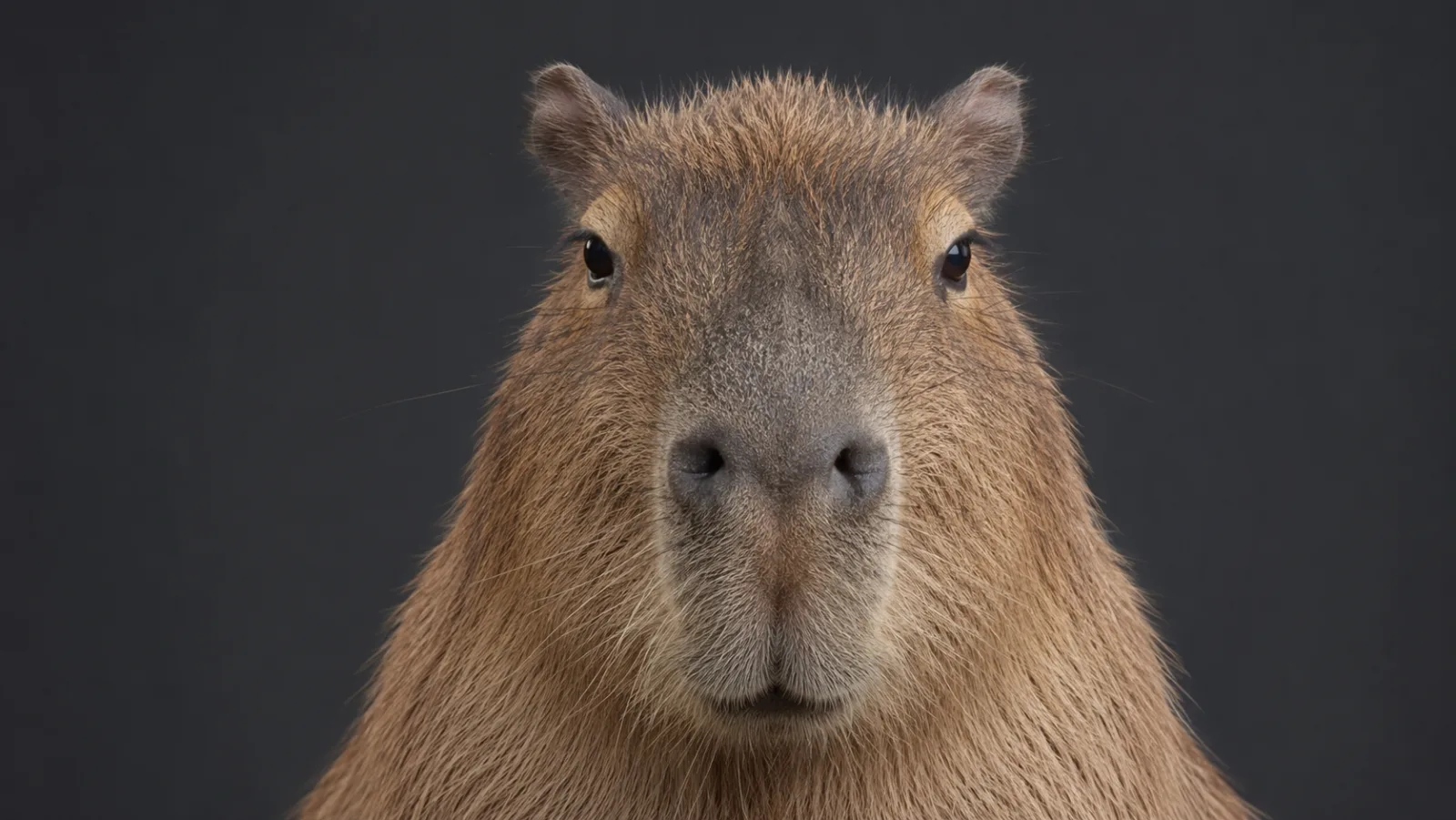
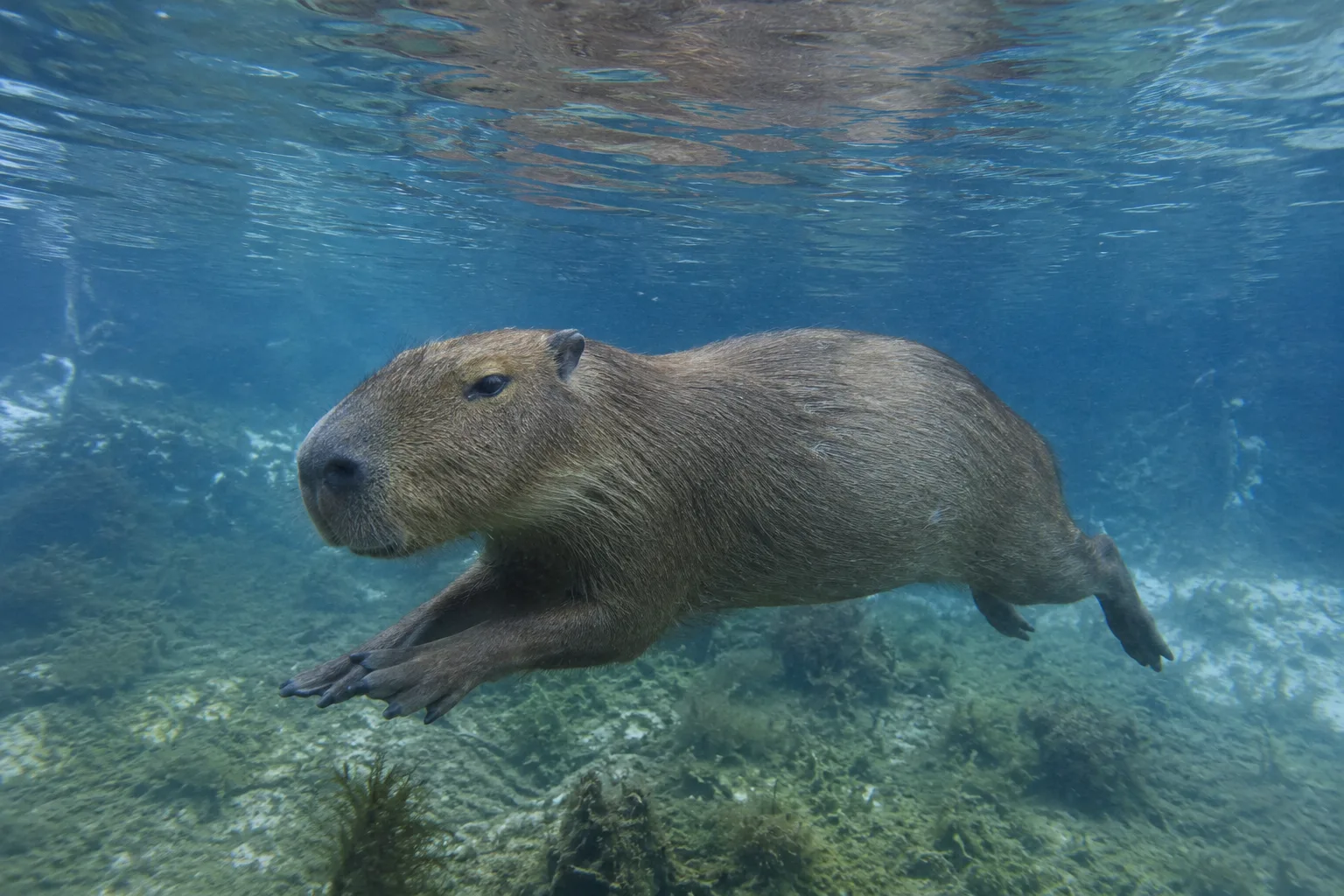
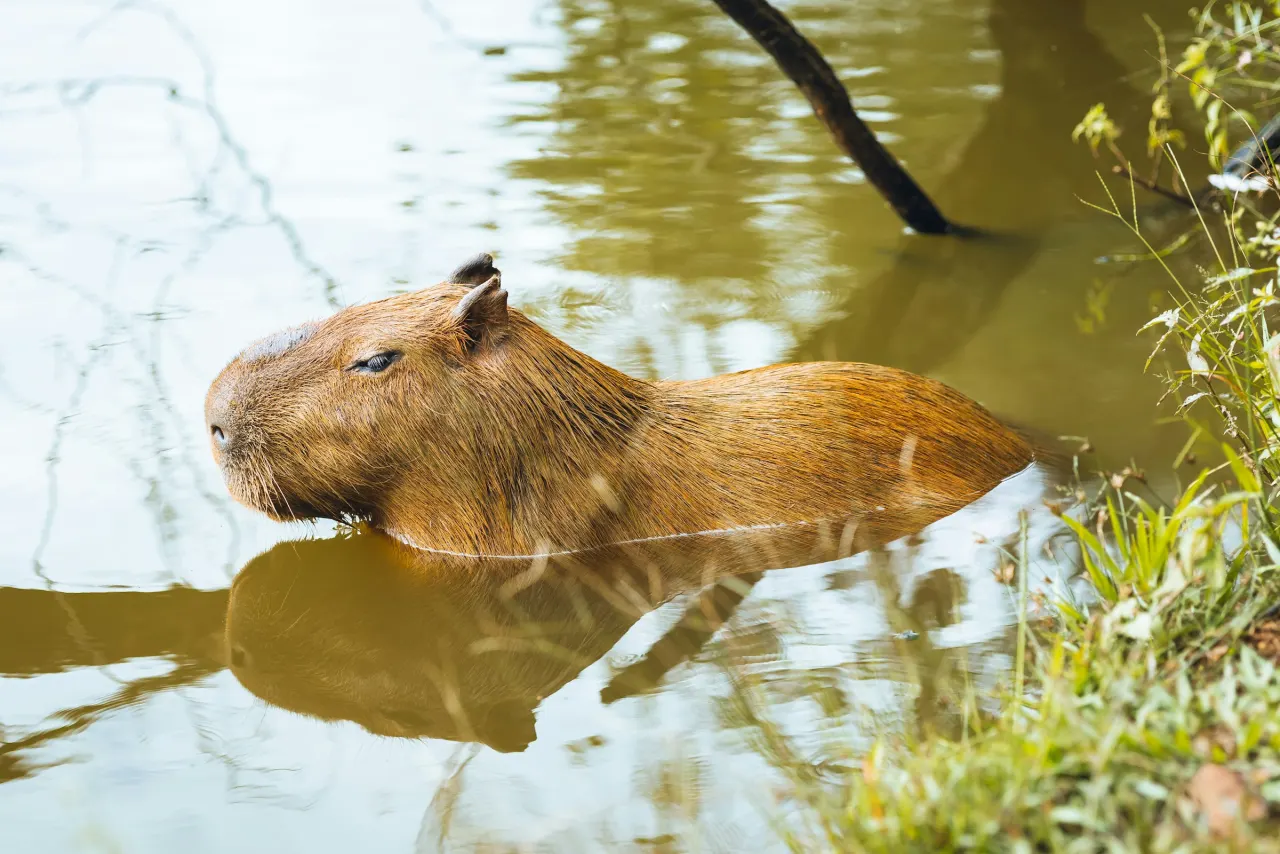
It helps to remember what you are standing next to. The capybara is the world’s largest rodent, with adults running roughly 35 to 66 kg, give or take a heavy individual. Animal Diversity Web and the San Diego Zoo Wildlife Alliance both file it where it belongs: a native South American, semi-aquatic grazer that lives off grasses and aquatic plants, with semi-webbed feet and teeth that grow continuously. It is built to eat, watch, and slip into water, in roughly that order.
It is also deeply social. Capybaras live in herds, and a lone capybara is usually a stressed capybara. That matters here because the calm group you see in a video is not a single chill animal volunteering for affection. It is a unit, and the unit has a security system. When one member moves, the rest read it. An approaching human is just one more input the group is quietly scoring.
None of this reads as “wants a cuddle.” It reads as a watchful herbivore doing herbivore things in a place where humans have become background noise. That is the honest frame, and it is less flattering than the captions suggest.
Wild Capybaras Have Different Math
Animal Diversity Web describes capybaras watching for predators while grazing and using water as an escape route. That is the wild baseline. In places where capybaras are used to people, you may see them tolerate distance. That still does not mean approach is harmless.
Wild animals do not owe us the zoo version of themselves. If a capybara moves away, enters water, barks, freezes, or stays near the group, the answer is already in the behavior.
The Body Language That Says Back Up
Capybara body language is not always dramatic. A stressed animal may not perform a cartoon escape. It may stiffen, watch, sidestep, move behind another animal, choose water, or stop engaging.
| What you see | Better reading |
|---|---|
| It is still | Could be comfort, caution, or assessing risk |
| It walks away | The interaction is over |
| It goes to water | Distance and safety may be the priority |
| It stays behind the group | The group is part of its security |
| It approaches staff | Familiar routine, not stranger access |
Reading The Caption, Not The Animal
Most of the misunderstanding starts in the caption, not the footage. The video shows a tolerant animal in a managed setting. The text on top turns that into a personality trait. Here is where the common claims fall apart.
| What the video implies | What is usually going on |
|---|---|
| ”This capybara loves people” | It has been habituated to a steady stream of humans who never did anything alarming |
| ”It chose to be petted” | A staff member set up a contact session the animal could leave at any point |
| ”Capybaras are basically friendly dogs” | They are social with other capybaras, tolerant of trusted routines, and indifferent to strangers |
| ”It’s so relaxed, it must be safe to approach in the wild” | Wild capybaras keep an escape route and a watch rotation, and approach changes their behavior |
| ”It came up to me, so it wants attention” | Food cues, curiosity, or enclosure design can all pull an animal closer without any of it being about you |
The pattern is consistent. The footage is real, the animal is real, and the interpretation is the part doing the lying. A capybara cannot tell you it consents, so the caption fills the silence with whatever gets shared.
The AZA’s work on giving ambassador animals choice and control points the same direction. Good programs are built around letting the animal opt out, not coaxing it into staying. If the structure assumes the animal might walk away, the structure is taking the animal’s preferences seriously. A phone held two inches from its face is not.
Proximity Is Not A Contract
The best capybara fan is not the one who gets closest. It is the one who can enjoy a close animal without turning that closeness into a demand.
Some capybaras allow proximity. That is interesting. It is not friendship paperwork. Let staff decide what contact is appropriate, let the capybara leave, and let the video be less dramatic than your group chat hoped.