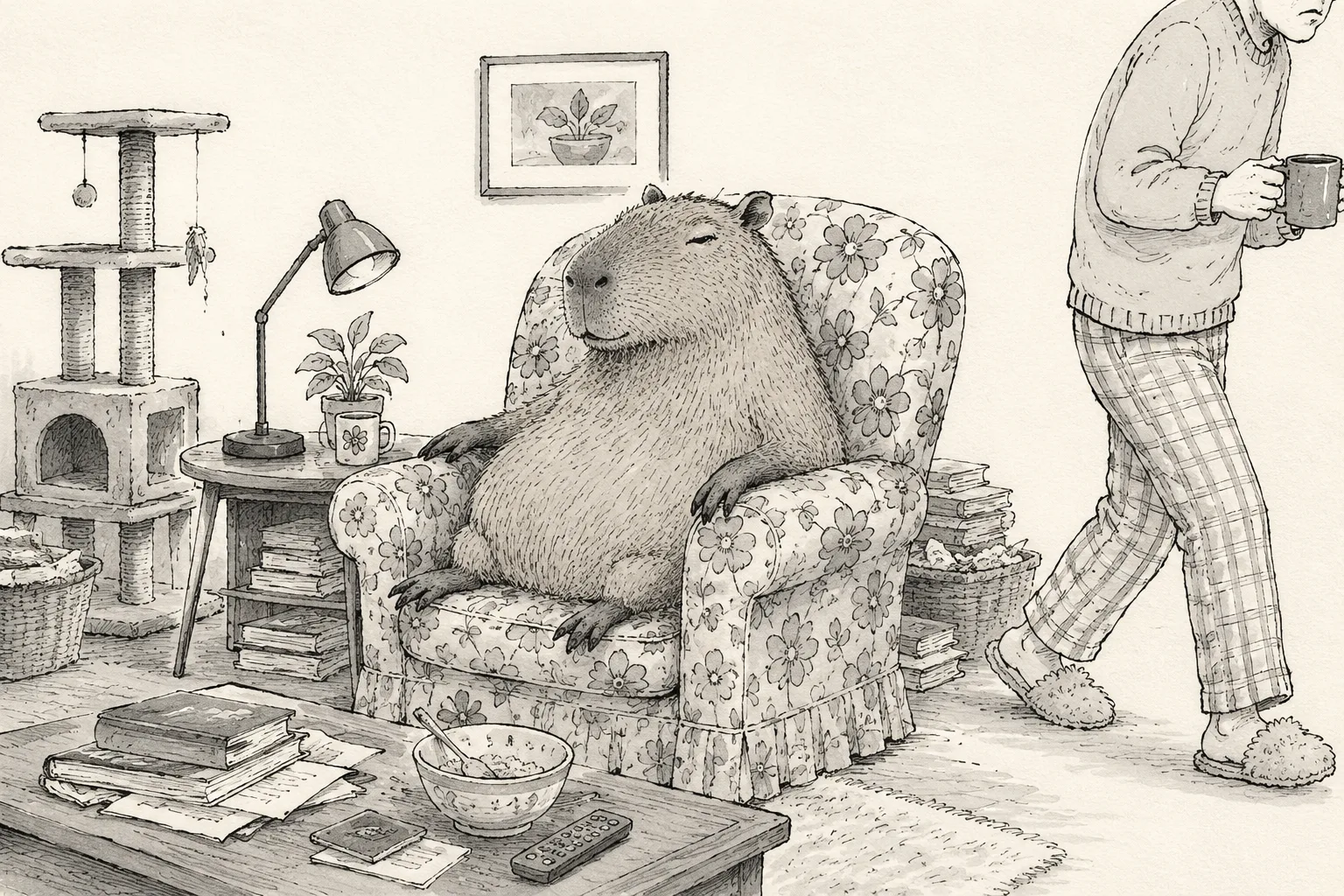
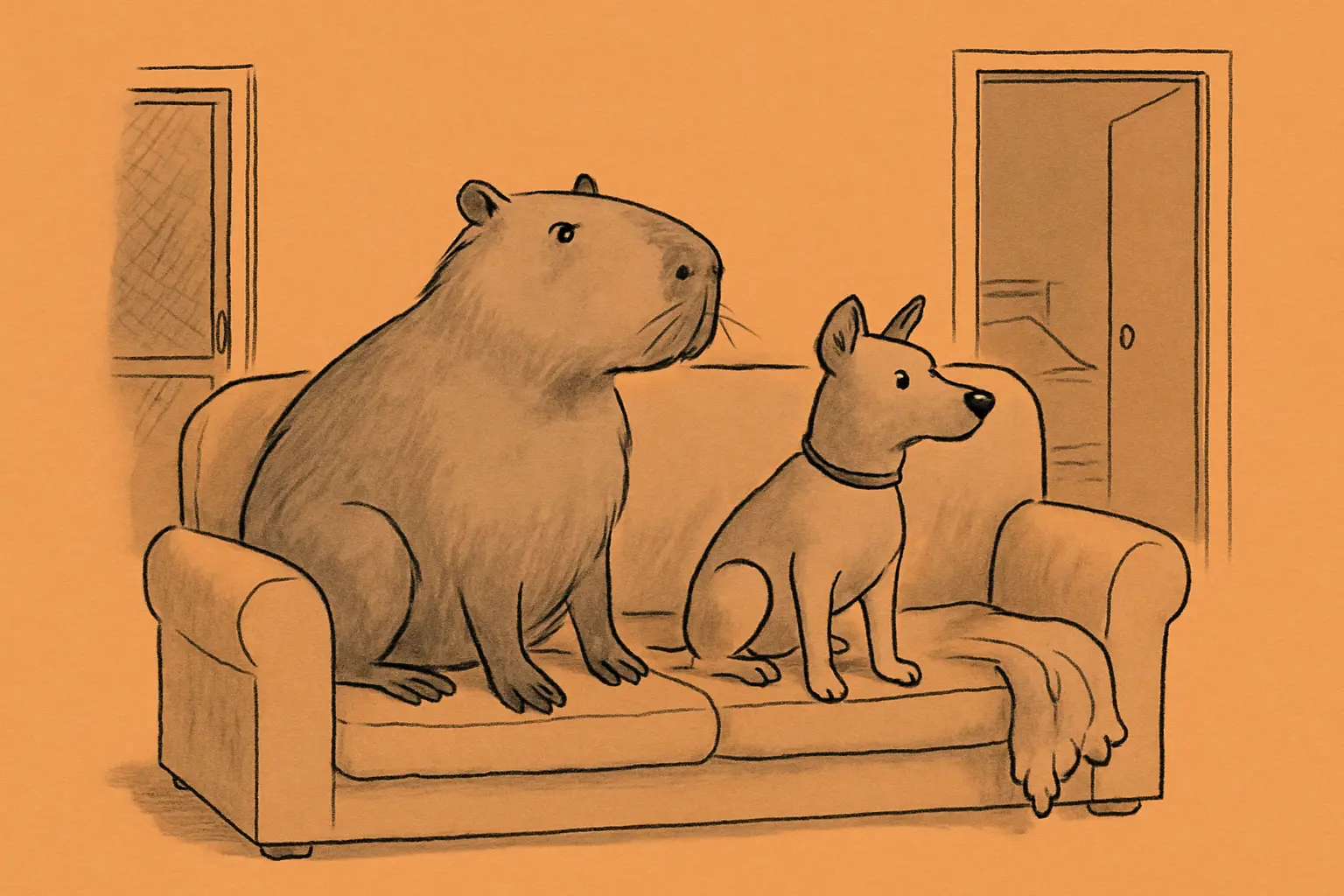
Cheesecake arrives at the screen door early. Not mid-morning, not after breakfast — early, while the house is quiet and her companion Pumpkin is still asleep.
Her keeper, Marina, has worked out why. Arriving first means the couch is uncontested. Pumpkin has not optimised her schedule. Cheesecake has.
What actually happens
Cheesecake and Pumpkin have access to the back porch through a connected pasture and come inside when they want attention. In the clip that spread — posted by Dark Wings Wildlife and picked up by Upworthy and PetHelpful on 29 May 2026 — Marina opens the door and asks her Border Collie, Stevie, whether he invited a friend over. She sounds less surprised than resigned.
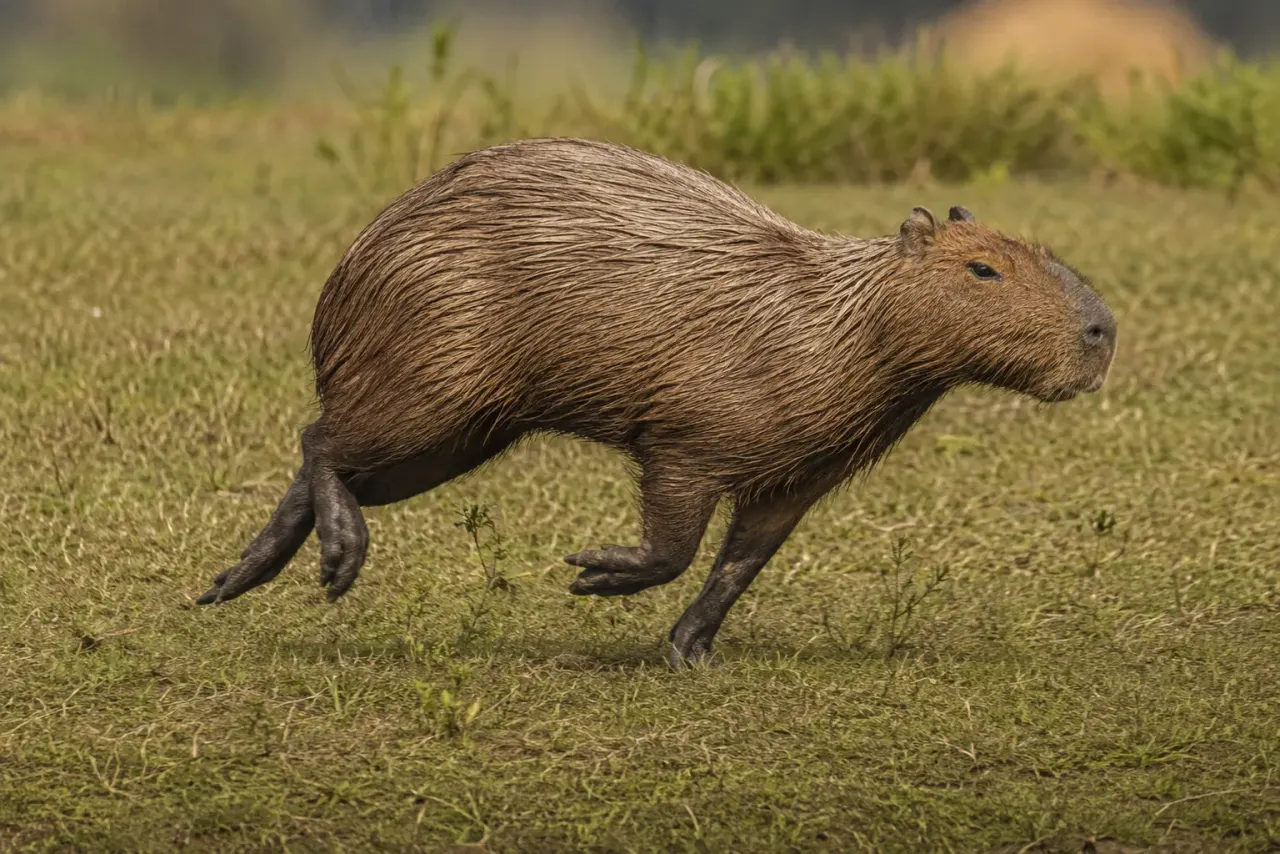
Cheesecake lumbers in. There is a brief detour: the bedroom door has been left open, and Cheesecake, being a creature of opportunity, turns straight into it. Marina rules the bed off limits. Cheesecake accepts the ruling without protest and redirects to the couch, where she settles next to Stevie.
That is the entire dynamic of living with a capybara in one sequence. They are not aggressive. They are not theatrically destructive. They locate the most comfortable option in the room and move toward it, and you either redirect them or you do not.
The caption is the story
The Reel has over 3.5 million likes and a comments section full of people who now want a capybara, a better dog, or both. What most of them did not read is what Marina wrote underneath it.
She has to watch them 100% of the time when they are inside. They will chew through wiring and blankets the moment supervision lapses, and she describes them as smart enough to wait for exactly that moment. She calls the care “extremely time-consuming and expensive,” and her advice to anyone drawn in by the video is to get a guinea pig instead — which is taxonomically reasonable, since guinea pigs are among the capybara’s closest relatives.
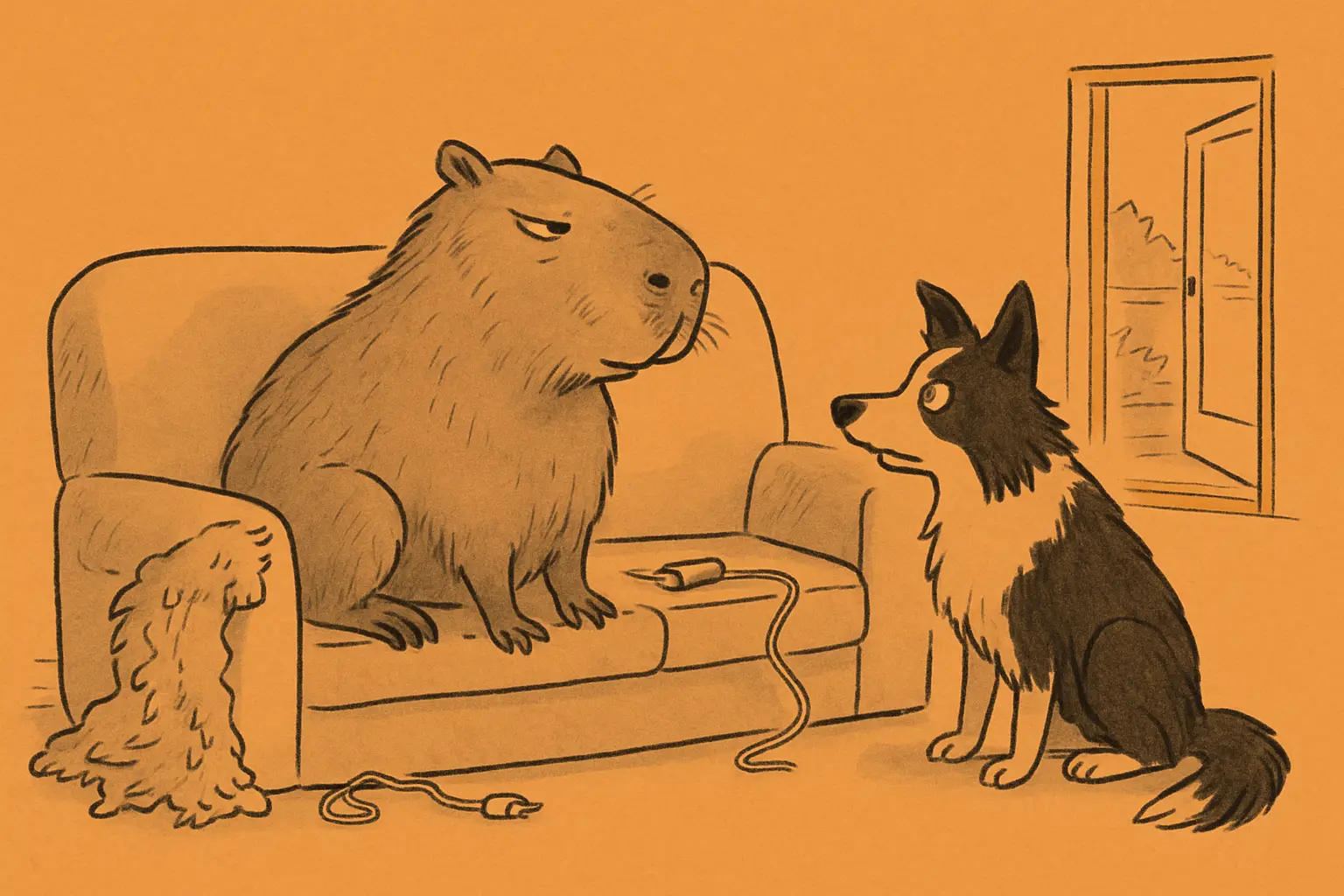
Her instruction to the capybaras when they are indoors is “don’t eat anything.” It is a reasonable thing to have to say out loud in your own home.
Why the chewing is not misbehaviour
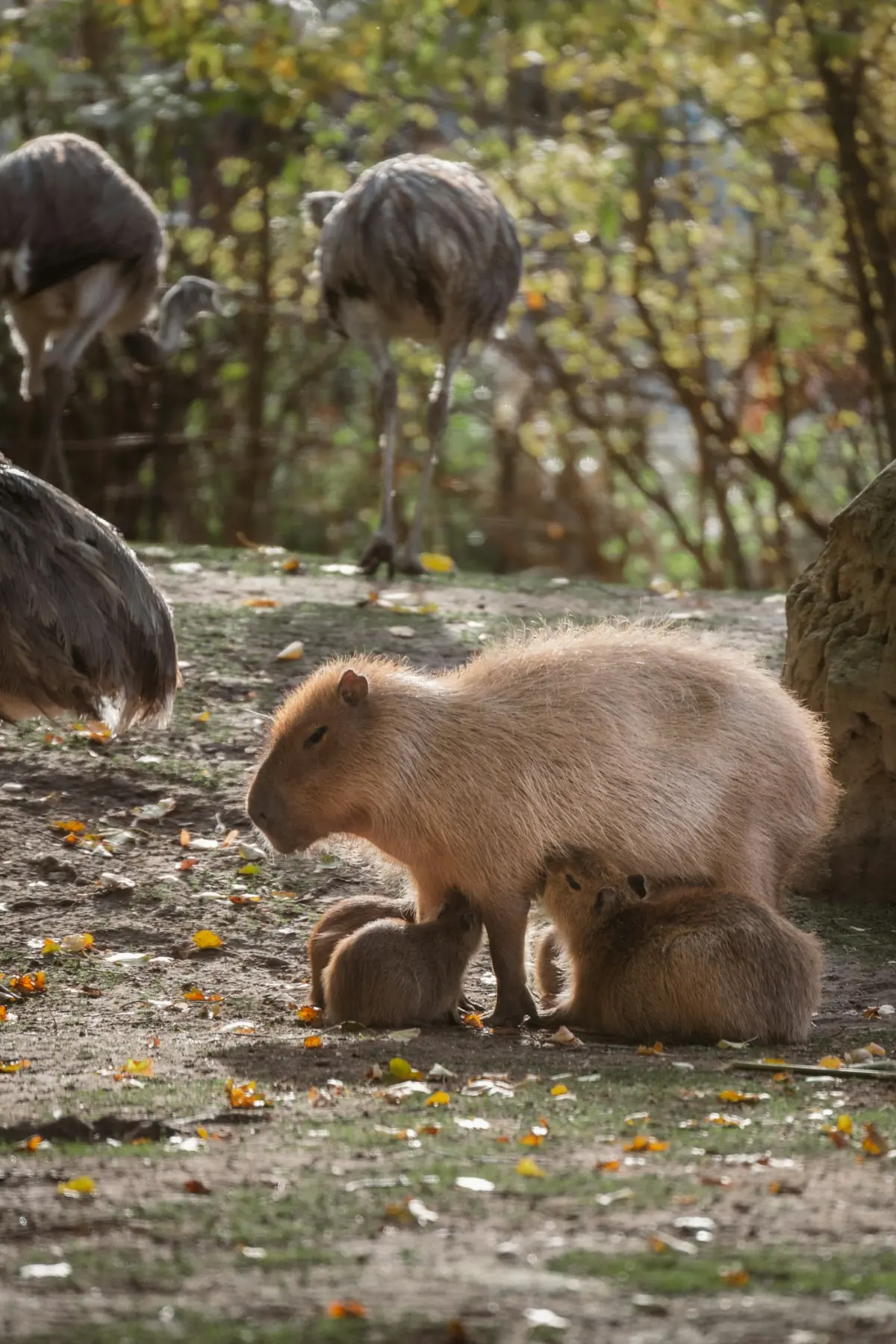
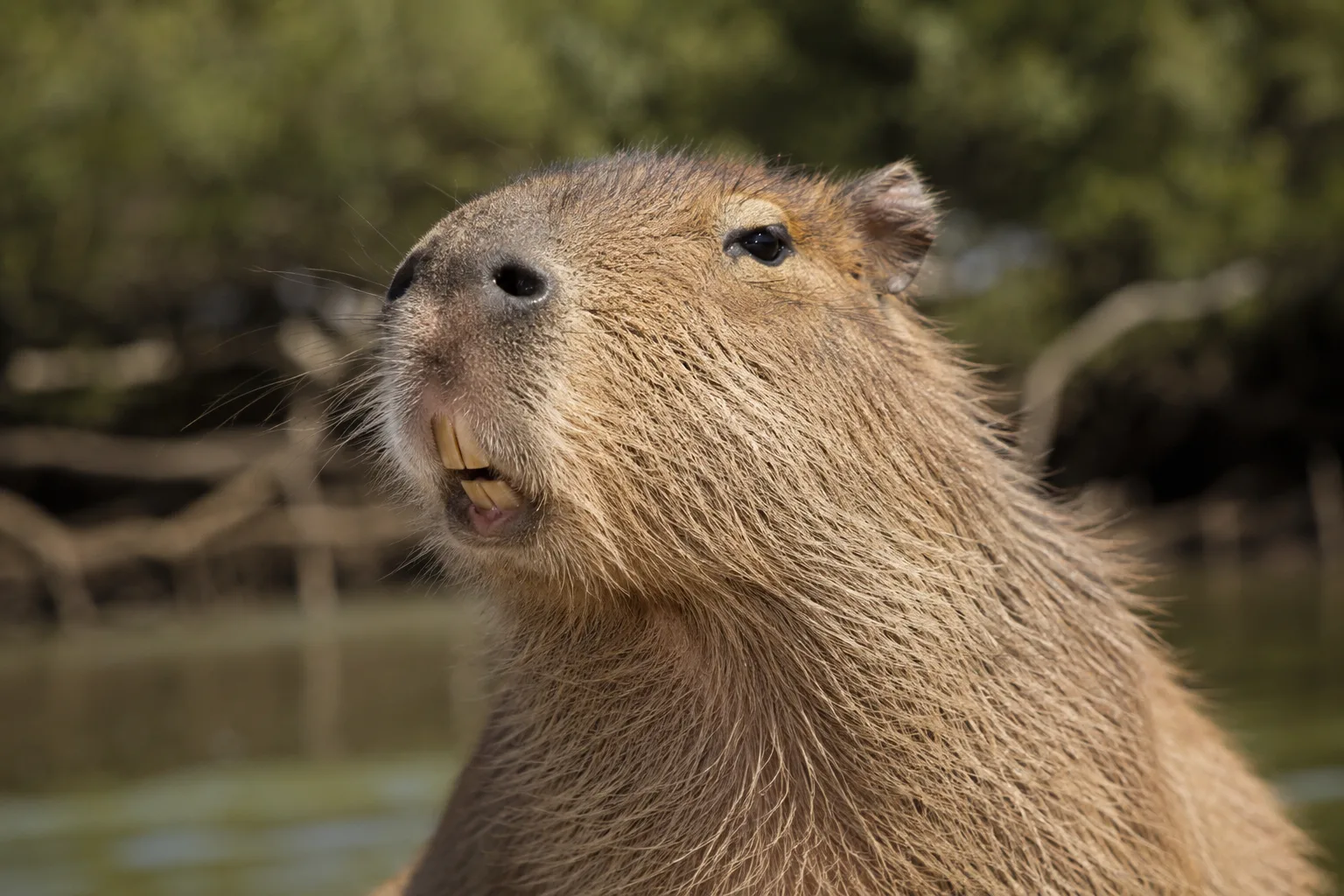
Capybara teeth never stop growing. Both the incisors and the cheek teeth grow continuously through life, worn down by the fibrous grasses and aquatic plants that make up almost all of a wild capybara’s diet.
Indoors, there is no fibrous grass. There is cabling, upholstery and blankets. The animal is not being destructive — it is performing dental maintenance on the nearest available material. This is the single practical fact that separates capybara content from capybara ownership, and it is almost never in the video.
The friendship took work
The other thing the viral framing gets wrong is treating Cheesecake and Stevie’s relationship as a natural default.
Marina is direct about this: the capybaras were carefully socialised to coexist with the dog. Wild capybaras can be territorial, and the famous cross-species tolerance — birds perching on them, small mammals treating them as furniture — is a social system built on scent-marking, vocalisation and posture rather than a personality trait that transfers automatically to a Border Collie in a living room.
Stevie’s side of it is easier to explain. Border Collies are herding dogs with a strong instinct to engage with whatever is moving nearby. A capybara arriving every morning probably satisfies something in the working-dog brain, even if what he is nominally supervising is a 50-kilogram rodent with its own agenda.
What Dark Wings Wildlife is
Not a house with a novelty pet. Marina runs a nonprofit focused on wildlife education through what she calls “edutainment” — livestream exhibit cameras and virtual interaction programmes. Cheesecake and Pumpkin are permitted ambassador animals.
The wider household includes two Asian small-clawed otters, an African pied crow, Stevie, a cat named Chloe who turned up under the porch one day, three goats, and a blind goose. It is a lot of animals, and Marina appears aware of this.
The Grumpy Capy take
The genuinely interesting detail is the one that reads as a throwaway: Cheesecake times her arrival around Pumpkin’s sleep schedule.
That is planning around a social variable. Either it is learned behaviour — she noticed that early visits produce a better outcome and repeated them — or it is a very convenient coincidence. Marina believes the former, and on the available evidence she is probably right. Capybaras are social animals with a real internal hierarchy, and quietly engineering uncontested access to a resource is exactly the kind of thing a hierarchy produces.
Everything else about the clip is the visible end of a long process. A permit, a farm, a nonprofit, years of socialisation work, and a person who does not leave the room. Most people watching will not replicate that, and the honest read of Marina’s caption is that she would rather they did not try.