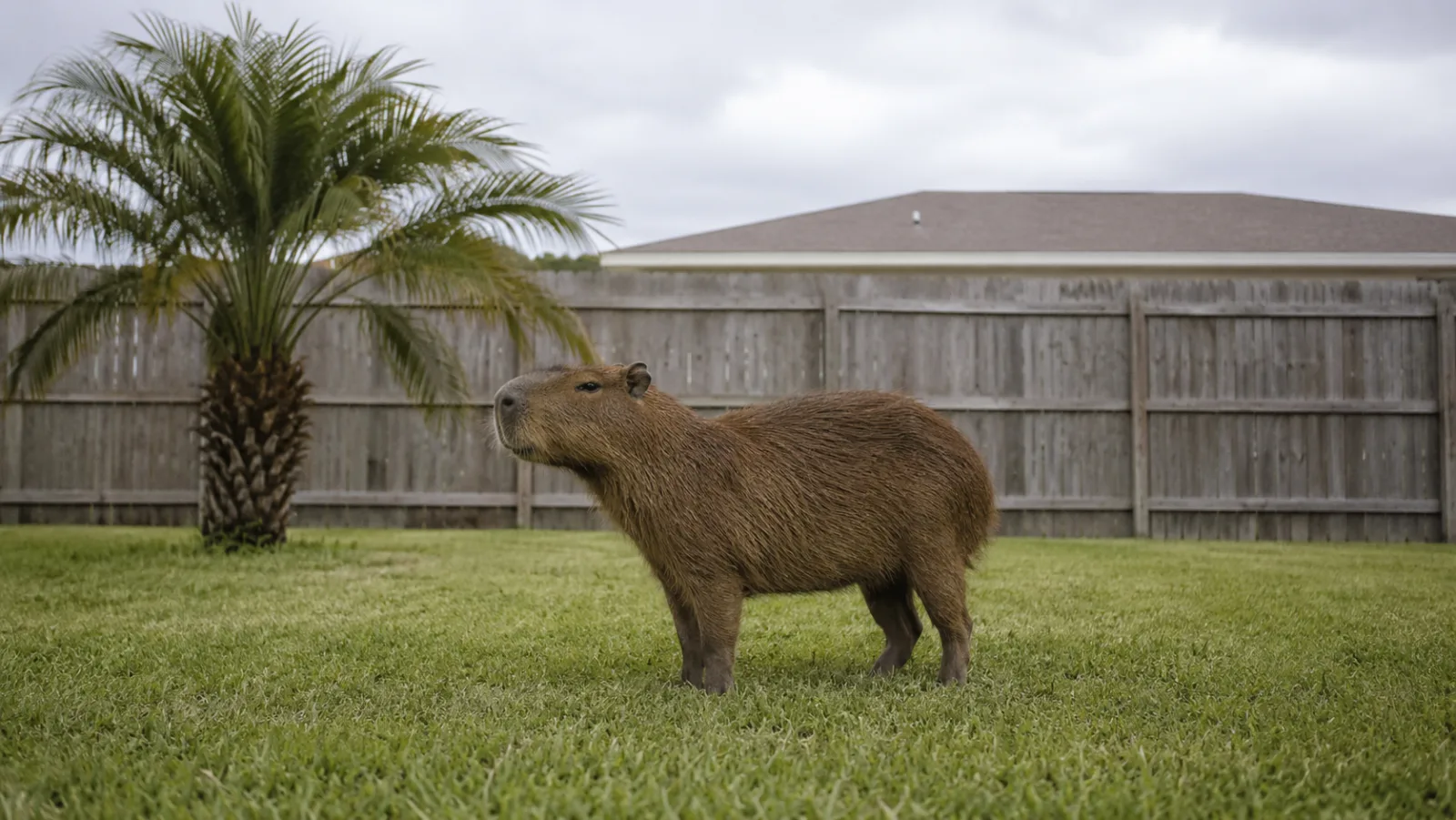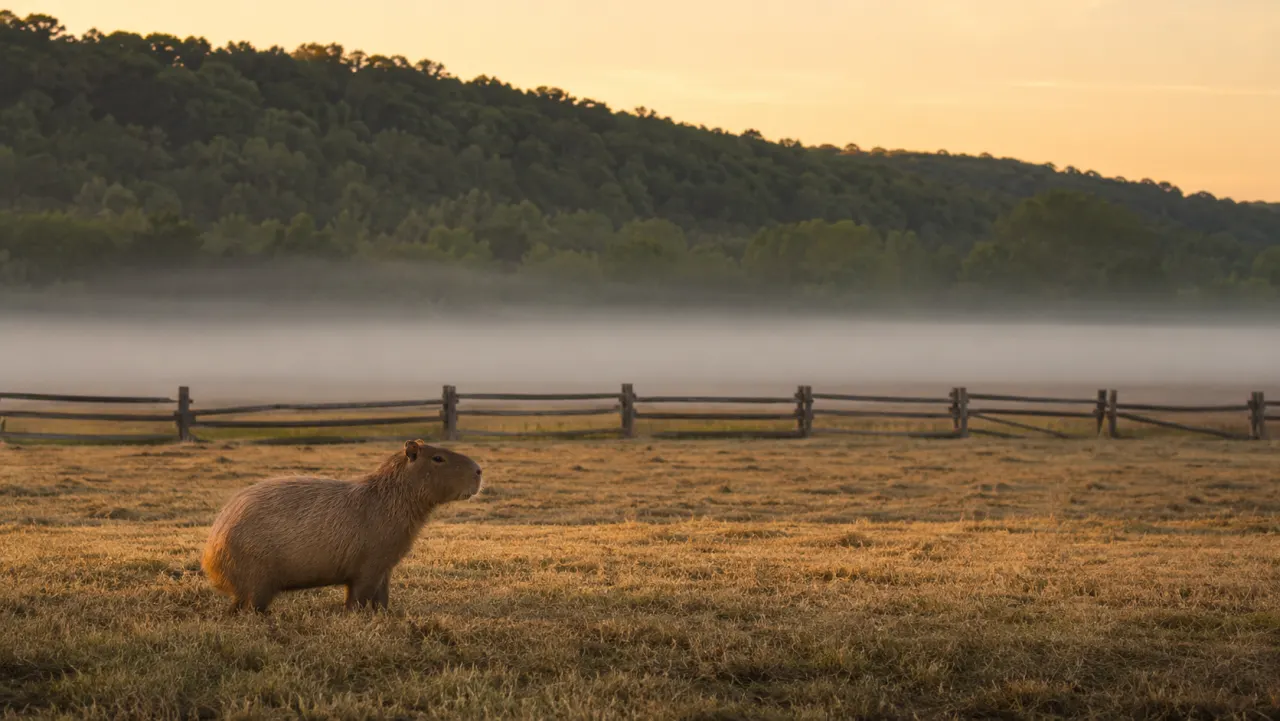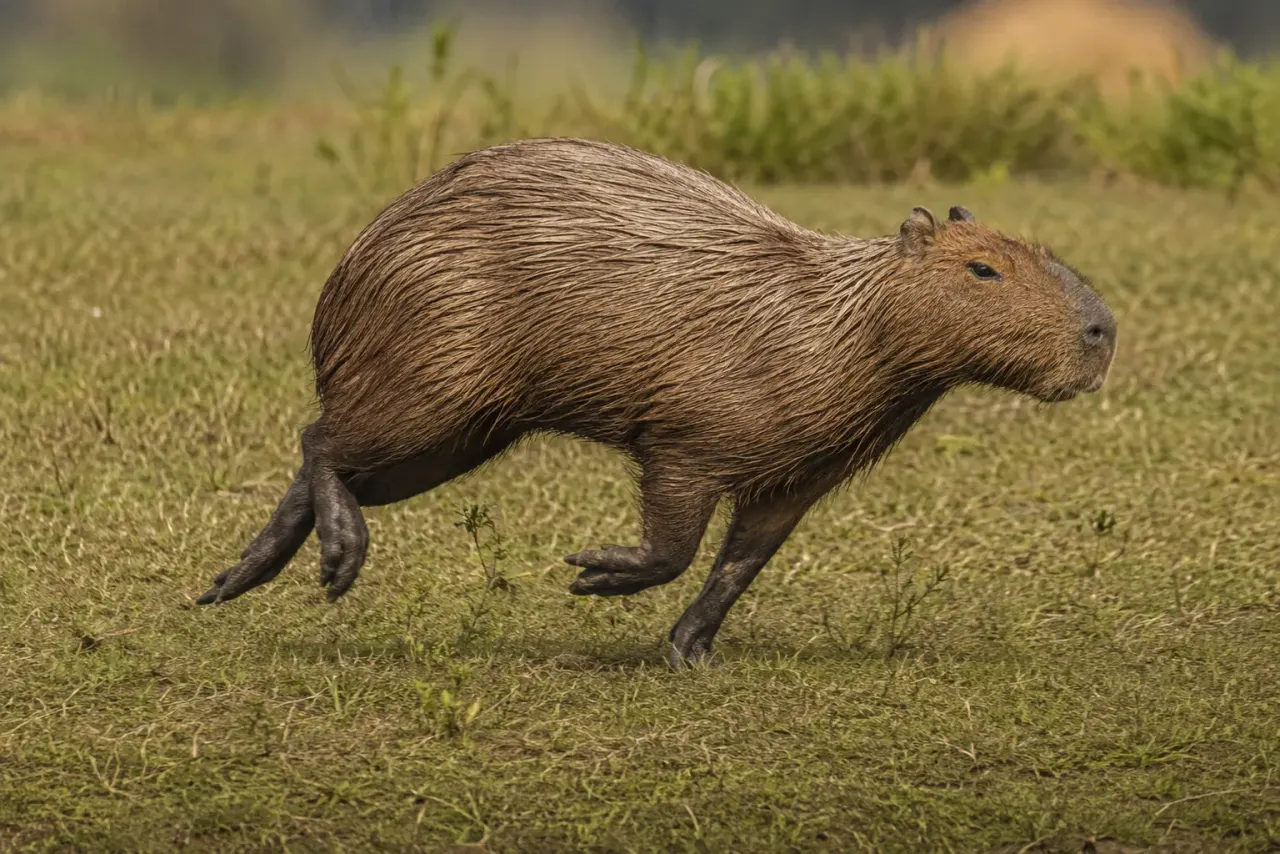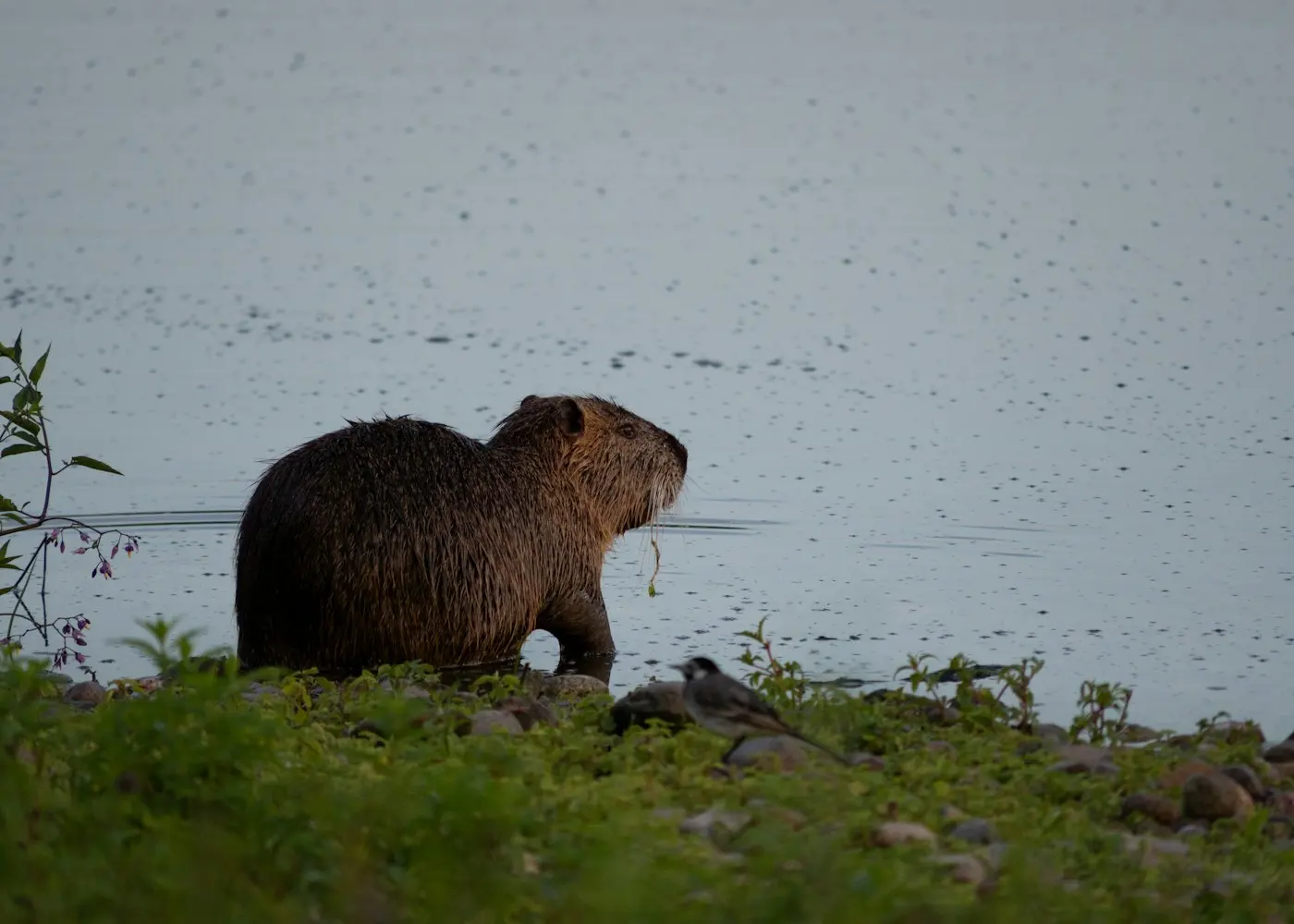
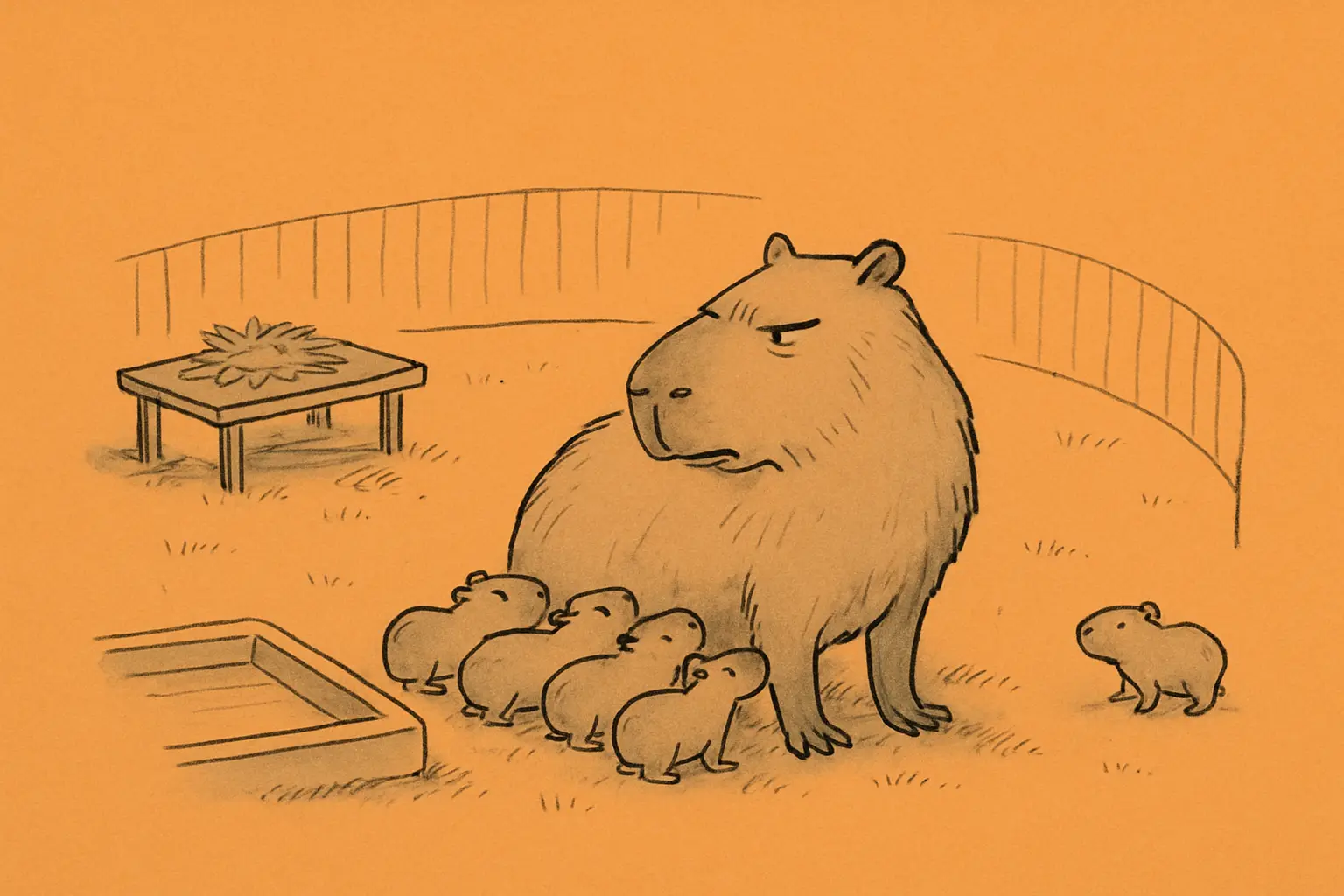
In September 2025 Rīga Zoo had three capybaras. By 3 June 2026 it had seventeen. That is not a slow drift upward — it is three litters in nine months from a single breeding group, and it has happened without the zoo saying anything publicly about how it intends to manage the result.
Three litters in nine months
September 2025 — A single pup is born. It has a harder start than what follows; keepers monitor it more closely than the later arrivals, and it is still being flagged in reporting a month on. The zoo does not elaborate on what the difficulty was.
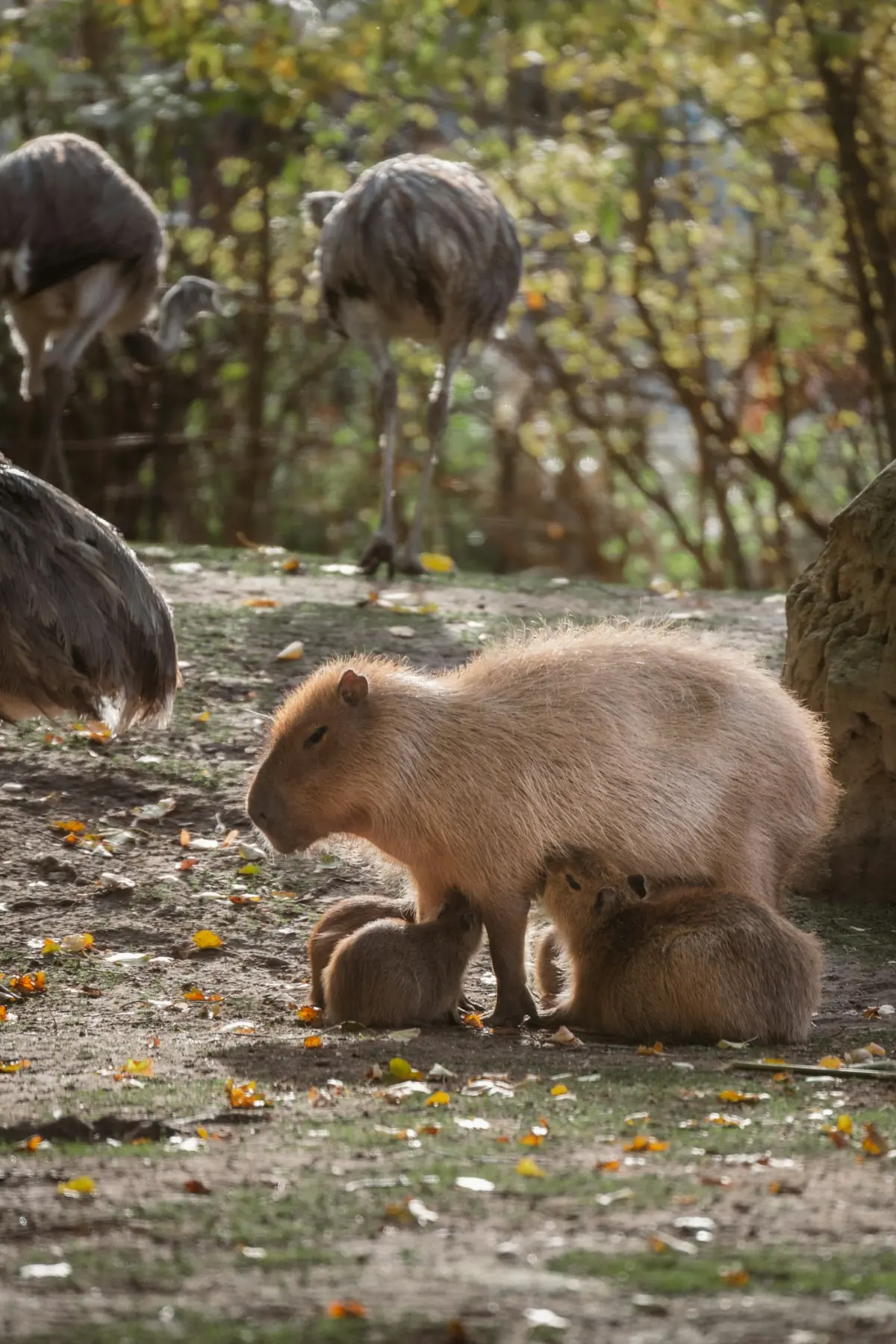
Mid-October 2025 — Four more pups arrive, roughly a month after the first. All five youngsters are reported healthy, active and gaining weight on schedule. The group is now eight: adults Oskars, Truse and Tindra, plus five pups — three male, two female.
Autumn 2025 — The whole family moves indoors for the season.
26–31 January 2026 — The zoo runs a public naming contest for the five pups, taking submissions on Facebook and Instagram.
May 2026 — Four more pups: three males, one female.
3 June 2026 — Five more pups. The group reaches seventeen. Sexes not yet determined.
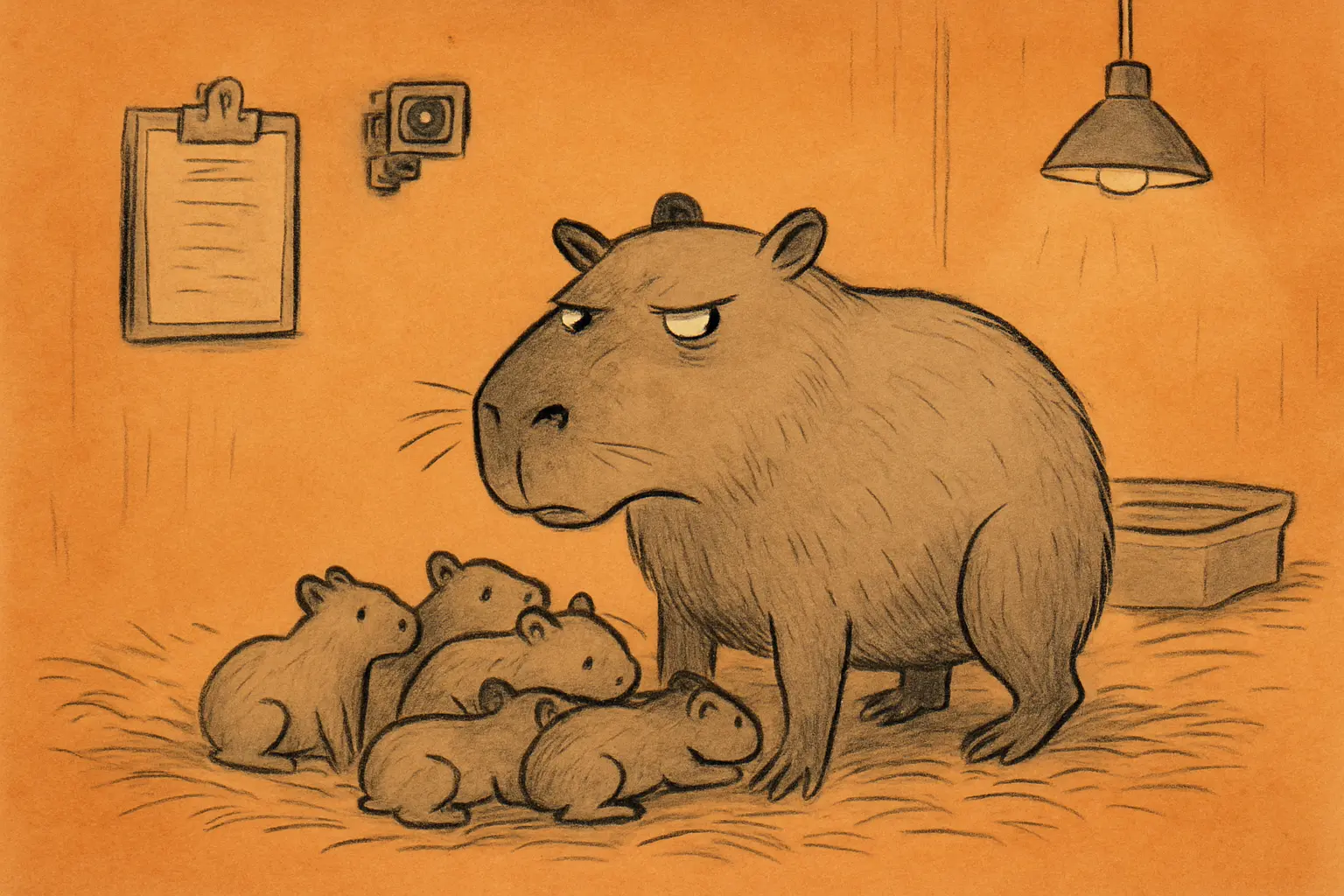
Three litters is not biologically remarkable. Capybaras produce two to eight pups per litter and a female can carry multiple litters in a year when conditions suit her. Fourteen offspring in nine months means the enclosure, diet and social group are working well. It is a husbandry success. It is also, at some point, a capacity question.
The naming contest
The five autumn pups were named by public vote, with submissions open on the zoo’s social channels until 31 January 2026. The results were eclectic in a way that suggests the zoo genuinely took suggestions rather than curating a tidy theme: Anda, Frīda, Straume, Tamis, and Maksimuss Otto.
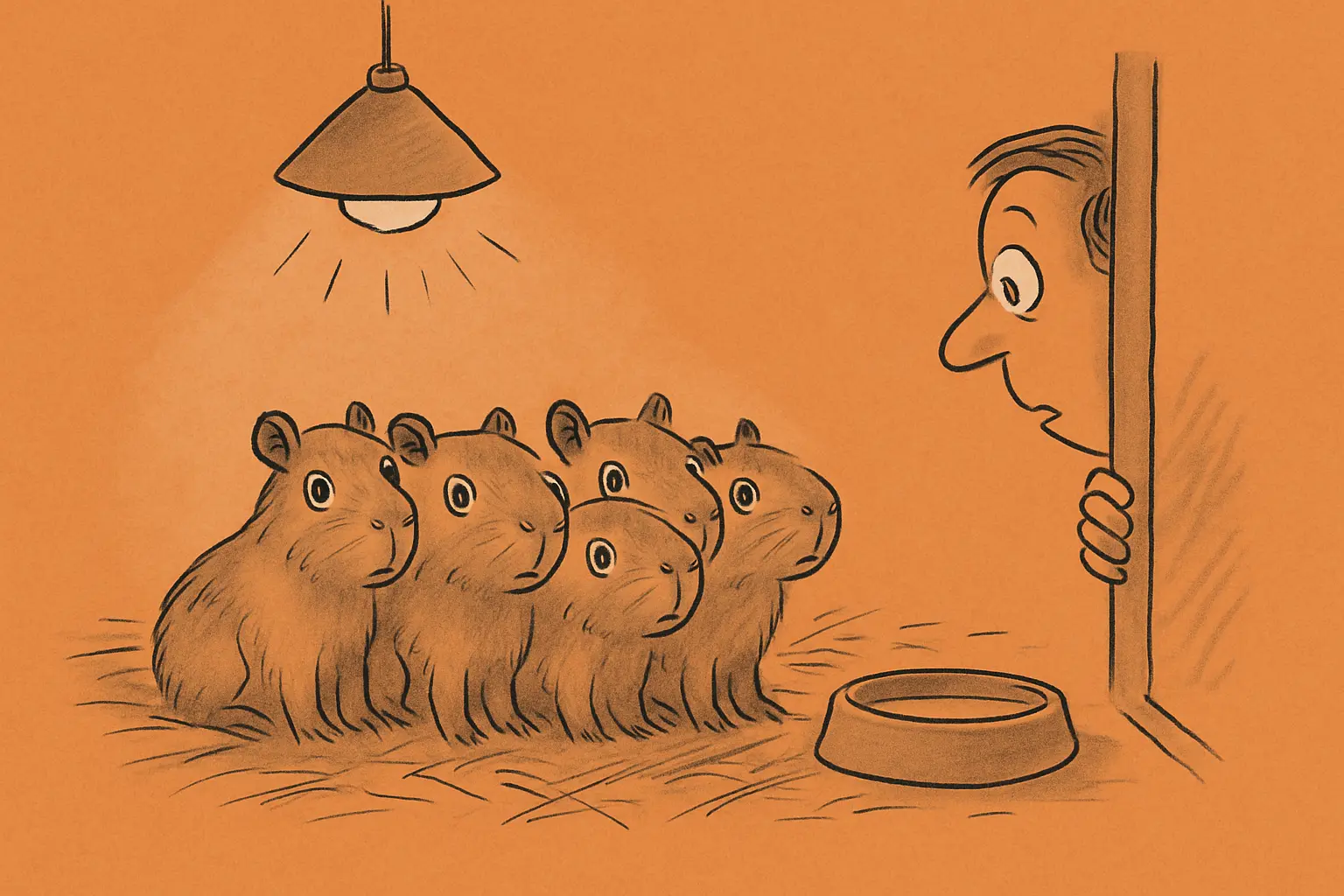
The May and June 2026 litters had not been publicly named at the time of writing. If the contest format returns for every cohort, the zoo has a content treadmill on its hands — nine more animals is a lot of naming rounds, and the novelty runs out before the litters do.
Why the group disappears every winter
Capybaras are native to tropical and subtropical South America and do not pretend otherwise. Latvian autumn arrives and the family goes inside.
LSM described them as “heat-lovers,” which undersells the problem. Capybaras thermoregulate partly by spending long stretches in water, which also keeps their skin from drying and cracking. A cold-climate indoor enclosure has to replace both the ambient temperature and the warm-water immersion. It is not a matter of closing a door.
To keep the animals visible while they are inside, the zoo runs a livestream of the enclosure, provided by Bite Latvija, with extended hours over winter. It goes dark for roughly two hours each morning during cleaning. It is a better solution than most zoos manage for a seasonally hidden species.
The male problem nobody has addressed
This is the part of the story that has gone unexamined in the coverage, and it is the one that actually matters.
Wild capybara groups are typically dominated by a single adult male. Subordinate males occupy a lower social tier or are pushed out of the group entirely as they mature. Oskars is Rīga Zoo’s only adult male. The October 2025 litter contained three males, and the May 2026 litter contained three more.
Capybaras reach sexual maturity at around 18 months. The autumn 2025 males will hit that point in early 2027. At that stage the zoo is looking at six or more maturing males in an enclosure with one established adult male and nowhere for the losers to go. That is either a rehoming plan, an expansion plan, or a contraception plan — and none of the three has been mentioned publicly.
The two females from the first litter, by contrast, will most likely integrate without friction. Capybara groups accommodate multiple adult females without the same hierarchy tension.
Why the communal rearing is working
All three adults tend all the pups, which is exactly what capybaras do in the wild. In South American populations, any lactating female in a group will nurse any pup, not just her own, and non-breeding adults help guard and supervise. It measurably improves survival across a litter.
That system is also the reason the “capybaras are low-maintenance because they’re sociable” assumption is wrong. Communal care only functions when the group composition is stable and the animals are not stressed by environmental pressure. The indoor move and the extra keeper monitoring for the September pup are not incidental logistics — they are the conditions the social structure depends on.
Worth correcting a related misreading while we are here: the famous capybara placidity, the one built on videos of birds and monkeys using them as furniture, is structural rather than temperamental. Capybaras run a real dominance hierarchy and signal threat and submission through scent glands, vocalisations and posture rather than overt aggression. A group of seventeen at four different developmental stages has an extremely active internal politics that a viewing public is not equipped to read.
In summer the enclosure is shared with a family of Patagonian maras — long-legged, faintly rabbit-like South American rodents. It is a sensible pairing: both species graze, both are social, and the size gap is wide enough that there is never any ambiguity about who has priority at the water.
What the zoo has not said
- No population management plan has been made public — no contraception, no rehoming, no expansion timeline, despite the group nearly sextupling in nine months.
- No veterinary comment appears in any of the coverage.
- The September 2025 pup’s difficulty was never specified, and the fact that it was still being mentioned a month later suggests keepers were not relaxed about it.
- The sexes of the June 2026 litter had not been determined at the time of reporting.
- Adult naming is inconsistent across sources. The October 2025 report names the adult females Trīne and Truse; later reporting gives Tindra and Truse. This page uses Tindra and Truse, following the more recent source, but the discrepancy is unresolved.
- All three reports come from LSM, Latvia’s public broadcaster. They are three separate dispatches rather than one recycled release, but this story has effectively had one outlet covering it.
The Grumpy Capy take
Rīga Zoo has quietly built one of the more interesting capybara groups in northern Europe, and almost nobody is treating it as a story. Seventeen animals, three litters, functioning communal rearing, a sponsored winter livestream — that is a genuinely well-run capybara programme.
It is also a programme running toward a wall. Six-plus males maturing into an enclosure with one dominant adult is not a hypothetical; it is a date on a calendar in early 2027. Zoos solve this all the time, usually with contraception or a transfer agreement, and there is no reason to assume Rīga has not. But nobody has asked, and the zoo has not volunteered it.
The naming contests are fine. The livestream is better. The husbandry question underneath both is the one worth an actual answer.