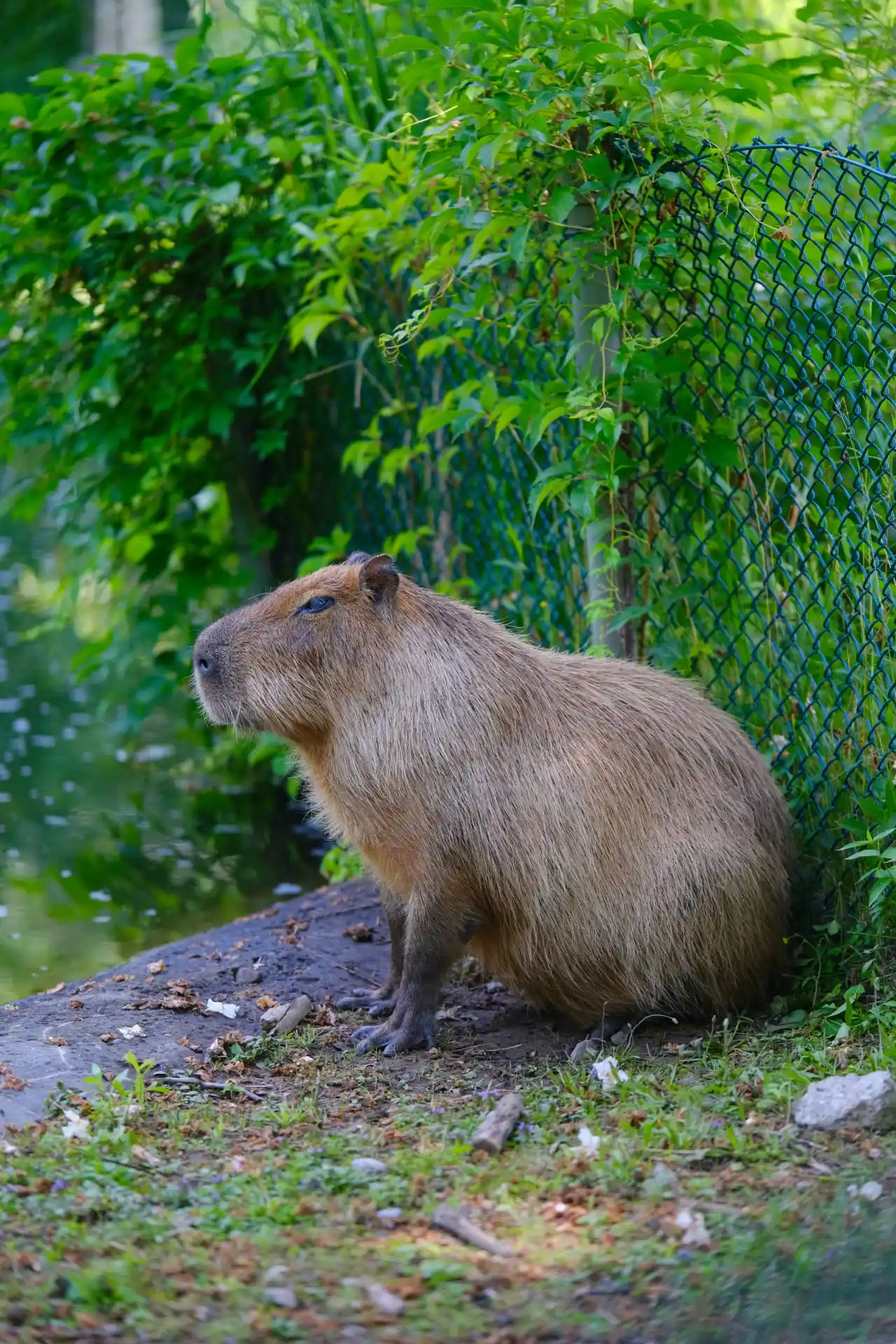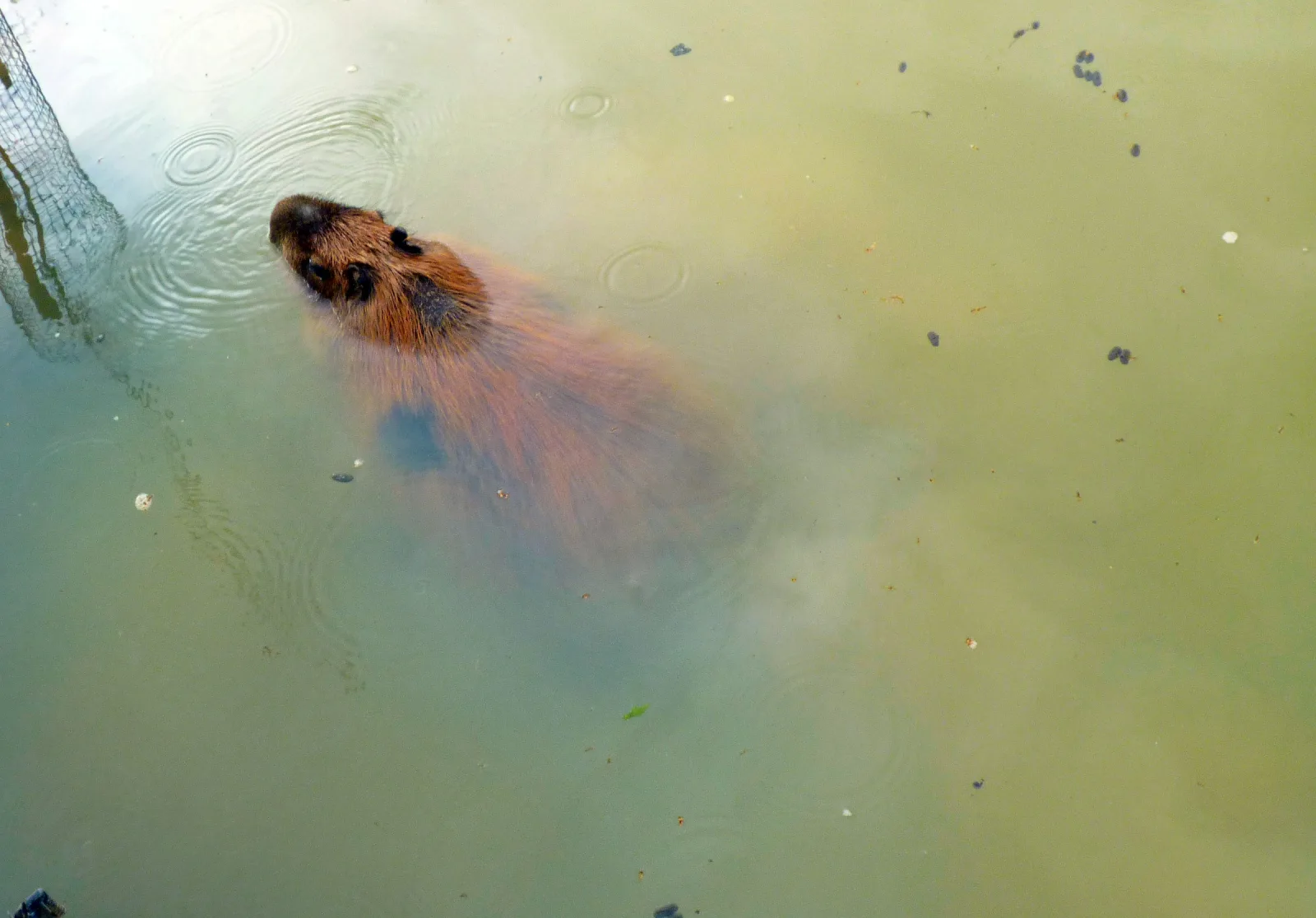
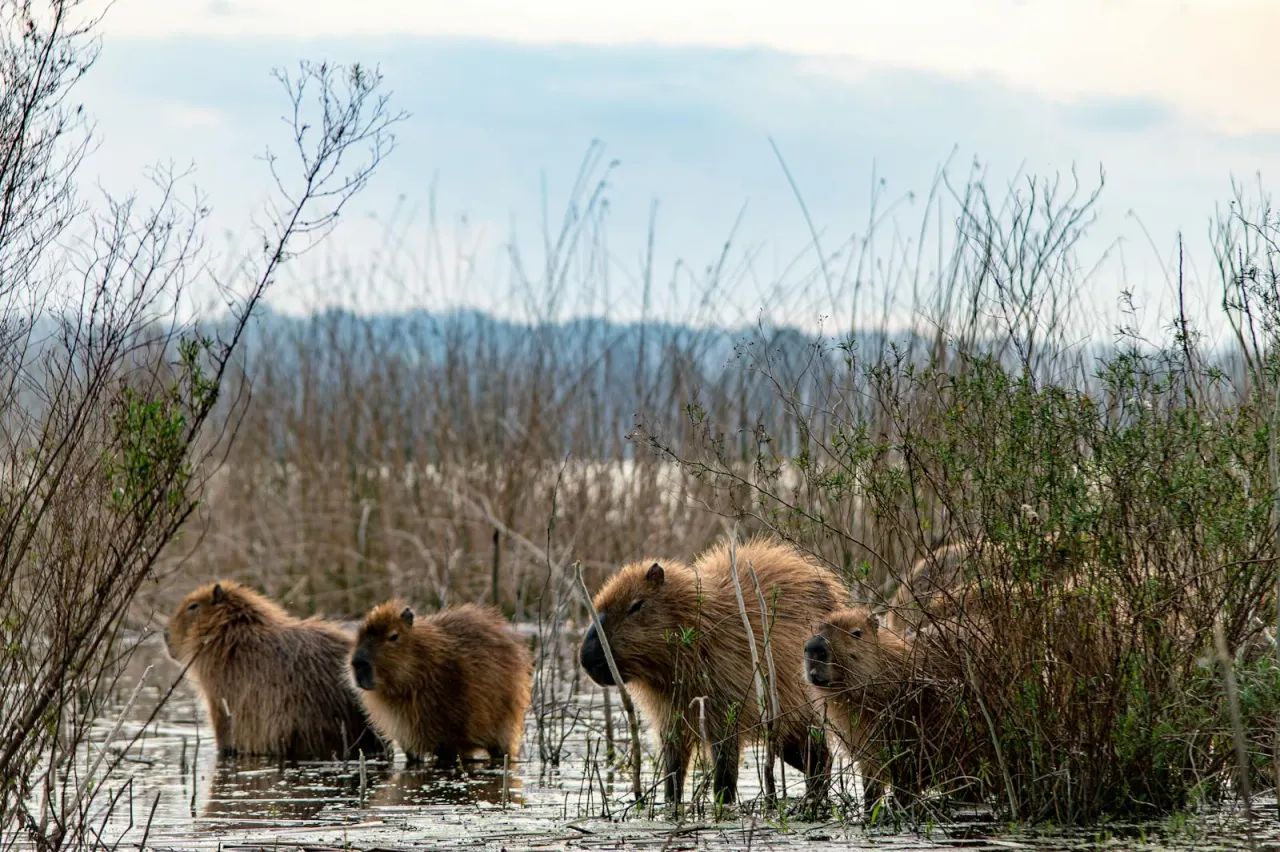
The best place to see wild capybaras is not a secret zoo or a magic bridge. It is a wetland with grass, water, cover, and enough protection that capybaras can get on with being capybaras while humans point binoculars and try not to squeak.
In South America, that usually means the Pantanal, Iberá, Los Llanos, and river-edge protected areas. The animals are not rare across much of their range, but easy viewing depends on open habitat. Dense forest can contain capybaras and still give you one suspicious ripple and nothing else.
The Best Regions For Wild Capybaras
Brazil’s Pantanal is the classic wildlife answer. WWF describes the Pantanal as the world’s largest tropical wetland, spanning Brazil, Bolivia, and Paraguay, and names capybaras among the region’s signature animals. The open water, grasslands, ranch roads, riverbanks, and jaguar-tour circuits make sightings common on many wildlife trips.
Argentina’s Iberá wetlands are another excellent choice. Travel specialists routinely highlight capybaras as emblematic wetland animals there, and Argentina’s own national sources describe the carpincho as a widespread amphibious herbivore present through much of South America and down to Buenos Aires province.
The Llanos of Venezuela and Colombia are seasonally flooded savannas where capybaras share the landscape with caimans, birds, deer, and big predators. Political and travel conditions matter here, so choose reputable local operators and current safety guidance rather than building the trip from a dreamy wildlife paragraph.
Argentina’s river parks and delta edges can also be productive. Argentina’s national parks materials mention carpinchos in several protected areas, including El Palmar, Iberá, Mburucuyá, and river-island parks. You may not get the cinematic Pantanal density, but you get real capybara habitat without needing to stage-manage nature.
| Region | Why it works | Best viewing style |
|---|---|---|
| Pantanal | Open tropical wetland with abundant water-edge wildlife | Guided wildlife lodge, boat, road, or jaguar-trip add-on |
| Iberá wetlands | Marshes, lagoons, floating vegetation, high wildlife visibility | Lodge stay, boat trip, boardwalks, local guides |
| Los Llanos | Flooded savanna with capybaras, caimans, and birds | Guided ranch or wildlife safari |
| Argentina river parks | Public protected areas and wetland edges | Day trips, trails, quiet viewing |
When And Where To Look On The Ground
Capybaras are easier to spot when the day cools. Dawn and late afternoon are good because grazing and group movement pick up. Midday heat can push them toward water, shade, mud, or the kind of stillness that makes a tourist wonder whether the animal is meditating or simply judging the itinerary.
Look where short grass meets water: riverbanks, lagoon edges, marsh trails, flooded pastures, pond margins, and quiet canals. San Diego Zoo Wildlife Alliance notes that capybaras live beside ponds, rivers, marshes, or wherever standing water is available. Animal Diversity Web describes grasses and aquatic plants as the core food pattern. Put those two facts together and the search map becomes less mystical.
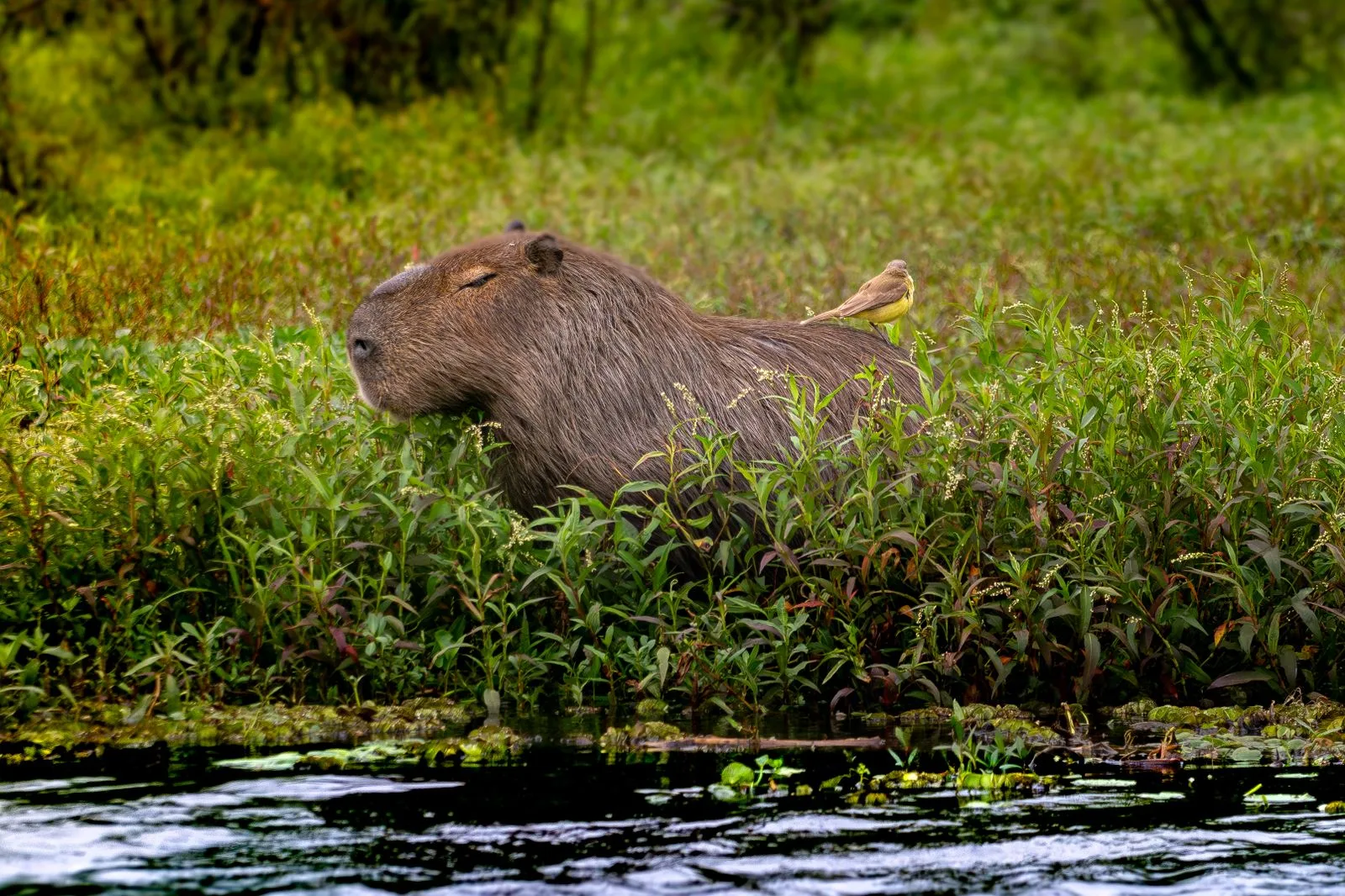
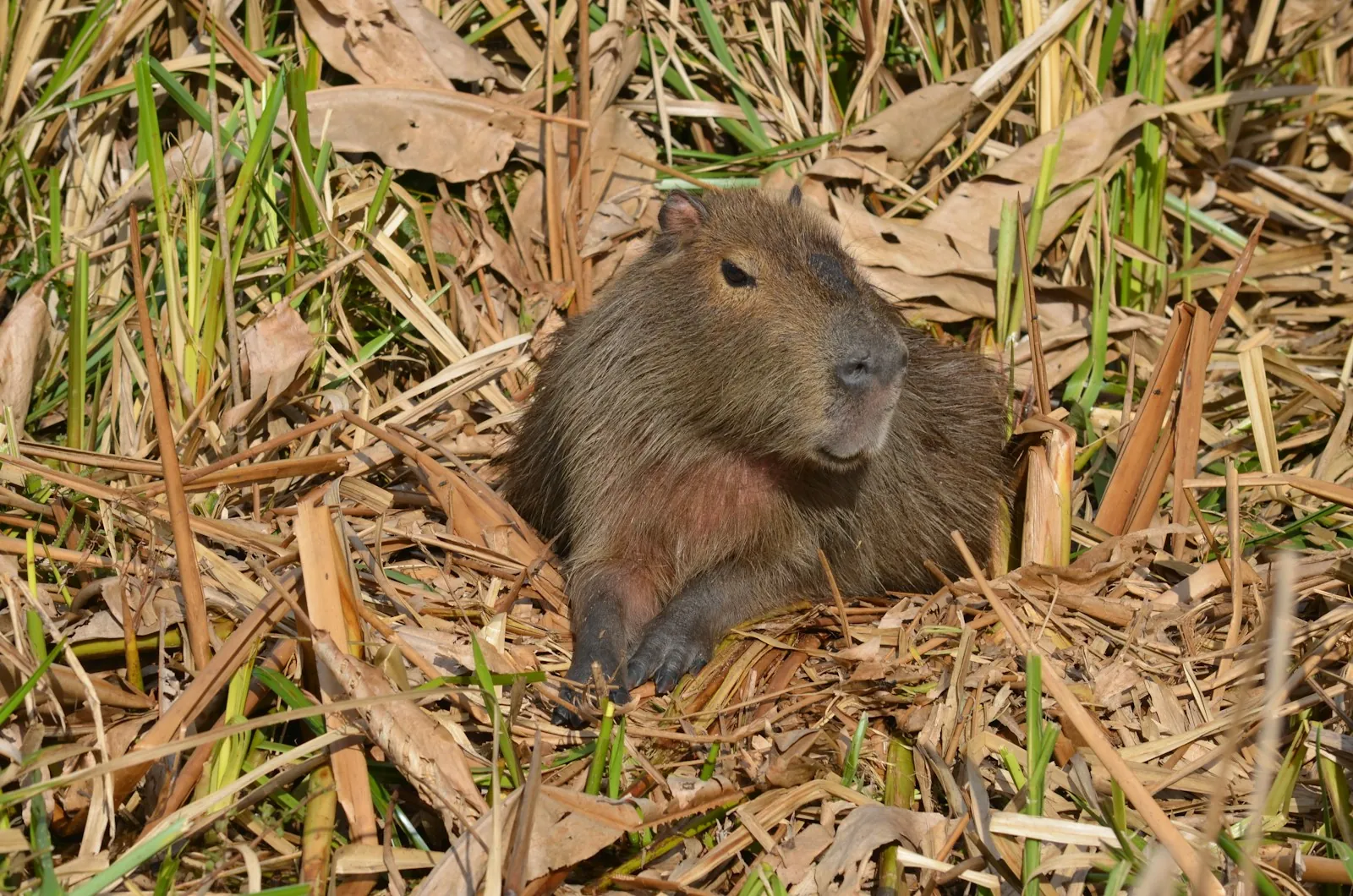
The little trick: scan for heads first. A capybara partly hidden in grass is a brown horizontal shape until the ears, nostrils, and blunt forehead resolve. Once you see one, you often realize the “logs” nearby have been a committee meeting all along.
The Cities Count Too
The regions above are where you go to see capybaras in a landscape. But a large share of South America’s capybaras now live alongside people, and some of the easiest viewing is municipal rather than wild.
The clearest illustration came from Cuiabá, in Mato Grosso, Brazil, when a group of capybaras walked into the state legislative assembly building while lawmakers were preparing for a vote. An assembly staffer, Nayara Bueno, filmed them and calmly walked them back outside. No damage, no drama.
The detail that did not travel with the clip is the one that matters: Bueno said the visits are frequent. The assembly sits beside a park with a resident capybara population, so this was routine rather than remarkable. That is the actual picture across much of urban Brazil and Argentina — capybaras using parks, drainage corridors and riverbanks inside cities, and moving through human infrastructure as a matter of course.
Two practical consequences. First, if you are in a South American city with a riverside park, check it before booking a lodge. Second, treat coverage weight figures with suspicion: reports of that incident put the animals at anything from 80 kg to 150 lb, while adult capybaras actually run 35–65 kg.
How To Watch Without Being The Problem
Wild capybaras are calm until they are not. They are prey animals, strong swimmers, fast runners, and large enough that a bite or collision can ruin a vacation. Respect the distance. Do not feed them. Do not block the path to water. Do not push a group for a photo.
| Human urge | Better behavior |
|---|---|
| Walk closer for the phone shot | Use zoom or binoculars |
| Offer food | Do not feed wildlife |
| Stand between capybara and water | Move away from the escape route |
| Approach babies | Back off; adults are nearby and stressed animals make poor hosts |
| Chase a group down a trail | Stay still and let them pass |
This matters in urban edges too. Capybaras can become road hazards, garden conflicts, and public-health headaches when humans normalize close contact. Argentina’s national sources note disease and parasite pressures can affect populations, and urban capybara conflicts are not imaginary. “Friendly-looking” is not a management plan.
Which Destination Fits Your Capybara Trip
Pick the region by the trip you actually want.
Choose the Pantanal if you want the richest all-around wildlife trip, with capybaras as part of a larger cast that may include jaguars, caimans, giant otters, macaws, and marsh deer. Choose Iberá if you want Argentina wetlands, slower travel, and high chances of seeing capybaras in open marsh country. Choose Los Llanos if you are already working with a reputable Venezuela or Colombia wildlife operator and want flooded-savanna drama. Choose Argentina’s river parks if you want a lower-commitment capybara day from a broader Argentina trip.
For fans already reading about wild capybaras in Argentina or the Pantanal capybara guide, this is the map-level version: water first, open edges second, patience third.
The Practical Takeaway
To see wild capybaras in South America, go where wetlands make the animal visible: the Pantanal, Iberá, Los Llanos, and protected river parks. Look near water at cooler hours. Hire local guides when the habitat is large, seasonal, or hard to access.
Then do the simplest hard thing: watch without interfering. A wild capybara does not need your snack, your hand, your drone, or your emotional support monologue. It needs grass, water, group space, and a human who can stand still for once.