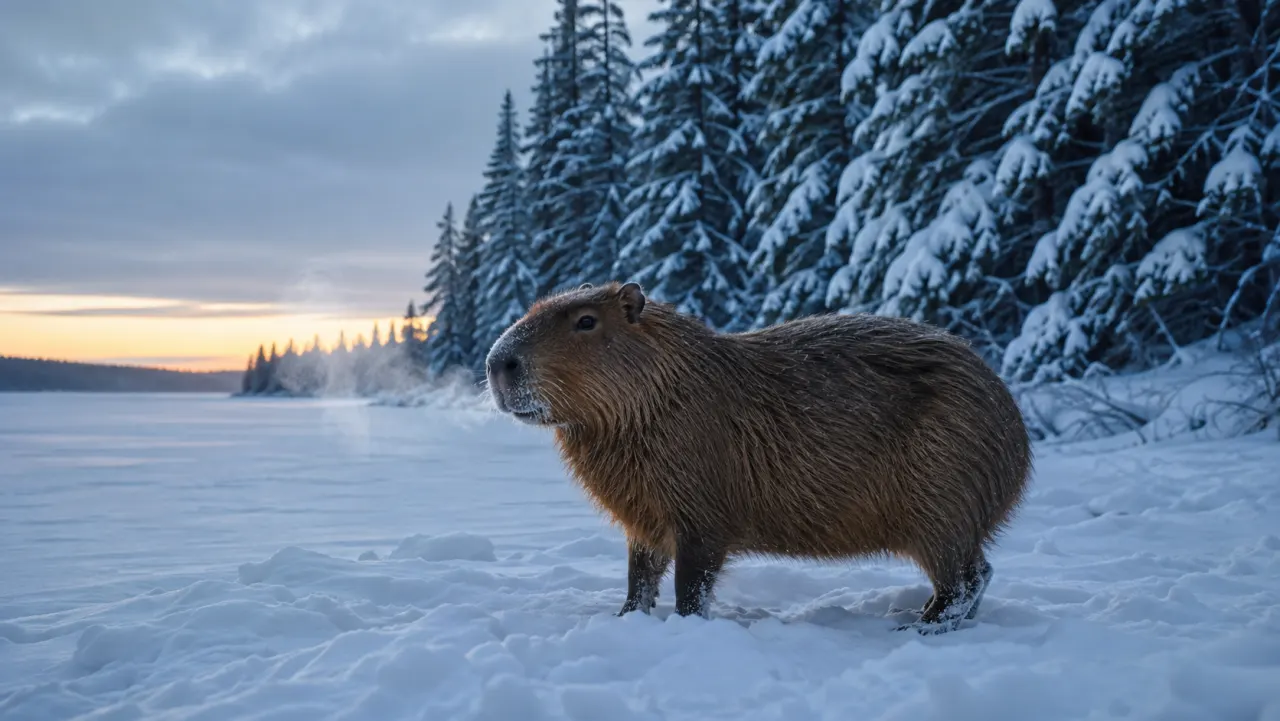
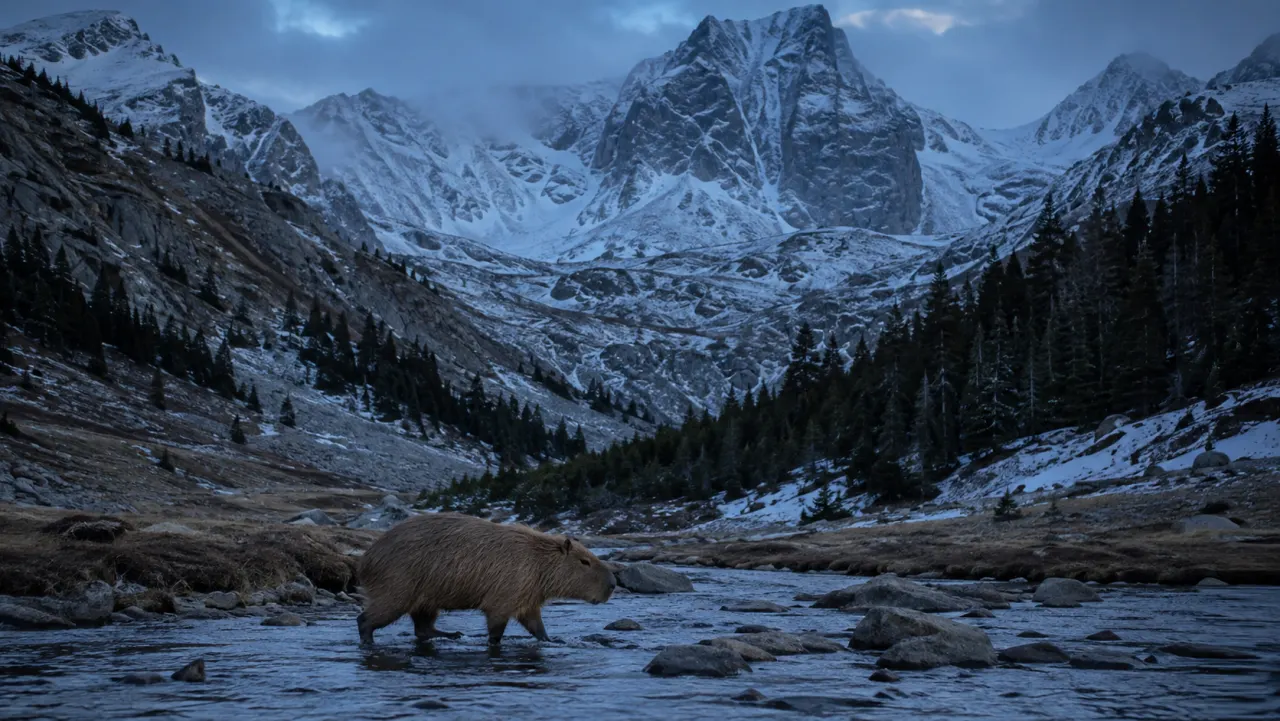
Colorado’s approach to exotic wildlife is governed by Colorado Parks and Wildlife (CPW), and the framework is more structured than many people assume. The Colorado Wildlife Act (CRS Title 33) gives CPW authority over non-native wildlife possession, import, and sale in Colorado, and the agency maintains classifications for permitted and prohibited species. Capybaras are not on Colorado’s explicitly prohibited list, but the “not prohibited” label comes with significant caveats.
Front Range cities have closed the door at the local level. The altitude and weather create specific care challenges. And the CPW verification call is non-negotiable.
Not prohibited, but CPW classification decides it
The Colorado Wildlife Act (CRS Title 33) gives Colorado Parks and Wildlife authority over non-native wildlife possession, import and sale, and CPW maintains classifications for permitted and prohibited species. Capybaras are not on the explicitly prohibited list — the classification question is the one to ask.
How Colorado Wildlife Law Handles Exotics
Colorado Revised Statutes Title 33 and the associated Colorado Wildlife Rules (2 CCR 406-11) give CPW authority to regulate wildlife possession in the state. CPW maintains lists of prohibited species (which cannot be possessed) and controlled species (which require permits). Non-native mammals that are not on either list may still require CPW contact before possession to determine their current regulatory status.
Capybaras as large South American rodents are not on Colorado’s prohibited species list. Whether they currently fall under a permit requirement as non-native wildlife should be confirmed with CPW’s Wildlife Licensing division. CPW rules can be updated by rulemaking, and the 2024 answer may not be the 2026 answer. The CPW call is step one.
The framework also has a federal layer for commercial exhibition. Anyone planning to show capybaras publicly for compensation — encounters, petting, educational programs — must comply with the USDA Animal Welfare Act in addition to whatever CPW requires. These are independent regulatory requirements.
| Colorado regulatory layer | Governed by | Capybara status |
|---|---|---|
| Prohibited wildlife species | CPW / CRS Title 33 | Not listed |
| Permitted non-native wildlife | CPW / 2 CCR 406-11 | Verify with CPW |
| Commercial exhibition | USDA APHIS AWA | Applies to public encounters |
| Local city/county ordinances | Local government | Applies independently |
Why The Front Range Is Effectively Closed
Colorado’s population is heavily concentrated on the Front Range — the Denver-Boulder-Colorado Springs corridor along the eastern slope of the Rockies. Denver’s municipal code restricts exotic and potentially dangerous animals, and its definition is broad enough to cover non-domestic large mammals. Colorado Springs has similar provisions. Aurora, Lakewood, Thornton, Arvada, Westminster, and most Front Range suburbs have exotic animal ordinances that restrict or prohibit capybara ownership in residential settings.
The Front Range represents roughly 85% of Colorado’s population and encompasses most of the state’s economic activity. For most people asking about Colorado capybara ownership, the answer is determined by their Front Range address before the CPW question is even relevant.
Boulder County and its surrounding communities skew even stricter on exotic animals due to conservation-oriented local governance. The assumption that a college-town progressive city would be more permissive for exotic pets is wrong; Boulder’s environmental orientation actually correlates with stricter exotic animal controls.
Rural Colorado: A Different Conversation
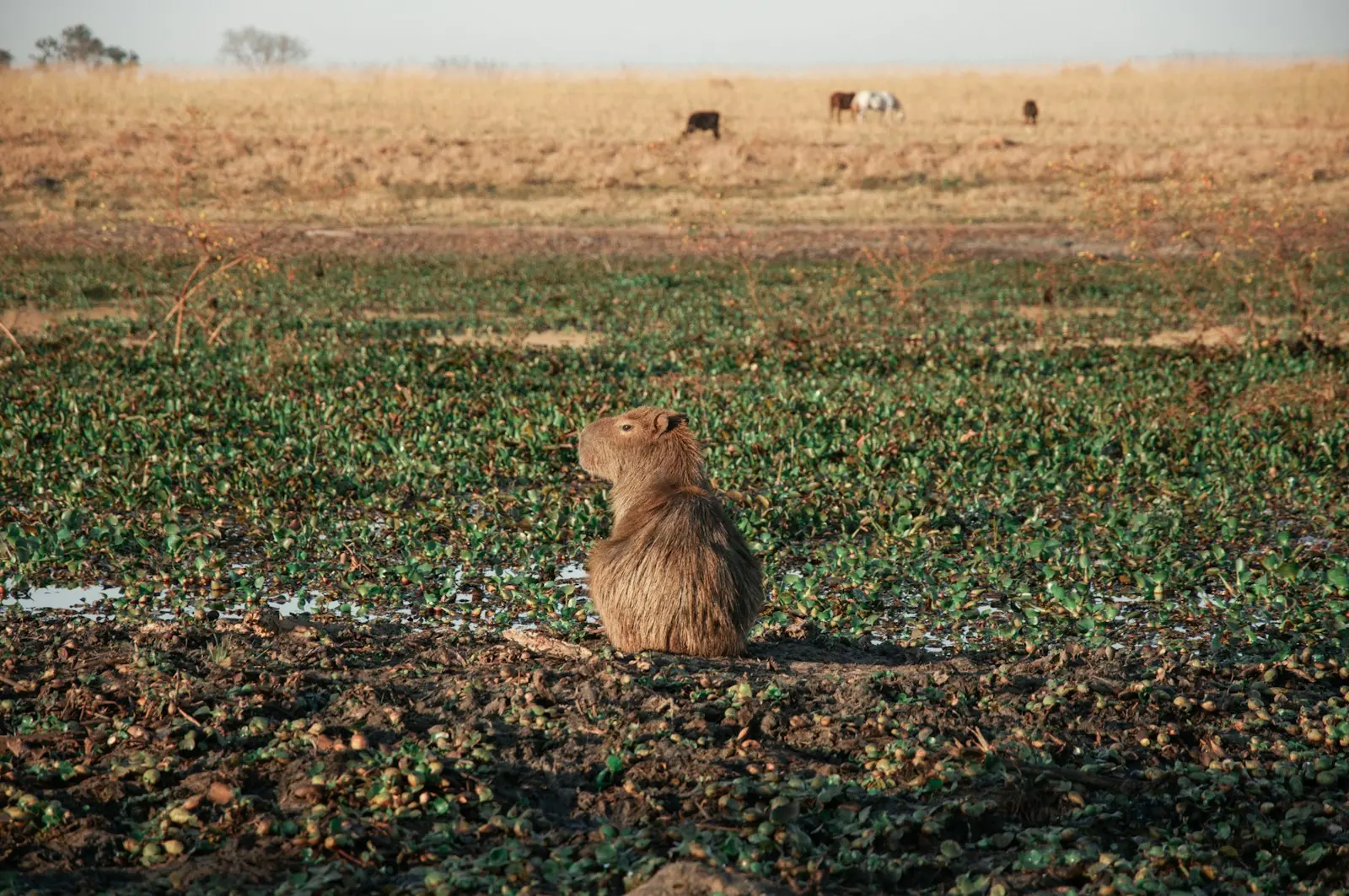
Colorado’s rural counties — in the agricultural San Luis Valley, the Western Slope, and the eastern plains — have fewer local exotic animal ordinances. Counties like Costilla, Conejos, Archuleta, or Moffat may have no explicit capybara restriction at the local level, placing the regulatory weight entirely on CPW’s state rules and federal AWA requirements.
For someone with rural agricultural property, CPW clearance, and the infrastructure to handle Colorado’s climate, rural Colorado is a more viable environment than the Front Range. The verification path is real but not impossible.
The water sourcing in rural Colorado also matters. Unlike Florida or the Pacific Northwest, where ambient water is plentiful, much of rural Colorado is high desert or semi-arid rangeland where water access requires planning. A capybara’s water needs — per the AZA Capybara Care Manual, continuous access to water large enough for submersion — require an actual infrastructure investment in areas without natural water bodies.
Altitude And Climate Challenges
Colorado’s altitude is a genuine variable. Denver sits at 5,280 feet above sea level; mountain communities above 7,000 feet face more significant conditions. The immediate effects for capybara management:
- Lower winter temperatures: Colorado winters are cold. Denver’s January average is around 30°F, and mountain communities can see sustained temperatures well below 0°F. The AZA manual requires capybaras to have temperature-controlled shelter.
- Stronger UV radiation: Higher altitude means less atmospheric UV filtration. While this affects humans more than capybaras (whose fur provides some protection), equipment and outdoor structures degrade faster at elevation.
- Lower humidity: Colorado’s high desert climate, especially on the Front Range and eastern plains, is dry. Capybaras evolved in humid wetlands; chronic low humidity can affect skin health and requires water management attention.
- Water evaporation: Dry air and altitude accelerate evaporation from outdoor water features, increasing the volume of water needed to maintain a functional pool.
None of these are prohibitive alone, but they stack. A Colorado capybara setup that accounts for winter heating, supplemental humidity, water volume management, and elevated UV exposure is a more complex and expensive project than the equivalent setup in Florida or coastal Washington.
What Colorado Newcomers Get Wrong
“Colorado is outdoorsy, so it must be permissive about exotic animals.” Outdoor recreation culture does not correlate with exotic animal permissiveness. CPW’s mandate is wildlife conservation, not expanding the pet market.
“Denver and Boulder are progressive, so they’ll be flexible.” Urban progressivism in Colorado tends to mean stricter exotic animal controls, not looser ones. Conservation-oriented governance does not favor backyard exotic mammals.
“The mountains are perfect capybara habitat — rivers and cold.” Capybaras evolved in tropical and subtropical wetlands. Cold mountain rivers and thin air are not their preferred conditions. The visual appeal of mountain water settings does not translate to ideal capybara habitat.
“I can import one from Texas without checking Colorado rules.” Interstate transport of exotic animals may require CPW import permits and health documentation. Driving a capybara across the Colorado state line without checking is an avoidable compliance problem.
What You Would Pay, If the Species Were On the List
Colorado’s cost answer is decided before any fee schedule opens, by a list of nine mammals.
The unregulated wildlife list in 2 CCR 406-11 is what removes an animal from the licensing system entirely. Its mammal section reads: African pygmy hedgehog, sugar glider, short-tailed possum, dama (tammar) wallaby, swamp wallaby, Bennett’s (red-necked) wallaby, red kangaroo, wallaroo, and zebras and zebra hybrids.
A red kangaroo is unregulated in Colorado and a capybara is not, which tells you the list is a list of what has been asked for and answered, not a considered ranking of risk. That is the practical reality of a positive-list state: absence is the whole finding.
In a state that regulates by exception, "the capybara is not mentioned" means the opposite of what it means in Ohio or Iowa. It means the default applies, and the default is that live wildlife requires a licence.
Before treating that as final, ask Colorado Parks and Wildlife directly whether the current unregulated wildlife list has moved. It is amended by rulemaking, and the mammal section is short enough that one addition changes the answer. For everything the licensing question does not touch, see the capybara cost guide.
Colorado: Who Clears Your Address
| Who to contact | What to ask | Why it matters | What changes the answer |
|---|---|---|---|
| Colorado Parks and Wildlife, Wildlife Licensing | Whether capybaras require a permit for personal possession under current CRS/CCR rules | CPW is the state authority; this is step one | Intended use (personal, commercial, exhibition) changes requirements |
| County planning or animal control | Whether your county restricts or prohibits exotic mammals at your property type | Rural counties vary; Front Range counties uniformly restrict | Agricultural vs. residential zoning, incorporated vs. unincorporated |
| City or municipality code enforcement | Whether your city has exotic animal ordinances | Front Range cities all have relevant ordinances; rural municipalities vary | HOA covenants, deed restrictions |
| USDA APHIS (if exhibition planned) | Whether your intended use triggers AWA requirements | Commercial exhibition triggers a federal layer | Public access, commercial activity, number of animals |
| Two exotic-animal veterinarians | Whether they treat capybaras and can handle Colorado climate emergencies | Denver metro has exotic practices; rural Colorado has gaps | Distance, species experience, emergency availability |
The Colorado Reality
Colorado is not a simple state for capybara ownership. The Front Range — where most people live — is effectively closed at the local level. Rural Colorado is more feasible but requires CPW clearance, winter infrastructure, and water planning that adds real cost and complexity.
For Colorado readers who want capybara access without the permit complexity, the zoo viewing guide lists facilities in the region. The legal states map places Colorado in national context, and the Nevada guide covers the nearest state with a more favorable framework.
In Colorado the state layer is CPW, but the Front Range city and county codes are what actually close or clear most addresses — and any of it can change by rulemaking. This reflects what was on the books as of 5 September 2026. Check with Colorado Parks and Wildlife, your county, and your municipality before acting. A starting point, not legal advice.