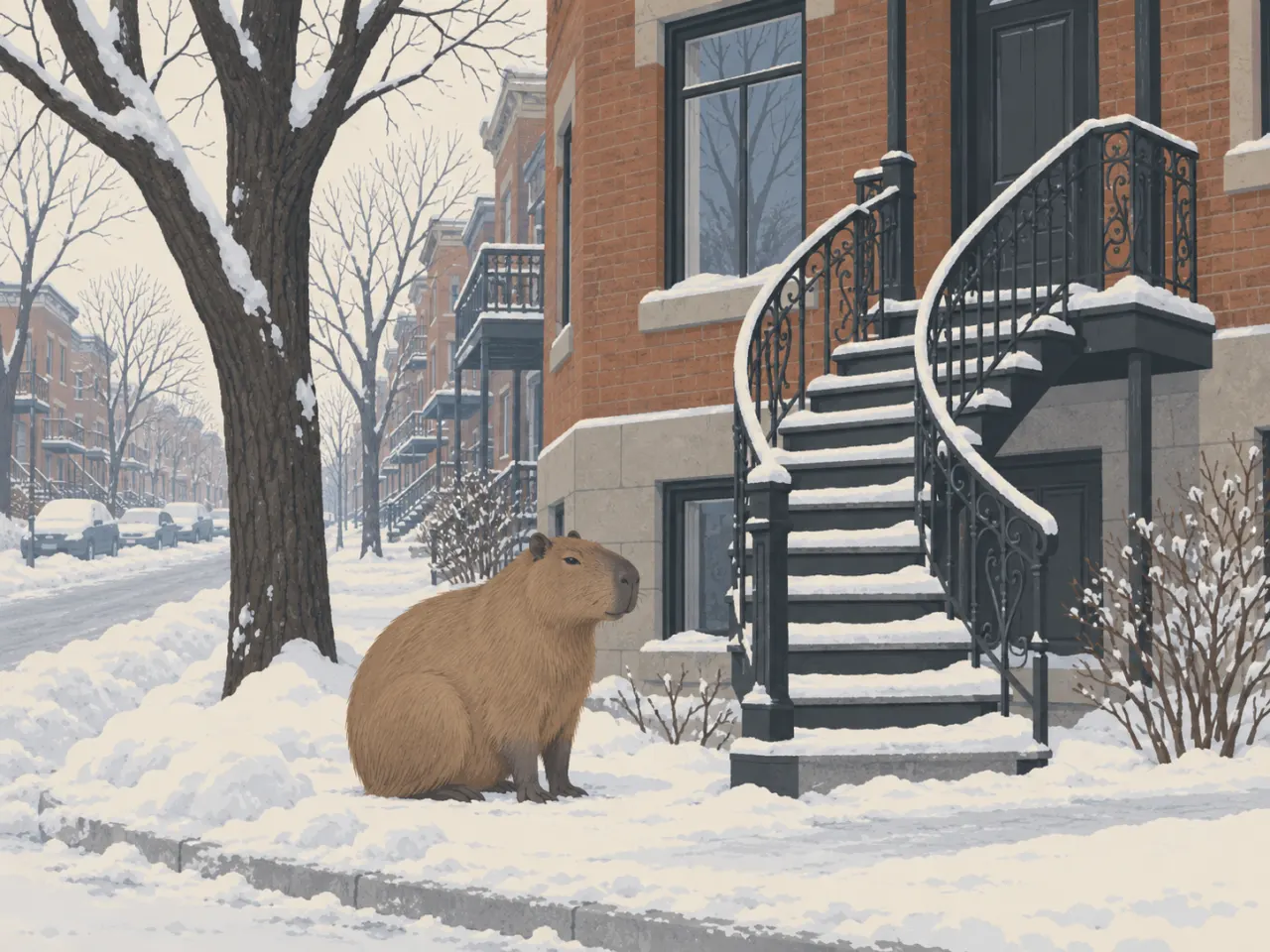
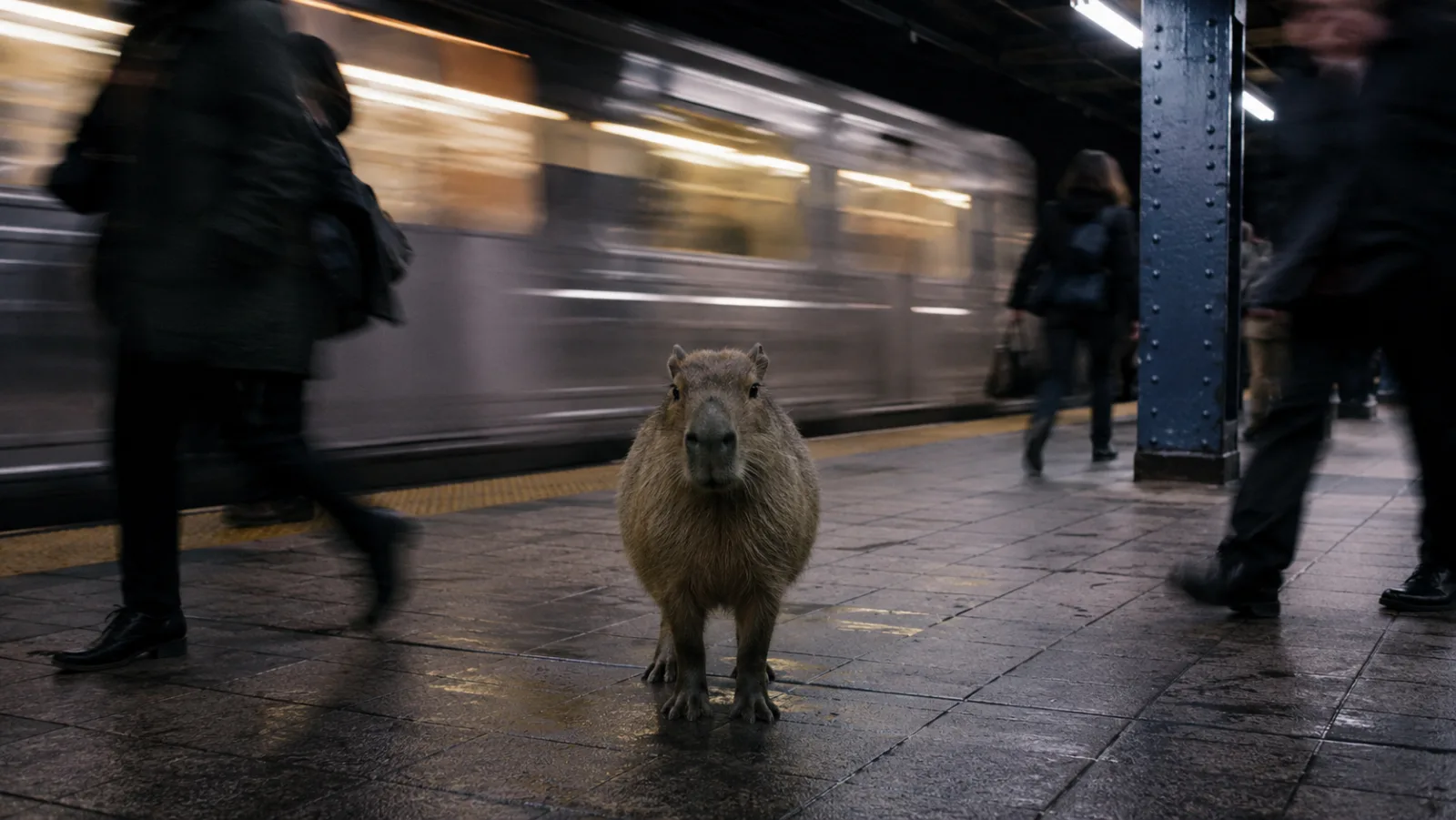
New York City bans capybaras by name. Health Code §161.01 prohibits “all large rodents (Rodentia)” and then lists the examples: gopher, muskrat, nutria, paca, woodchuck, marmot, beaver, prairie dog, capybara, sewellel, viscacha, porcupine and hutia. There is no private-pet permit that gets around it.
New York State, meanwhile, never wrote a capybara rule at all. Its wild-animal pet ban is drafted as a closed list, and no rodent is on it.
So the state does not stop you and the city does. Everywhere in between is decided by a town.
Banned in the city, unwritten in the state, decided by your town
NYC Health Code §161.01 names capybara in its prohibited large-rodent clause. Outside the five boroughs, ECL 11-0512's pet ban applies to a definition that "includes, and is limited to" primates, felids, canids, bears, certain venomous reptiles and crocodilians, so it does not reach a capybara.
That leaves county, town, village and zoning code as the operative layer, plus a DEC confirmation you should get in writing.
Two New Yorks, and Only One of Them Banned It
Most state guides in this series describe one legal regime with a local layer bolted on. New York runs two regimes that barely acknowledge each other. The city writes its own health code and enforces it through the Department of Health and Mental Hygiene. The state regulates wildlife through DEC and the Environmental Conservation Law. Neither defers to the other on this question.
The five boroughs
- Named prohibition, Health Code §161.01
- Capybara appears in the text, not by inference
- No private permit route exists
- Exceptions are institutional only
- Enforcement is city, not state
The other 54,000 square miles
- No state statute names the species
- ECL 11-0512's pet ban excludes rodents
- Not on the prohibited invasive list either
- County, town and village code control
- Nobody has published your answer
The practical consequence is uncomfortable. A New Yorker in Queens gets a fast, clean, checkable no. A New Yorker in Chenango County gets silence, which is harder to act on and much easier to misread.
What §161.01 Actually Says About Large Rodents
The clause is one sentence, and it is not subtle. Item 14 of the prohibited list covers “all large rodents (Rodentia), including, but not limited to,” and then runs thirteen animals, capybara among them, sitting between prairie dog and sewellel.
Two things about that sentence matter more than the name-check.
The first is “including, but not limited to.” The category is large rodents. The named animals are illustrations, not the boundary. Argue that your particular rodent is not on the list and you have argued yourself into the category rather than out of it.
The second is the exception structure. §161.01 permits these animals only in a zoological park or aquarium operated by the Department of Parks, the Wildlife Conservation Society or the Staten Island Zoological Society; in a laboratory operated under §504 of the Public Health Law; in a veterinary hospital or facility providing care for such animals; or in a temporary exhibit, performance or display holding a permit from the Commissioner. Every one of those is an institution. None of them is an apartment with good intentions.
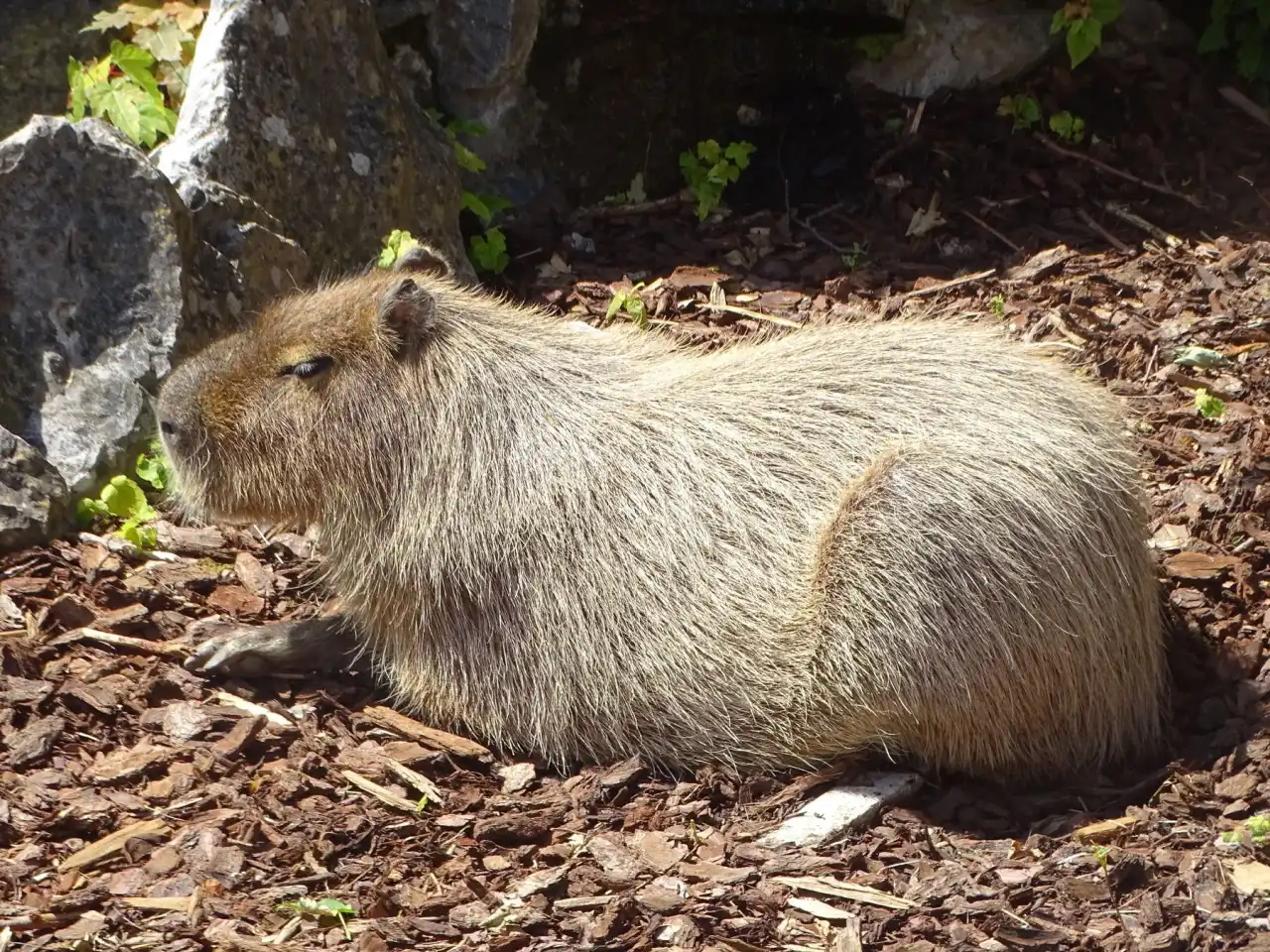
The fan-grade detail in that list: sewellel. It is the mountain beaver, a burrowing rodent found in the Pacific Northwest and nowhere near New York. Somebody drafting a city health code decided to name it anyway. Whatever else §161.01 is, it is thorough.
Why the State Pet Ban Never Reached a Rodent
This is the part that most pages about New York get backwards, usually by assuming the state must be at least as strict as the city.
ECL 11-0512 makes it unlawful to knowingly possess, harbor, sell, barter, transfer, exchange or import any wild animal for use as a pet, with exemptions for USDA-licensed zoological facilities, exhibitors, research facilities, veterinarians, shelters, licensed rehabilitators, universities and sanctuaries. Read alone, it sounds sweeping.
ECL 11-0103(6)(e) is where it narrows. The definition of “wild animal” for that section is drafted with the phrase includes, and is limited to, and then names non-human primates and prosimians, Felidae, Canidae, Ursidae, specified venomous reptiles and large constrictors, and Crocodylia. That is a closed list. Rodentia is not in it.
ECL 11-0511, the possession and transportation rule, works the same way. It names wolf, wolfdog, coyote, coydog, fox, skunk, raccoon, venomous reptiles and endangered species, then adds a catch-all for any native or non-native species “where the department finds” that possession would endanger people or native wildlife. The catch-all is real, and it is the one live question left on the state layer.
There is also a place where New York did take a view on a big semi-aquatic rodent, and it is worth knowing about. 6 NYCRR 575.3, the prohibited invasive species regulation, lists nutria. It does not list capybara. Same continent of origin, same wetland habit, same general body plan. One got written down; the other did not.
Whether that silence helps you depends entirely on how a state drafts. New York uses closed lists, so an animal outside the list sits outside the scheme. Other states invert it: New Mexico assigns unlisted species to its most restrictive group by default, which turns the same absence into a no. Reading “capybaras aren’t mentioned” as good news is a habit that works in New York and fails badly two states over.
Nothing above is DEC saying capybaras are fine. It is DEC never having been asked. The 11-0511 catch-all lets the department make a dangerous-species finding without new legislation, and an unanswered question is exactly the kind of thing that gets answered once somebody's animal is loose in a village park. Get the department's current position in writing, with a date on it.
Upstate: The Town Is the Whole Decision
New York has counties, cities, towns, villages, zoning boards and, in newer developments, HOAs. Each of them can restrict exotic or non-domestic animals, livestock in residential zones, ponds, outbuildings, fencing height and setbacks, and none of them needs the state’s permission to do it.
Here is the honest seam in this article: nobody has compiled those codes, and I am not going to pretend otherwise. There are more than 900 towns in New York State. Any page claiming to tell you the answer for your address is guessing.
The most common way this plan dies is procedural rather than dramatic. Somebody calls DEC, gets a non-answer that sounds encouraging, treats it as clearance, and never calls the town. Six months and one deposit later the town clerk reads them a paragraph about non-domestic animals that has been sitting in the code since before either of them was born. The clerk is not the villain in that story. The clerk is the person who was supposed to be called first.
The paper trail worth building before any money moves:
| Who to ask | What to ask | Why it matters | What changes the answer |
|---|---|---|---|
| Town or village clerk | Does our code restrict non-domestic or exotic animals at this parcel? | This is where upstate plans actually fail | Village versus unincorporated town, parcel zoning |
| County health or animal control | Any county-level exotic animal or nuisance rule? | Counties vary and are rarely searchable online | Rabies-vector rules, kennel definitions |
| NYS DEC Special Licences | Has the department made an 11-0511 finding for Hydrochoerus hydrochaeris? | The one open state-level question | A new determination, or commercial or exhibition use |
| Zoning or code enforcement | Are ponds, enclosures and shelters permitted as planned? | Water is a structure, not a landscaping choice | Wetland setbacks, stormwater, accessory-structure limits |
| NY Ag and Markets, Animal Industry | What import documentation applies on entry? | Interstate movement needs a health certificate | Origin state, species jurisdiction, DEC referral |
| USDA APHIS | Does any public contact or paid encounter trigger AWA licensing? | Federal layer is separate from both city and state | Exhibition, breeding, sale, paid photos |
Note the fifth row. Ag and Markets sets general import requirements and says plainly that some animals fall outside its jurisdiction and belong to DEC. That referral is not a formality; it is two agencies that each need to hear from you.
What a New York Winter Does to the Plan
The legal question is the cheap one. Ask anyone who has costed a heated outbuilding.
The AZA Capybara Care Manual treats water access, social grouping and secure shelter as baseline husbandry rather than enrichment, and Animal Diversity Web describes an animal tied to water and to group life across its South American range. New York gives you roughly five months a year where an outdoor pool is a block of ice and the animal still needs to swim.
That means an insulated building, a heated water source, a plan for when the power fails in February, and a vet who will drive to it. If you want the full version of that arithmetic, the cost guide and the care guide do it properly.
Two Jurisdictions, Two Prices, One of Them Infinite
New York is really two cost questions with a city line between them, and the answers are not on the same scale.
The middle figure is the one people misread. A New York City ban is not a high bar, a paperwork burden, or a fee waiting to be discovered. §161.01’s carve-outs go to city-operated zoos, licensed laboratories, veterinary facilities and permitted temporary exhibits. None of those describes an apartment, and no amount of money converts one into the other.
Upstate, the absence of a state fee means nobody at the state has looked at your plan. Your town, your village and your county have not been consulted by that silence, and in New York they are the ones who write the ordinance that decides it.
So the honest New York budget line is zero to the state, whatever your municipality charges for a permit it may or may not issue, and everything in the capybara cost guide — which a New York winter makes noticeably worse.
Misconceptions New Yorkers Keep Repeating
| What New York buyers believe | What is actually true |
|---|---|
| ”If the city banned it, the state must have too” | The state pet ban is a closed list of primates, cats, dogs, bears and reptiles. No rodent is in it. |
| ”The state is silent, so I’m clear” | Silence is the absence of a rule, not a permission. Your town still has to be asked, and DEC still has a catch-all. |
| ”It’s on the invasive species list” | Nutria is. Capybara is not listed in 6 NYCRR 575.3 at all. |
| ”I’ll move to New Jersey and visit” | New Jersey runs its own exotic-animal permit system. It is stricter than upstate New York, not looser. |
| ”My building can’t object if the city allows it” | In the city nothing allows it, and a landlord can restrict animals the law already permits anyway. |
| ”I’ll register it as a service animal” | Service animal status under the ADA is species-limited. Trying it makes the file worse, not better. |
The New York Answer, Plainly
If you live in the five boroughs, the research is finished. §161.01 names the animal, the exceptions are institutional, and the honest version of the capybara plan is a membership at a zoo that already keeps them well. The US zoo viewing guide is a better use of the afternoon than a fight with the Health Code.
If you live anywhere else in New York, do the calls in this order: town clerk first, county second, DEC third. Reversing that order is how people end up with a deposit paid and a code section read to them over the phone. Ask by scientific name, ask for the answer in writing, and note the date you got it.
My honest read: New York is one of the easier states to research and one of the harder ones to actually do this in, and those two facts are unrelated. The law upstate is quiet. The winter is not.
This guide is current as of September 5, 2026. City health code, DEC determinations and town ordinances all change independently of each other, so treat this as a screening path rather than legal advice, and confirm with NYC DOHMH, NY State DEC and your local clerk before acting. For how New York sits against the rest of the country, the state-by-state map has the comparison, and Pennsylvania’s permit-heavy approach is the nearest contrast worth reading.